
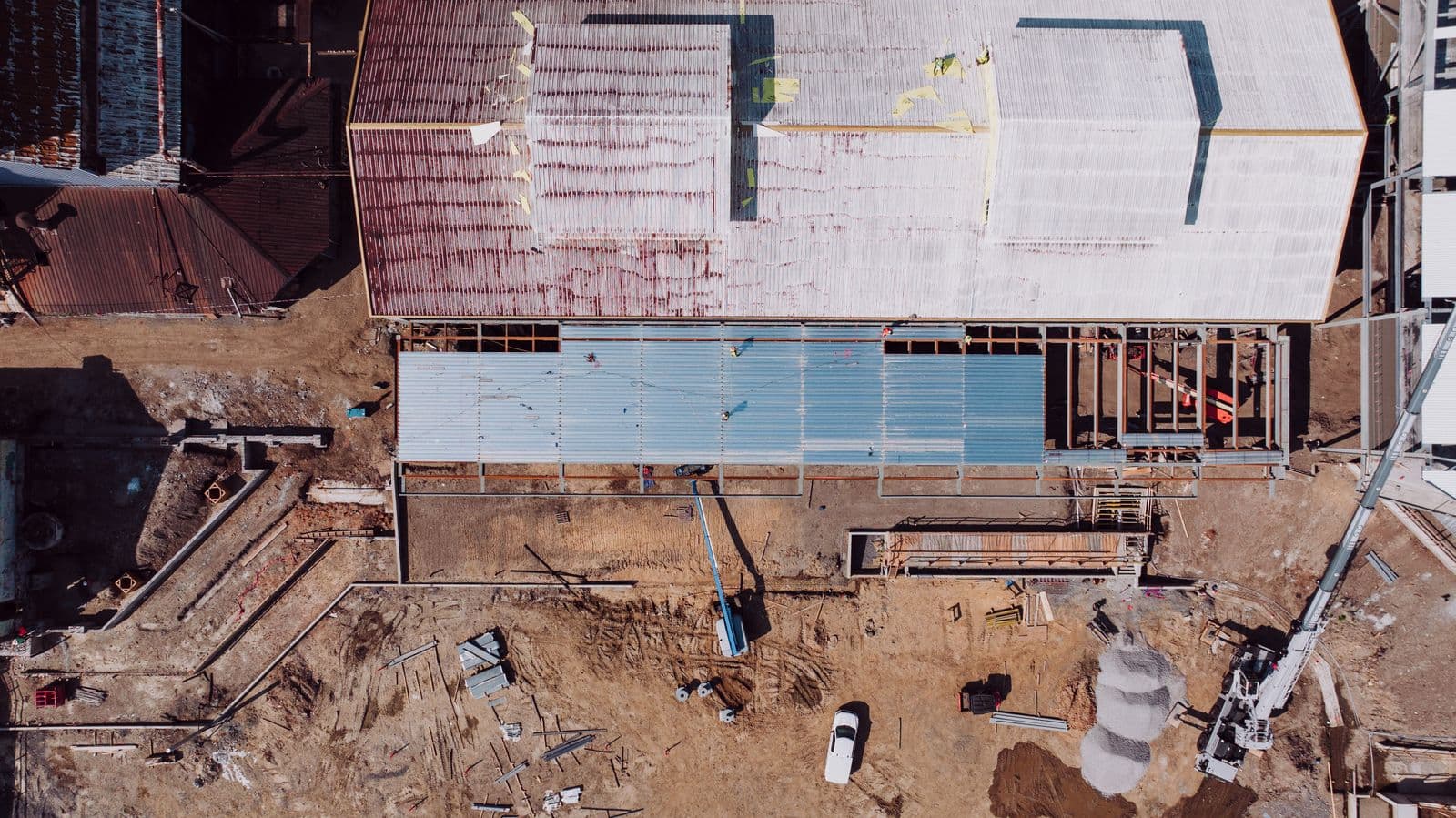
Commercial Roofing Contractors in Indiana
Red Door Roofing serves commercial, industrial, and multifamily property owners across Indiana - from the Indianapolis metro and Fort Wayne to Evansville, South Bend, Bloomington, and the Northwest Indiana corridor. We inspect hail, wind, and snow-load damage, document it for insurance carriers, and manage full roof replacements on TPO, EPDM, modified bitumen, metal, and shingle systems engineered for Indiana's cold-climate freeze-thaw and lake-effect snow exposure.
About Commercial Roofing in Indiana
Indiana anchors Red Door Roofing's Midwest coverage. The state's commercial and multifamily roof inventory is concentrated in the Indianapolis metro - the nation's logistics and distribution crossroads, where I-70, I-65, and the I-465 loop feed one of the largest warehouse and fulfillment markets in the country - plus Fort Wayne in the northeast, Evansville on the Ohio River in the southwest, the South Bend / Elkhart manufacturing corridor in the north, and the Gary / Hammond industrial belt on the Northwest Indiana edge of metro Chicago. Indiana commercial roof stock spans white TPO and EPDM on distribution centers and office parks, modified bitumen and built-up systems on older downtown and institutional buildings moving into replacement cycles, standing-seam metal on industrial and agricultural stock, and architectural asphalt shingle on pitched multifamily - all specified for a cold climate that has to shed snow, resist ice damming, and survive repeated freeze-thaw cycling.
Indiana Climate & Severe-Weather Patterns
Indiana sits in the Ohio Valley severe-weather corridor, where spring and early-summer convection (March–July) drives the bulk of commercial hail, straight-line wind, and tornado claim activity - the March 2012 Henryville EF4 in southern Indiana remains a state benchmark for commercial-scale storm documentation. Central Indiana counties - Marion, Hamilton, Hendricks, and Johnson - record recurring hail annually per NOAA Storm Prediction Center data. Unlike the Southeast, Indiana adds a significant cold-season load: heavy snowfall and ice accumulation statewide, with lake-effect snow off Lake Michigan making South Bend and the Northwest Indiana corridor among the snowiest metros in the country. Commercial and multifamily owners benefit from documented annual inspections plus prompt post-event inspections after both the spring hail window and major winter snow-and-ice events.
Indiana Commercial Roof Market Segments We Serve
Our Indiana commercial and multifamily work concentrates in five market segments: (1) Indianapolis-metro logistics and distribution - warehouse and fulfillment roof stock along I-70, I-65, and the I-465 loop, anchored by the FedEx National Hub at Indianapolis International; (2) Indy-metro multifamily and office across Carmel, Fishers, Noblesville, Greenwood, and the downtown / Mass Ave core; (3) Northern Indiana manufacturing - the Elkhart RV corridor, South Bend, and the Kokomo automotive belt; (4) university-adjacent commercial and multifamily near Indiana University (Bloomington), Purdue (West Lafayette), Notre Dame (South Bend), and Ball State (Muncie); (5) Northwest Indiana / Chicago-adjacent industrial across Gary, Hammond, and Merrillville.
- Indianapolis I-70 / I-65 distribution and fulfillment warehouses
- Carmel, Fishers, and Noblesville multifamily portfolios
- Fort Wayne and Evansville office and retail commercial
- Elkhart RV and South Bend manufacturing / industrial stock
- IU, Purdue, Notre Dame, and Ball State university-adjacent multifamily
- Gary / Hammond Northwest Indiana industrial adjacencies
Indiana Licensing & Insurance Notes
Indiana does not issue a statewide general-contractor or roofing license - contractor registration and roofing permits are handled at the municipal and county level (for example, the City of Indianapolis Department of Business and Neighborhood Services, plus separate registration in Fort Wayne, Evansville, South Bend, and other jurisdictions), so permitting is pulled locally per project. Indiana commercial property policies typically apply percentage-based wind/hail deductibles on insured value; because the state is landlocked there is no named-storm or hurricane deductible, but snow-load, ice-damming, and freeze-thaw water intrusion are recurring covered perils that adjusters evaluate. Indiana falls in ASHRAE climate zone 5A (most of the state) and 4A (the southern tip), which drives higher continuous-insulation minimums under ASHRAE 90.1 - commonly R-30 or more on commercial replacement scopes, meaningfully above the levels typical of the company's Southeast markets.
Indiana Commercial Roofing Market Overview
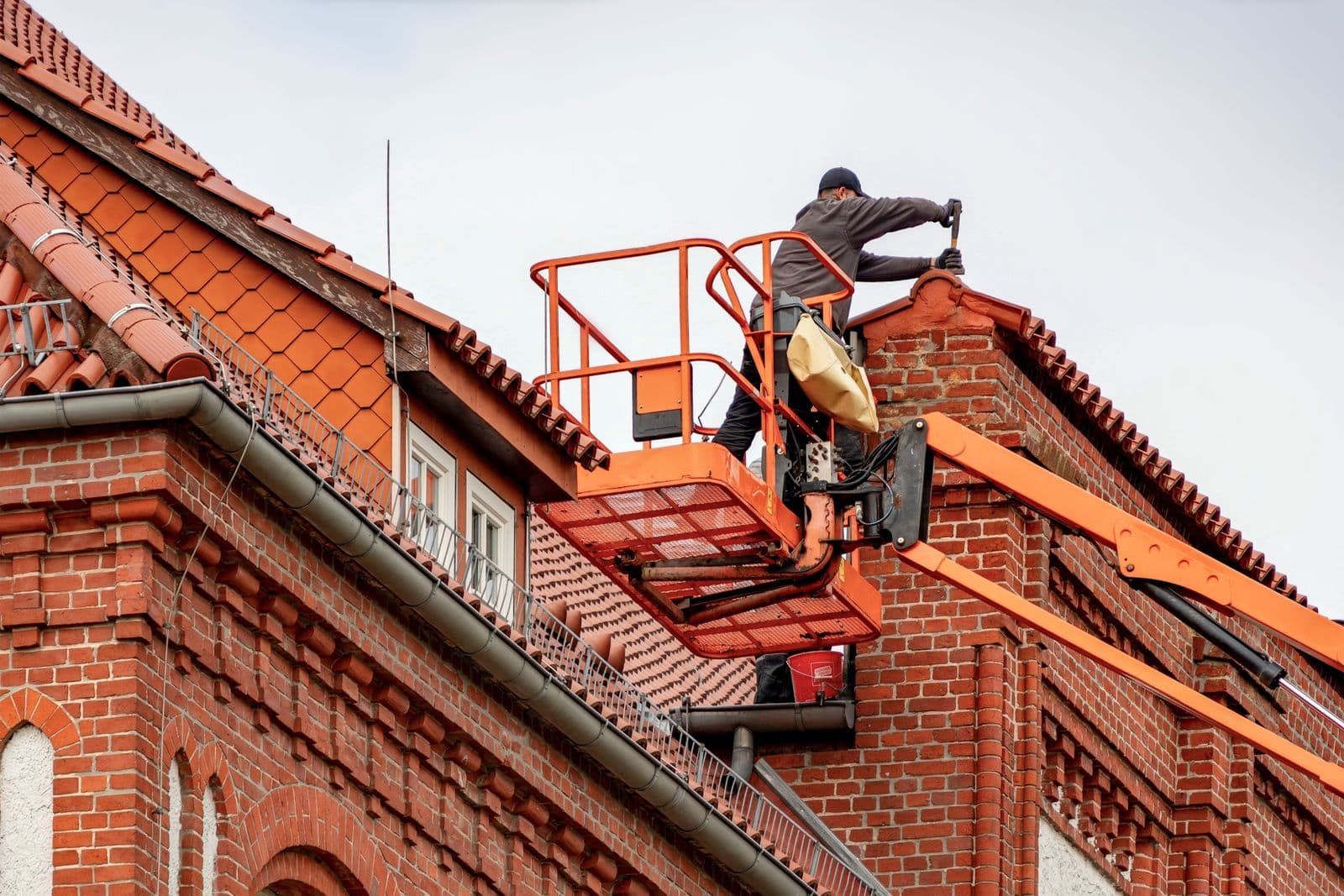
Indiana's commercial and multifamily roofing market is anchored by the Indianapolis metropolitan area and reinforced by a ring of manufacturing and university cities. The Indianapolis-Carmel-Anderson MSA - roughly 2.1 million residents per U.S. Census Bureau 2020 estimates - is the state's dominant commercial roof market and one of the most important logistics and distribution hubs in the country. Nicknamed the Crossroads of America, Indianapolis sits at the convergence of I-70, I-65, I-69, I-74, and the I-465 beltway, and hosts the FedEx National Hub at Indianapolis International Airport. That infrastructure has produced an enormous inventory of large-format warehouse, fulfillment, and distribution roofs across Marion, Hendricks, Hancock, and Johnson counties - the core of Indiana's commercial roof activity.
Beyond Indianapolis, Fort Wayne anchors northeast Indiana commercial and industrial activity; Evansville anchors the southwest along the Ohio River; the South Bend / Elkhart corridor combines Notre Dame-adjacent commercial with the Elkhart RV manufacturing cluster - the RV Capital of the World; Kokomo carries automotive-manufacturing roof stock; and the Gary / Hammond / Merrillville belt in Northwest Indiana operates as an industrial extension of metro Chicago. University markets - Bloomington (Indiana University), West Lafayette (Purdue), Muncie (Ball State), and Terre Haute (Rose-Hulman / Indiana State) - each anchor multifamily and institutional commercial inventory on staged replacement cycles.
- Indianapolis-Carmel-Anderson MSA - ~2.1M residents; the state's largest commercial market and a national logistics hub.
- Fort Wayne and Evansville - the northeast and southwest regional commercial anchors.
- South Bend / Elkhart - Notre Dame-adjacent commercial plus the Elkhart RV manufacturing cluster.
- Northwest Indiana (Gary, Hammond, Merrillville) - Chicago-adjacent heavy industrial roof stock.
- Bloomington, West Lafayette, Muncie, Terre Haute - university-anchored multifamily and institutional inventory.
Indiana Severe-Weather and Snow-Load Climatology
Indiana carries a two-season roof-risk profile that distinguishes it from Red Door Roofing's Southeast markets. In the warm season, the state sits in the Ohio Valley severe-weather corridor: March through July convection produces recurring hail, straight-line wind, and tornado activity, and the NOAA Storm Prediction Center consistently records central-Indiana counties among the state's higher-frequency hail-report areas. The March 2, 2012 Henryville EF4 tornado in southern Indiana remains the state benchmark for commercial-scale storm damage documentation and continues to shape how Indiana adjusters expect date-of-loss anchoring and photo-keyed evidence.
In the cold season, Indiana adds a load the Southeast rarely sees. Snowfall and ice accumulation affect the entire state, and lake-effect snow off Lake Michigan makes the South Bend metro and the Northwest Indiana corridor among the snowiest populated areas in the United States. Ground-snow load, ice damming at eaves and low-slope transitions, and repeated freeze-thaw cycling drive a distinct set of commercial roof failures - trapped moisture in saturated insulation, split membranes at cold-weather stress points, and blocked or frozen drains that pond water until it finds a seam. Prompt post-event inspection after major winter storms is as important in Indiana as post-hail inspection is in the spring.
Indiana's ASHRAE climate zones - 5A across most of the state and 4A at the southern tip near Evansville - set commercial-roof insulation minimums under ASHRAE 90.1 that run higher than the 2A/3A Southeast, commonly requiring R-30 or more continuous insulation on replacement scopes. The combination of high winter thermal demand, freeze-thaw cycling, and spring severe-weather exposure compresses commercial roof lifecycles and rewards owners who maintain a documented annual inspection cadence.
- Warm-season severe-weather window: March through July - peak commercial hail, wind, and tornado activity.
- March 2012 Henryville EF4 - the state benchmark for commercial storm documentation.
- Cold-season load: statewide snow and ice, with lake-effect snow driving heavy accumulation in South Bend and Northwest Indiana.
- Recurring cold-climate failures: ice damming, freeze-thaw membrane splits, and frozen-drain ponding.
- ASHRAE zones 5A (most of state) and 4A (southern tip) - dictates R-30-plus continuous-insulation minimums on replacement scope.
Indiana Commercial Insurance and Local Permitting
Commercial property insurance in Indiana is regulated by the Indiana Department of Insurance. Indiana commercial policies have largely moved to percentage-based wind/hail deductibles on insured value - commonly 1 percent to 5 percent - and because the state is landlocked there are no named-storm or hurricane deductibles to reconcile. What Indiana adjusters do evaluate alongside hail and wind is cold-season loss: snow-load stress, ice-damming water intrusion, and freeze-thaw damage. Understanding the actual deductible dollar figure and the covered-peril language before engaging a contractor on a claim is foundational, and we walk the declaration page with property managers in plain English so there are no surprise carve-outs during claim execution.
Permitting and contractor regulation in Indiana are handled locally rather than at the state level. Indiana does not issue a statewide general-contractor or roofing license; instead, individual cities and counties administer contractor registration and building permits - the City of Indianapolis through its Department of Business and Neighborhood Services, with separate registration and permit processes in Fort Wayne, Evansville, South Bend, Bloomington, and other jurisdictions. That fragmentation means a multi-property owner with sites across several Indiana cities is dealing with several permitting authorities; we pull permits per jurisdiction and manage the registration side so each municipality's requirements are met.
Ordinance-and-Law coverage on Indiana commercial policies unlocks reimbursement for code-required upgrades that a replacement scope triggers - continuous-insulation R-value increases to ASHRAE 90.1 minimums, updated fastening and edge-metal requirements, and drainage upgrades. Matching considerations, where applicable under policy endorsements, may bear on undamaged roof sections when damage is partial. As in every market, Indiana commercial claim strategy starts with a declaration-page and endorsement review.
Indiana Commercial Roof Systems by Submarket
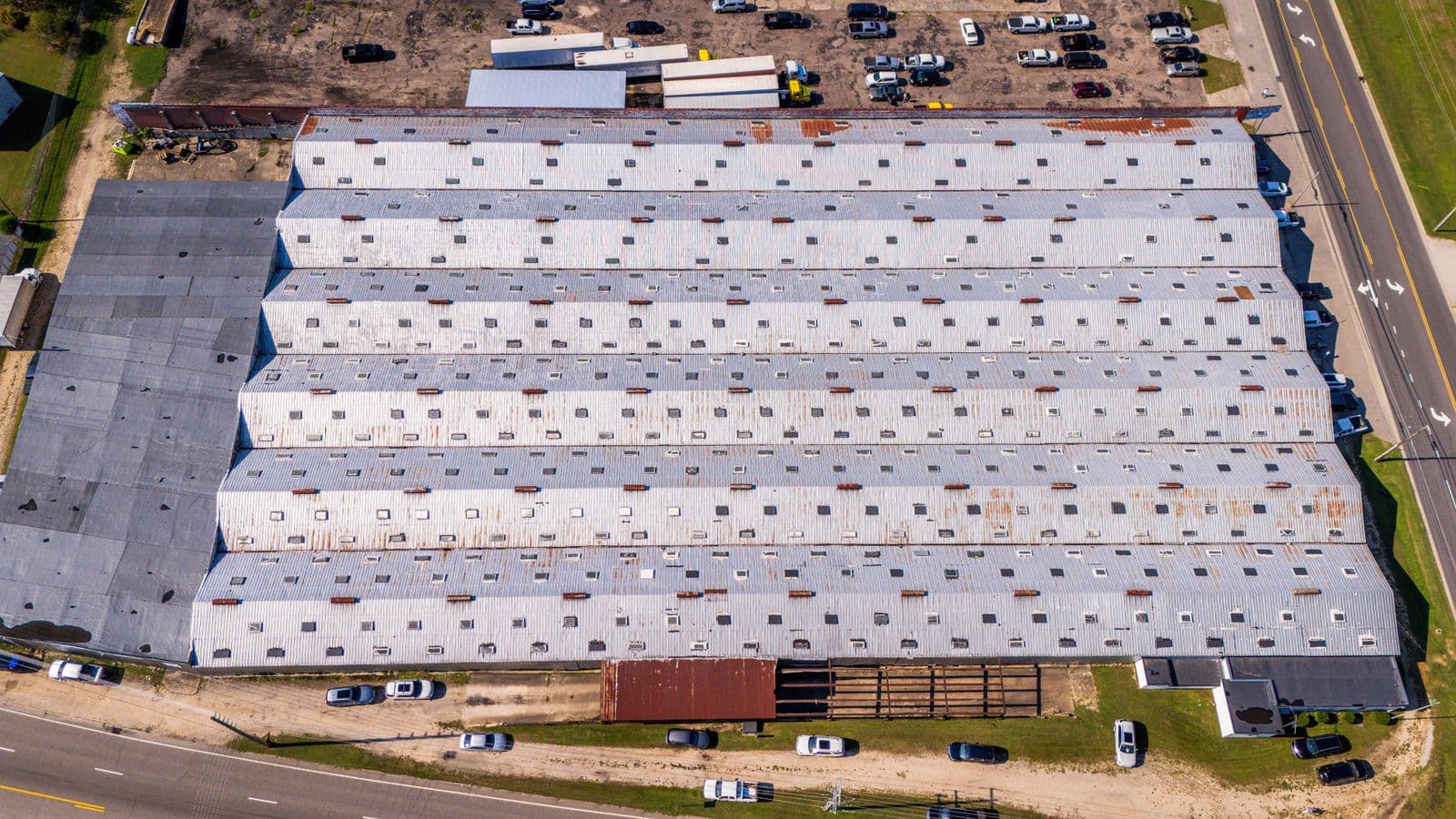
Commercial roof systems across Indiana track closely to submarket and building type. The Indianapolis logistics corridor - the warehouse, fulfillment, and distribution stock along I-70, I-65, and the I-465 loop - is dominated by large-format flat roofs, where white reinforced TPO and EPDM predominate for wide-roll installation efficiency and solar-reflectance HVAC savings across sprawling footprints. Older downtown Indianapolis, Fort Wayne, and Evansville commercial and institutional stock runs on modified bitumen and built-up systems, much of it approaching staged replacement, while newer suburban and industrial builds increasingly specify standing-seam metal.
Northern Indiana's manufacturing base - the Elkhart RV corridor, South Bend, and the Kokomo automotive belt - carries heavy industrial roof stock on metal and single-ply assemblies that has to handle both high interior mechanical loads and severe winter snow accumulation. Northwest Indiana's Gary / Hammond industrial belt runs older built-up and metal systems on heavy-duty decks. Multifamily across the Indy donut counties - Carmel, Fishers, Noblesville, Greenwood - and the university markets combines architectural asphalt shingle on pitched sections with TPO or EPDM on common-area breezeways, clubhouses, and mid-rise flat roofs.
The through-line across every Indiana submarket is cold-climate detailing. Whatever the membrane, the assembly has to carry adequate insulation for zone 5A/4A, drain before water can freeze, and resist ice damming at eaves and transitions. Our inspections start by identifying the existing system, estimating remaining useful life, and recommending a replacement specified for the Indiana climate and the building's use - not a warm-weather assembly moved north.
Cold-Climate Detailing and the Indiana Inspection Workflow
Every Indiana commercial and multifamily inspection produces a photo-keyed PDF report formatted for how Indiana adjusters, lenders, and asset managers actually work - every slope, every drain, every penetration, every transition documented with photographs referenced to an overhead schematic of the property. For portfolios with multiple buildings - common across Indianapolis distribution parks, Indy-metro multifamily, and Northwest Indiana industrial - we document building-by-building so the evidence travels cleanly through the carrier scope conversation. When our inspection finds no qualifying damage, we issue a Certificate of Clearance suitable for lender, insurer, or asset-manager files at no cost and no obligation.
The Indiana inspection toolkit is built for a cold, dual-season climate: drone-assisted aerial documentation for rapid baseline mapping of large distribution roofs, infrared thermography to find trapped moisture in saturated insulation after snow-melt and freeze-thaw cycling, core-sample extraction to validate deck type and insulation stack against zone 5A/4A requirements, moisture-meter surveys, and photo-keyed ground-level documentation of eave, drain, and transition detailing where ice damming concentrates. We identify the existing roof system - TPO, EPDM, PVC, modified bitumen, built-up, or standing-seam metal - estimate remaining useful life, and recommend a replacement specified for the Indiana climate.
On approved scope, Indiana production is planned around the weather calendar as much as the tenant calendar: tear-off and membrane work are sequenced to avoid open-roof exposure during winter storms and the spring severe-weather window, and multifamily replacement runs on phased per-building schedules with tenant-notice templates distributed ahead of each building's turn so tenants stay in place throughout the project.
Served by request
Indiana is part of our 16-state service footprint. We serve commercial and multifamily property owners across this state by request - with the same inspection, documentation, and installation process we run in the markets where we work most. Most of our crews are based in Georgia, Tennessee, Alabama, and South Carolina, so Indiana jobs are scheduled from the nearest crew. Contact us for a Indiana-specific inspection or project quote.
Quick Start
Most Indiana commercial inspections are scheduled within days. No obligation - if no damage is found, we issue a Certificate of Clearance at no cost.
Request InspectionWhy Indiana Property Owners Choose Red Door Roofing
Commercial and multifamily property owners across Indiana face a common problem: storm damage is often invisible from the ground; claim windows close faster than tenant-reported symptoms; and storm-chaser crews flood affected markets promising everything and delivering inconsistently. Red Door Roofing is built on the opposite approach - inspect first, document with photo-keyed evidence, support the claim paperwork without guaranteeing outcomes, and manage installation with tenant-in-place phasing. Our Indianacommercial work draws on 30 years of Red Door family experience across the Southeast.
30+ years of commercial experience
Built on 30 years of Red Door family commercial and multifamily work across the Southeast. Notable clients include Best Western, Harbor Freight, Tractor Supply, and Vanderbilt Medical Clinic.
Carrier-ready documentation
Photo-keyed inspection reports formatted for Indiana-area adjuster and lender workflows. We match the documentation standards local adjusters expect post-event.
Tenant-in-place multifamily phasing
Multifamily work phased by building block with tenant- notice templates and noise-window coordination. Tenants stay in place throughout the project.
Industry certifications
NRCA member, BOMA member, and Licensed General Contractor in multiple states. Credentials the carriers and lenders know.
Indiana Commercial Roofing FAQs
Does commercial roof storm damage qualify for insurance replacement in Indiana?
What commercial roof systems are most common in Indiana?
Are Indiana commercial roof inspections no-obligation?
How quickly can Red Door Roofing respond to a Indiana post-storm inspection request?
Does Red Door Roofing cover Indiana?
Which Indiana counties carry the highest commercial hail and wind claim frequency?
How does Indiana snow and ice load change commercial roof specifications versus Southeast markets?
Does Indiana require a state roofing or general-contractor license?
What roof systems are most common on Indianapolis distribution and warehouse roofs?
Does Indiana commercial property carry hurricane or named-storm deductibles?
Need a Indiana commercial inspection?
Call us directly at 1-855-GO4REDD or request a no-obligation inspection online. Most Indiana-area inspections are scheduled within days of the request.
Request InspectionCommercial Roof Inspection in Indiana
We inspect, document, and walk you through next steps.
30+ Years of Red Door Family Experience · 16 States
Free · No obligation · No follow-up sales calls