Why Architectural Asphalt Shingle Dominates Multifamily Pitched Roofs
Architectural asphalt shingle is the dominant pitched-roof system on multifamily across Georgia, Alabama, and the Southeast for one simple reason: it hits the sweet spot on cost, aesthetics, installation speed, manufacturer availability, and reasonable service life. Metro Atlanta multifamily garden-style, Birmingham multifamily across Hoover and Vestavia, Huntsville multifamily near Research Park, and similar multifamily across Nashville, Memphis, Charleston, Greenville, and the broader Southeast footprint - all default to architectural asphalt shingle on pitched sections. The flat-roof systems (TPO, EPDM, PVC) apply only to clubhouses, common areas, and breezeway transitions.
The architectural-shingle dominance on multifamily reflects practical realities. Shingle material costs are lower per square foot than single-ply membrane or metal on equivalent specification tier. Installation speed on garden-style multifamily is high because crews can work across multiple buildings in parallel without requiring specialized welding equipment. Manufacturer availability is broad - every major manufacturer produces architectural lines. Resident aesthetic expectations on multifamily favor the dimensional texture of architectural shingle over the flat visual of metal or the utilitarian appearance of exposed membrane.
Architectural vs 3-Tab vs Premium Designer Lines
Within asphalt shingle, three product tiers dominate the commercial and multifamily specification conversation:
3-Tab Shingle
3-tab shingles are the legacy product - single-layer, flat-profile, the lowest tier. Service life typically 15-20 years. Wind-uplift performance is materially below architectural. 3-tab is rarely specified on new commercial or multifamily construction since the early 2000s. We encounter 3-tab primarily on older multifamily portfolios approaching replacement.
Architectural (Dimensional, Laminated)
Architectural shingles use multi-layer construction with staggered laminated tabs creating a textured, dimensional appearance. Service life typically 20-30 years. Wind-uplift performance materially exceeds 3-tab. Architectural is the dominant specification on new and replacement multifamily pitched roofs across the Southeast.
Premium Designer and Luxury Lines
Premium designer and luxury shingle lines - typically specified on Class-A multifamily, high-end architecturally-detailed multifamily, and commercial properties where aesthetic specification matters - offer extended service life (30-50 years on some manufacturers), enhanced wind-uplift ratings, improved impact resistance, and distinctive visual profiles (slate-look, shake-look, scalloped). Material cost is 2-4x architectural. Specification is appropriate where the property positioning and tenant aesthetic expectations justify the premium.
UL 2218 Class 4 Impact Rating - Why It Matters in GA and AL
UL 2218 is the Underwriters Laboratories impact-resistance test for roofing materials. The test drops a steel ball from a specified height onto the shingle; shingles that withstand the impact without breaking earn a Class rating. Class 4 is the highest rating - the shingle withstands a 2-inch steel ball dropped from 20 feet.
In hail-prone Georgia and Alabama commercial and multifamily markets - metro Atlanta, Birmingham, Huntsville, Tuscaloosa, and the Piedmont corridor - UL 2218 Class 4 impact-rated shingles are frequently specified on commercial-grade replacements. Three reasons drive the specification choice:
- Reduced replacement risk. Class 4 shingles meaningfully reduce documentable hail damage on 1-2-inch hail events, which the metro Atlanta and central Alabama severe-weather climatology produces with regularity. Properties with Class 4 shingles often come through a spring severe-weather season without claimable damage where standard-architectural roofs would show bruising.
- Insurance-premium discounts. Many commercial and multifamily carriers offer premium discounts for Class 4 impact-rated shingle specifications - often 5-30% on the roof-related portion of the commercial policy. Premium discount documentation typically requires manufacturer specification confirmation and installation-compliance verification.
- Long-term cost-of-ownership math. The 10-25% material-cost premium over standard architectural, combined with reduced replacement risk and insurance discounts, often produces net-positive total cost of ownership over the roof's service life. The math favors Class 4 on hail-exposed commercial more often than not.
Attic Ventilation - The Hidden Determinant of Shingle Lifespan
Attic ventilation is the first-order driver of shingle lifespan that most commercial-roof conversations underweight. Inadequate attic ventilation traps heat in summer (accelerating shingle UV degradation from below) and traps moisture in winter (accelerating substrate rot and promoting shingle blistering). Adequate ventilation materially extends shingle service life; inadequate ventilation materially compresses it.
Ventilation systems appropriate for multifamily shingle roofs:
- Ridge-and-soffit ventilation - the standard system. Continuous ridge vents paired with continuous or spot soffit vents create convective airflow through the attic space. Works passively without electrical or mechanical components.
- Turbine vents - rotary wind-driven ventilators. Acceptable as secondary ventilation. Can be problematic in some multifamily aesthetic contexts where the rotating turbines are visually prominent.
- Gable vents - static vents on gable walls. Acceptable secondary ventilation; generally insufficient as primary ventilation on long multifamily structures.
- Power attic vents - electrically-powered exhaust fans. Common on retrofits where adding ridge-and-soffit is impractical.
Replacement scope on existing shingle multifamily commonly includes ventilation evaluation. If the existing ventilation is inadequate, the replacement scope includes ventilation upgrades - which is typically a legitimate scope item under Ordinance and Law coverage where applicable.
Asphalt Shingle Failure Modes and Repair vs Replacement Signals
Common asphalt-shingle failure modes and what they mean:
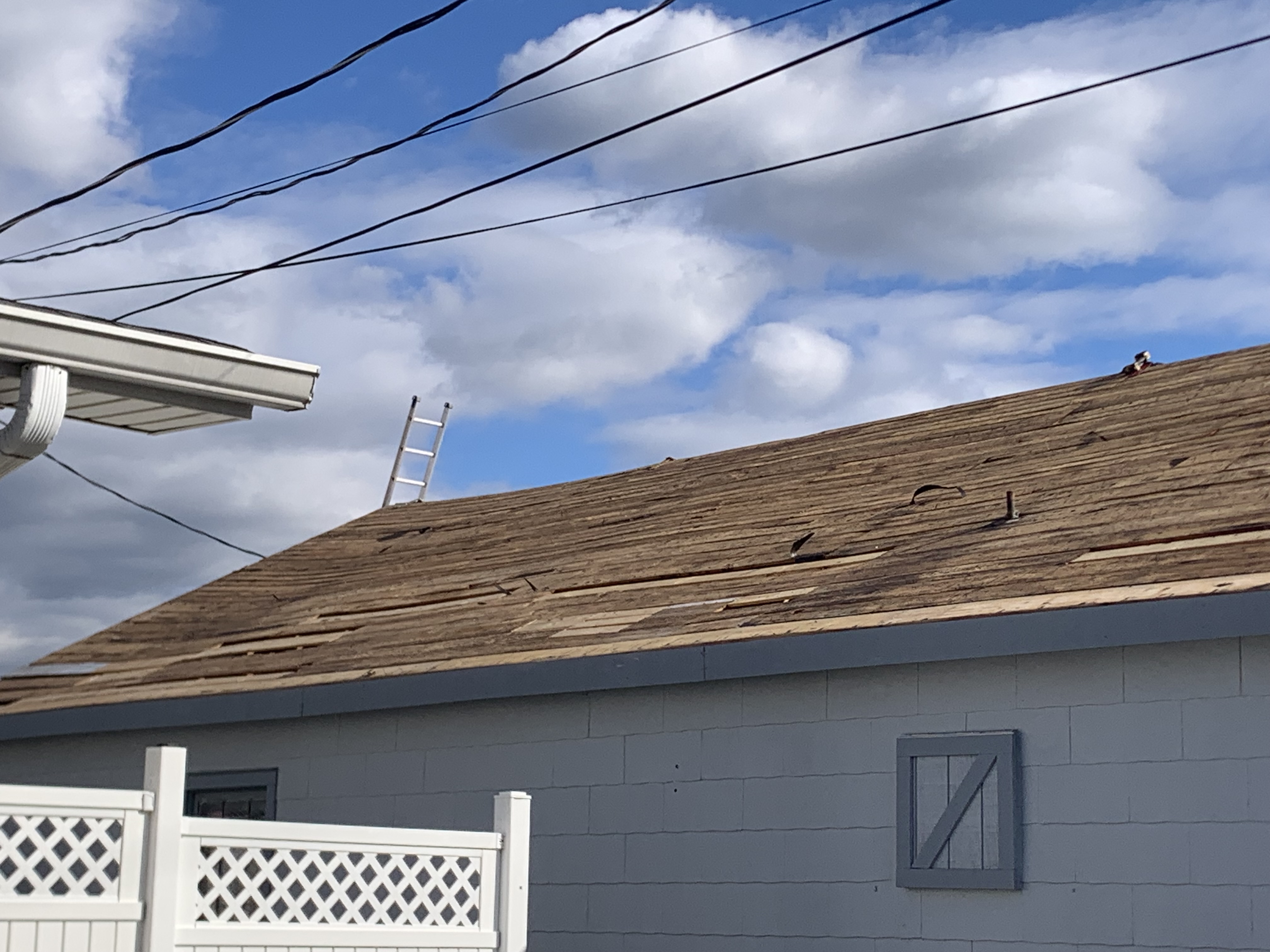
- Granule loss. UV and weathering displaces the granular coating, exposing the asphalt layer to accelerated degradation. Granules accumulate in gutters and downspouts. Granule loss below the roofing industry threshold warrants replacement, not repair.
- Blistering. Raised, bubble-like areas indicate trapped moisture from attic-ventilation deficiency or manufacturer defect. Blisters progress into rupture and water intrusion if unaddressed.
- Nail pops. Thermal cycling drives roofing nails upward through the shingle surface, creating leak paths and wind-uplift vulnerability. Scattered nail pops warrant repair; systemic nail pops warrant replacement.
- Shingle curling. End-of-life brittleness manifests as curling at tab edges. Widespread curling signals imminent replacement timing.
- Wind-lifted tabs. High-wind events lift shingle tabs compromising the tar-strip seal underneath. Targeted repair with re-adhered tabs and replacement of missing shingles; widespread wind damage warrants replacement.
- Hail damage. Granule displacement, mat bruising, localized fractures. Often invisible from ground; our on-roof inspection documents the damage pattern for carrier evaluation.
Shingle Installation on Multifamily - Tenant Coordination
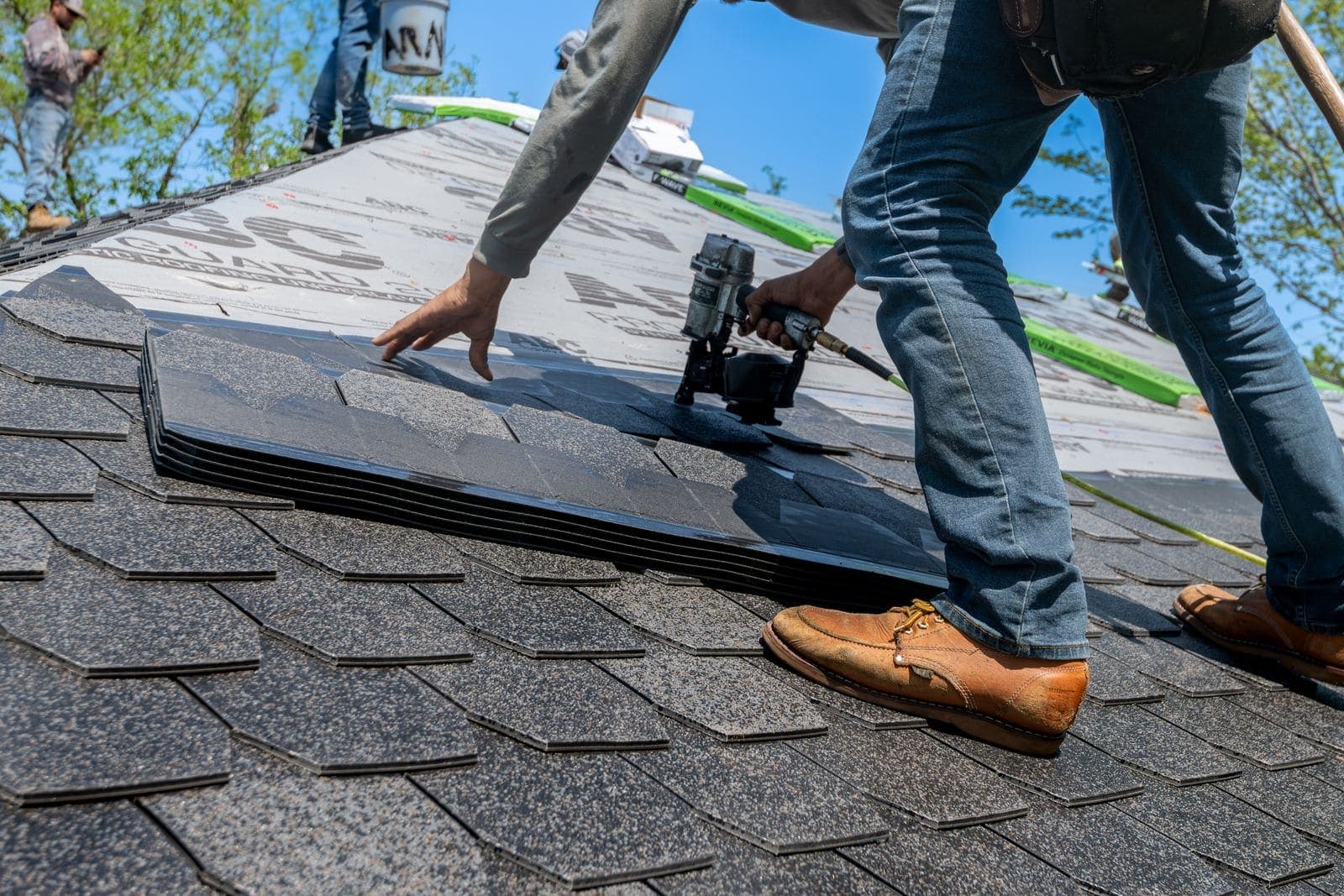
Architectural asphalt shingle installation on multifamily is a project-management discipline as much as a trade discipline. The work is noisy (nail guns, hammer impact), the debris is significant (old shingle removal, granule runoff), and the timeline typically runs 1-3 days per building on garden-style multifamily. Our multifamily shingle replacement process:
- Phased per-building production schedule distributed to leasing and operations teams
- Tenant-notice templates seven-plus days ahead of each building's turn
- Daytime noise-window discipline respecting quiet hours
- Walkway safety fencing and debris-chute containment during tear-off
- Parking-lot staging coordination with property management
- Daily dry-in protocol so buildings are never exposed to overnight weather
- Per-building photo-documentation for the closeout package
For the adjacent service conversations, see our multifamily roofing service, commercial roof replacement service, roof inspection service, and storm damage service. For the flat-roof-system alternatives commonly paired with shingle on multifamily, see our flat-roof systems material page. For market-specific context, see our Atlanta commercial roofing, Birmingham commercial roofing, and Huntsville commercial roofing pages.
Not sure if this material is on your building?
Use our Roof Type Identifier to narrow it down, then request a no-obligation inspection for definitive identification.
Frequently Asked Questions
How long does an architectural asphalt shingle roof last?
What is UL 2218 Class 4 impact rating?
Do Class 4 shingles cost more than standard architectural?
What's the difference between 3-tab and architectural shingles?
Why is architectural shingle the default on multifamily?
How does hail affect asphalt shingle roofs?
Can asphalt shingles be installed over an existing shingle roof?
What are the common asphalt shingle failure modes?
Do you install asphalt shingles on multifamily across metro Atlanta?
How does attic ventilation affect shingle lifespan?
Thinking about Asphalt Shingle Roofing for Commercial & Multifamily for your property? We inspect and document your current system - no-obligation, with a photo-keyed report for lender, carrier, or asset-manager review.
Request Inspection