The Three Tile-Roofing Families
Tile roofing across the Southeast falls into three material families: clay tile, concrete tile, and synthetic (polymer composite) tile. Each family has distinct lifecycle, aesthetic, cost, and installation characteristics.
Clay Tile
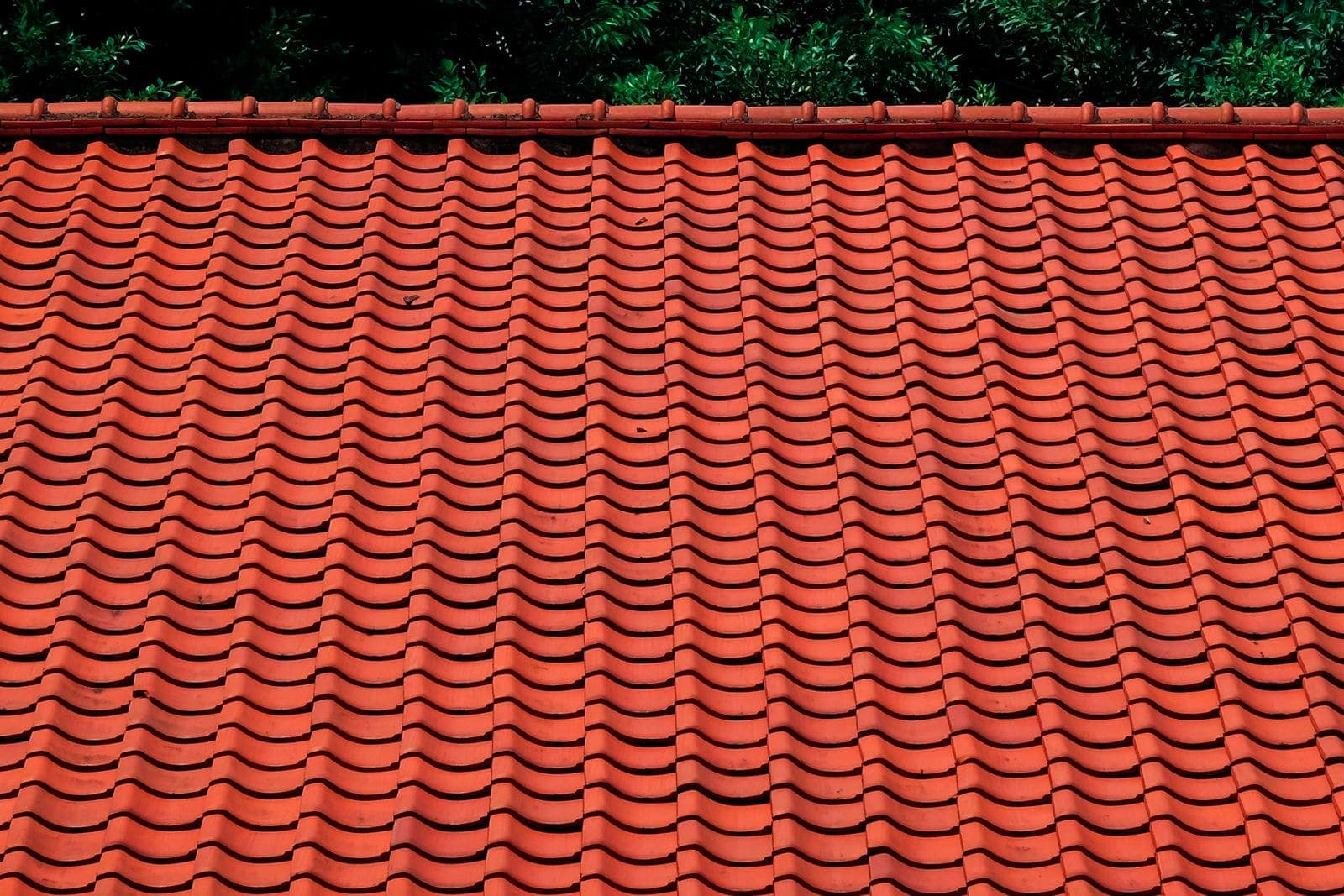
Clay tile is the original tile-roofing material with multi-century documented service life. Traditional Mediterranean and Spanish architectural profiles - S-curve "Mission," flat "French," interlocking "Roman," and variants - all originate in clay tradition. Modern clay tile manufacturers produce extensive profile and color ranges with consistent dimensional tolerances.
Strengths: Extremely long service life (50-100+ years), authentic Mediterranean aesthetic, strong weathering performance, color stability across the tile's service life, fire resistance, and distinctive architectural specification value. Failure modes: Individual tile breakage from foot traffic or impact, brittleness under severe impact (hail, wind-driven debris), high material cost, heavy dead-load requiring structural engineering, and underlayment degradation below the tile that often drives the first major rework.
Concrete Tile
Concrete tile emerged in the 20th century as a lower-cost alternative to clay. Modern concrete tiles are factory-molded cement-and-sand composites with surface coloring. Profile range is broader than clay (flat-profile, low-barrel, high-barrel, shake-style imitations are all available), and material cost is lower.
Strengths: Shorter but still substantial service life (30-50 years), broader profile and color range than clay, lower material cost than clay, fire resistance, and structural strength. Failure modes: Color fading over time (particularly on painted-surface tiles), individual tile breakage, similar underlayment-degradation pattern as clay, and moss/algae growth in humid climates without periodic cleaning.
Synthetic (Polymer Composite) Tile
Synthetic tile uses polymer composite materials engineered to mimic clay, concrete, slate, or shake appearance. Weight is significantly lower than clay or concrete - often in the 200-400 lb per roofing square range, which eliminates or reduces the structural-load analysis requirement for conversions.
Strengths: Lightweight installation (often compatible with existing structural framing without reinforcement), weathering performance approaching or matching concrete, lower cost than clay, and aesthetic flexibility. Failure modes: Younger product category with shorter field-verified service history than clay or concrete, UV degradation on some earlier formulations, and sometimes-lower fire-resistance rating than mineral-based tile.
Where Tile Roofing Fits in Southeast Commercial Specifications
Tile roofing is a niche but meaningful specification in the Southeast commercial and multifamily footprint. Its sweet spots:
- Upscale and luxury multifamily - Class-A multifamily with Mediterranean or Spanish architectural positioning. Metro Atlanta examples exist across Buckhead, Alpharetta, and Johns Creek.
- Boutique and historic hospitality - Savannah historic-district hospitality, Charleston-area Low Country restoration, Mobile Bay and Fairhope historic properties.
- Gulf Coast and coastal architectural - Alabama Gulf Coast hospitality and upscale architecturally-detailed multifamily where Mediterranean aesthetic and coastal architectural tradition align.
- Institutional and academic - some institutional commercial (church complexes, private school campuses, university historic buildings) specifies tile for architectural continuity with existing structures.
- Premium commercial restoration - historic commercial stock with original tile being restored rather than replaced with modern alternatives.
Mainstream Southeast commercial specification - metro Atlanta office parks, Birmingham I-459 industrial, Huntsville Research Park, Mobile port-adjacent industrial, standard multifamily - rarely defaults to tile. Asphalt shingle (pitched multifamily and small commercial) and single-ply TPO/EPDM (flat commercial) dominate those specifications for cost and practical reasons.
Structural-Load Considerations for Tile Conversions
A property designed for asphalt shingle cannot receive a clay or concrete tile replacement without structural engineering analysis and, typically, structural reinforcement. The weight differential (250-350 lb per square for asphalt shingle versus 800-1100 lb per square for clay or concrete tile) is significant - a 3,000 square foot roof that carries roughly 10,000 lb of asphalt-shingle dead load would carry 27,000-33,000 lb of tile dead load. Most building structures not originally engineered for tile cannot support the additional load without rafter, truss, or bearing-wall reinforcement.
Tile conversion projects require:
- Licensed structural engineer analysis of existing structural framing
- Load calculations against current ASCE 7-16 standards
- Reinforcement design where existing framing is inadequate
- Coordination between the roofing contractor and the structural engineer
- Typically permit submittal with engineered drawings stamped by the licensed engineer
- Inspection and approval of structural modifications before roof installation
These requirements add significantly to project timeline and cost. Many tile-conversion conversations end with a synthetic-tile specification instead - lightweight synthetic composites that mimic clay or concrete appearance without triggering structural analysis.
Tile Roof Underlayment - The Hidden First-Failure Point
Tile itself can last 50-100+ years, but the underlayment below the tile often requires replacement every 20-30 years even when the tile itself remains serviceable. Underlayment degradation is the most common tile-roof first-failure point - and because the tile hides the underlayment from visible inspection, underlayment failure is often detected only when water intrusion reaches interior symptoms.
Modern tile underlayment specifications include:
- Synthetic underlayment (polypropylene or polyester) - the modern standard, with service life matching or exceeding 30 years
- Ice-and-water shield in valleys, eaves, and penetration zones
- Secondary waterproofing membrane below the tile for high-performance applications
- Compatible flashing systems at valleys, penetrations, ridges, and hips
Tile-roof inspections should evaluate underlayment condition where accessible - typically through tile lifting in small areas to expose the underlayment for visual assessment. Core samples are less common on tile roofs than on flat commercial because lifting tiles is a reversible, non-destructive inspection methodology.
Common Tile Repair Scopes
Most tile-roof issues we encounter are repair-scope rather than replacement-scope. Common repairs:
- Individual tile replacement - broken, cracked, or missing tiles replaced with matching profile and color. Keeping a stock of original tiles from the original installation (or accessing the manufacturer's current line if the original is still produced) preserves aesthetic continuity.
- Underlayment renewal in specific sections - where underlayment has failed in a bounded area, tile can be carefully lifted, underlayment replaced, and tile re-set.
- Flashing rework at penetrations and valleys - the most common tile-roof leak source. Flashing rework is a targeted scope that doesn't require tile replacement.
- Ridge and hip tile re-setting - mortar or cement at ridge and hip tiles degrades over time. Re-setting the ridge/hip tiles with appropriate modern materials addresses this common failure.
- Mortar repair on cemented profiles - traditional clay tile installations with mortared ridges and hips often require periodic mortar repair.
For the adjacent service conversations, see our commercial roof replacement service, roof inspection service, roof repair service, and storm damage service. For the alternative material specifications commonly paired with or substituted for tile, see our metal roofing material page and flat-roof systems material page. For market-specific context, see our Atlanta commercial roofing, Savannah commercial roofing, and Mobile commercial roofing pages.
Not sure if this material is on your building?
Use our Roof Type Identifier to narrow it down, then request a no-obligation inspection for definitive identification.
Frequently Asked Questions
How long does a tile roof last?
What's the weight difference between tile and asphalt shingle?
Where does tile roofing fit in commercial specifications?
Is clay tile or concrete tile better?
Does tile roofing handle hurricane wind?
What are the common tile-roof failure modes?
Can you repair a tile roof or does it require full replacement?
Does Red Door Roofing install tile in Atlanta and Savannah?
What's the difference between tile and slate?
What does tile roof replacement cost?
Thinking about Tile Roofing - Clay, Concrete, and Synthetic Tile for your property? We inspect and document your current system - no-obligation, with a photo-keyed report for lender, carrier, or asset-manager review.
Request Inspection