Why Roof-Replacement Timing Matters on Commercial Solar Projects
Commercial solar PV systems carry 25-year-plus warranty and operational commitments. The underlying roof system should carry matching service life - otherwise the property faces a predictable expensive problem: when the roof reaches end of useful life before the solar array does, the array must come off (at significant cost), the roof must be replaced, and the array must go back on. That sequence is materially more expensive than pre-solar roof replacement and represents one of the most avoidable cost exposures in commercial CapEx planning.
The sequencing math is straightforward. A typical 500-kW commercial rooftop solar array represents a $500,000-plus capital investment. Array removal, storage, and reinstallation during an unplanned roof replacement mid-solar-life typically runs $50,000-$200,000 depending on system size and complexity - a 10-40% premium on top of the roof replacement cost itself. When that entire premium could have been avoided by replacing the roof before the solar array went on, the pre-solar roof replacement conversation becomes the responsible capital-planning move.
Our commercial and multifamily clients across metro Atlanta, Birmingham, Huntsville, Mobile, Montgomery, and the broader Georgia/Alabama footprint increasingly engage roof-replacement conversations with solar-readiness as an explicit specification criterion. Property owners evaluating solar PPA arrangements, owner-financed solar installations, or Georgia Power / Alabama Power commercial solar programs all benefit from documented solar-ready roof specifications before the array contractor arrives.
The Solar-Ready Commercial Roof Specification
A solar-ready commercial flat-roof specification involves five coordinated decisions:
1. Membrane System and Thickness
Reinforced TPO or PVC in 80-mil or 90-mil thickness is the dominant new-commercial solar-ready specification. Membrane thickness matters for three reasons: puncture resistance against solar-install foot traffic, durability under array-maintenance activity over 25+ years, and longer service life matching the solar array's operational expectation. Standard 45-mil or 60-mil TPO is acceptable for most commercial but represents lower durability margin under solar activity. EPDM supports solar but with careful seam-integrity management.
2. Attachment Strategy - Ballasted vs Attached
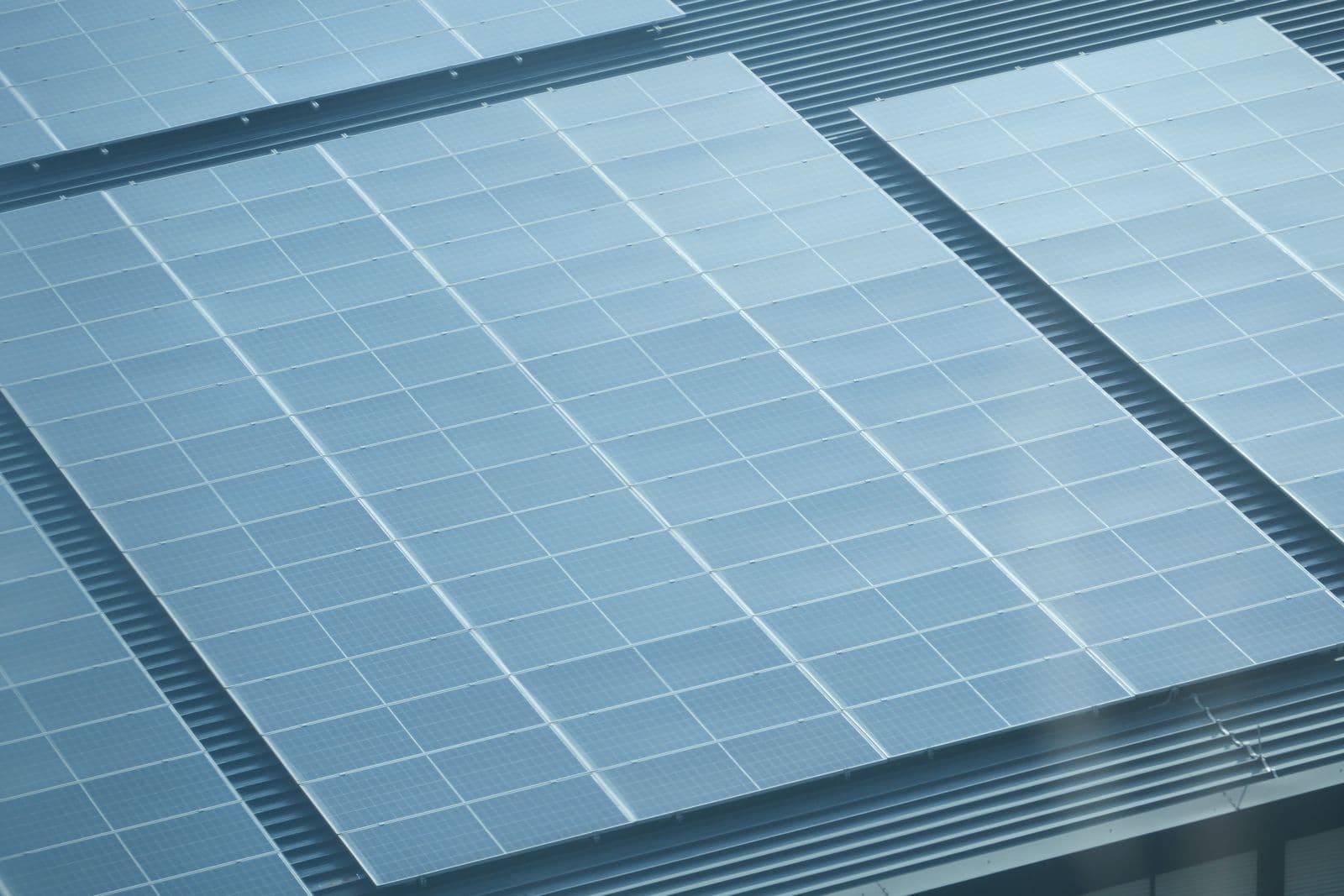
Ballasted solar systems hold the PV array in place with weighted trays or concrete ballast, requiring no roof penetrations. Typical added dead load: 4-6 lb per square foot across the array footprint. Ballasted is common on commercial flat-roof solar because it preserves membrane integrity and simplifies manufacturer-warranty compliance.
Attached solar systems mechanically fasten through the membrane into the deck or structural framing at attachment points. Attached systems provide higher wind-uplift capacity (critical in Gulf Coast and coastal commercial where ballasted may not meet wind-uplift code) and allow array installation on metal or sloped roofs where ballasted is impractical. Attached attachment requires properly-flashed penetrations and increases attention to membrane-manufacturer warranty compliance.
Ballasted vs attached specification depends on structural capacity, wind-uplift requirements, array size, and membrane type. Many commercial solar projects use hybrid approaches - ballasted in most locations with attached at perimeter and corner zones where wind-uplift forces are highest.
3. Structural-Load Analysis
Commercial solar always requires structural engineering analysis. Ballasted systems add 4-6 lb/sqft distributed dead load plus concentrated loads at array perimeter. Attached systems concentrate point loads at attachment locations. Structural engineer review against current ASCE 7-16 or applicable code - existing framing load capacity, wind-uplift force transfer, seismic considerations where applicable - is non-negotiable before array installation.
Older commercial structures not originally engineered for solar loading may require structural reinforcement before solar installation. Costs for reinforcement vary widely depending on existing framing condition and the scope of reinforcement required. Pre-solar roof replacement is the ideal sequencing opportunity to evaluate structural capacity and implement any necessary reinforcement as part of the coordinated scope.
4. Code-Compliance and Permitting
Commercial solar installations require permitting from the local jurisdiction and typically inspection by both building and electrical authorities. Georgia, Alabama, and broader Southeast jurisdictions each have specific permitting workflows. Pre-solar roof replacement can incorporate solar-readiness documentation into the roofing permit package, simplifying the subsequent solar permit.
5. Manufacturer-Warranty Coordination
Commercial roof manufacturer warranties almost universally include specific solar-PV provisions. Approved attachment systems, approved ballast configurations, pre-installation manufacturer coordination, and documented qualified-contractor installation typically preserve warranty coverage. Unapproved installations void warranties - creating significant risk exposure given the 20-30 year warranty value on premium commercial TPO and PVC systems.
The Pre-Solar Roof-Replacement Decision Tree
For commercial property owners evaluating solar PV, the pre-solar roof replacement decision follows a clear analytical path:
- What is the current roof's remaining useful life? Document via professional inspection - drone aerial, IR thermography, moisture survey, core samples, overhead schematic.
- Does the remaining useful life align with the solar array's operational expectation? If the roof has 20+ years of remaining useful life and the solar warranty is 25 years, the alignment is acceptable with planned end-of-cycle coordination. If the roof has less than 15 years remaining, pre-solar replacement is the responsible path.
- What would array removal/reinstallation cost if the roof needed replacement mid-solar-life? Typically 10-40% of original array cost - budget that exposure against the pre-solar roof replacement cost.
- Does the existing structural framing support solar loading? Engineering analysis - if reinforcement is required, coordinating reinforcement with pre-solar roof replacement is significantly more cost-effective than adding reinforcement after the array is installed.
- What membrane specification is best for solar-ready status? Upgrade to 80-mil reinforced TPO or PVC if current spec is lower; maintain on 80-mil+ TPO or PVC if already at that spec tier.
- What attachment strategy fits the array specification and site conditions? Coordinate with the solar contractor to align roof specification with their attachment methodology.
Solar-Active Property Roof Replacement - When the Timing Didn't Work Out
For commercial properties with existing solar PV and a roof requiring replacement, we handle the coordinated scope: working with the property's solar contractor or an independent solar contractor for array removal and reinstallation, performing the roof replacement to specification, sequencing the reinstallation. The process adds meaningfully to project timeline and cost - typically a 20-40% premium over a non-solar roof replacement on equivalent scope. Existing array condition gets documented before removal, membrane replacement proceeds to specification, and the array reinstalls with any necessary updates to attachment hardware.
Not all commercial roofing contractors handle solar-active roof replacement. The scope requires contractor coordination beyond standard commercial roofing, scheduling alignment with the solar contractor's availability, and specific coordination around array-storage logistics during the replacement window.
Georgia and Alabama Solar Market Context
Commercial solar volume across Georgia and Alabama has grown materially over the past decade. Georgia Power's commercial solar programs, Alabama Power's commercial PPA arrangements, independent solar PPA providers, and owner-financed commercial solar installations all drive consistent commercial solar project volume across the footprint. Commercial property owners in metro Atlanta office parks, Birmingham U.S. 280 corridor commercial, Huntsville Research Park, Mobile industrial, and similar commercial inventory routinely evaluate solar as part of operating-cost strategy.
Our solar-ready roof specifications and solar-active roof-replacement capability align with that market reality. Pre-solar roof replacement is a standard conversation across the Georgia and Alabama commercial footprint; solar-active property roof replacement is a specialty scope we regularly handle.
For the adjacent service conversations, see our commercial roof replacement service, roof inspection service, roof certifications service, and storm damage service. For the membrane specifications commonly paired with solar-ready roofs, see our flat-roof systems material page and metal roofing material page. For market-specific context, see our Atlanta commercial roofing, Birmingham commercial roofing, and Huntsville commercial roofing pages.
Not sure if this material is on your building?
Use our Roof Type Identifier to narrow it down, then request a no-obligation inspection for definitive identification.
Frequently Asked Questions
Should I replace my roof before installing solar PV?
What commercial roof systems are best for solar PV?
What's the difference between ballasted and attached solar?
Does solar PV affect the roof warranty?
What structural loading analysis is required for commercial solar?
Can you replace a roof with existing solar PV?
How does solar PV interact with insurance-claim documentation?
What membrane thickness should a solar-ready commercial roof specify?
How does the Georgia and Alabama solar market affect roof specifications?
Do you handle roof replacement on properties with existing solar?
Thinking about Solar-Ready Commercial Roofing - Roof Prep for PV for your property? We inspect and document your current system - no-obligation, with a photo-keyed report for lender, carrier, or asset-manager review.
Request Inspection