
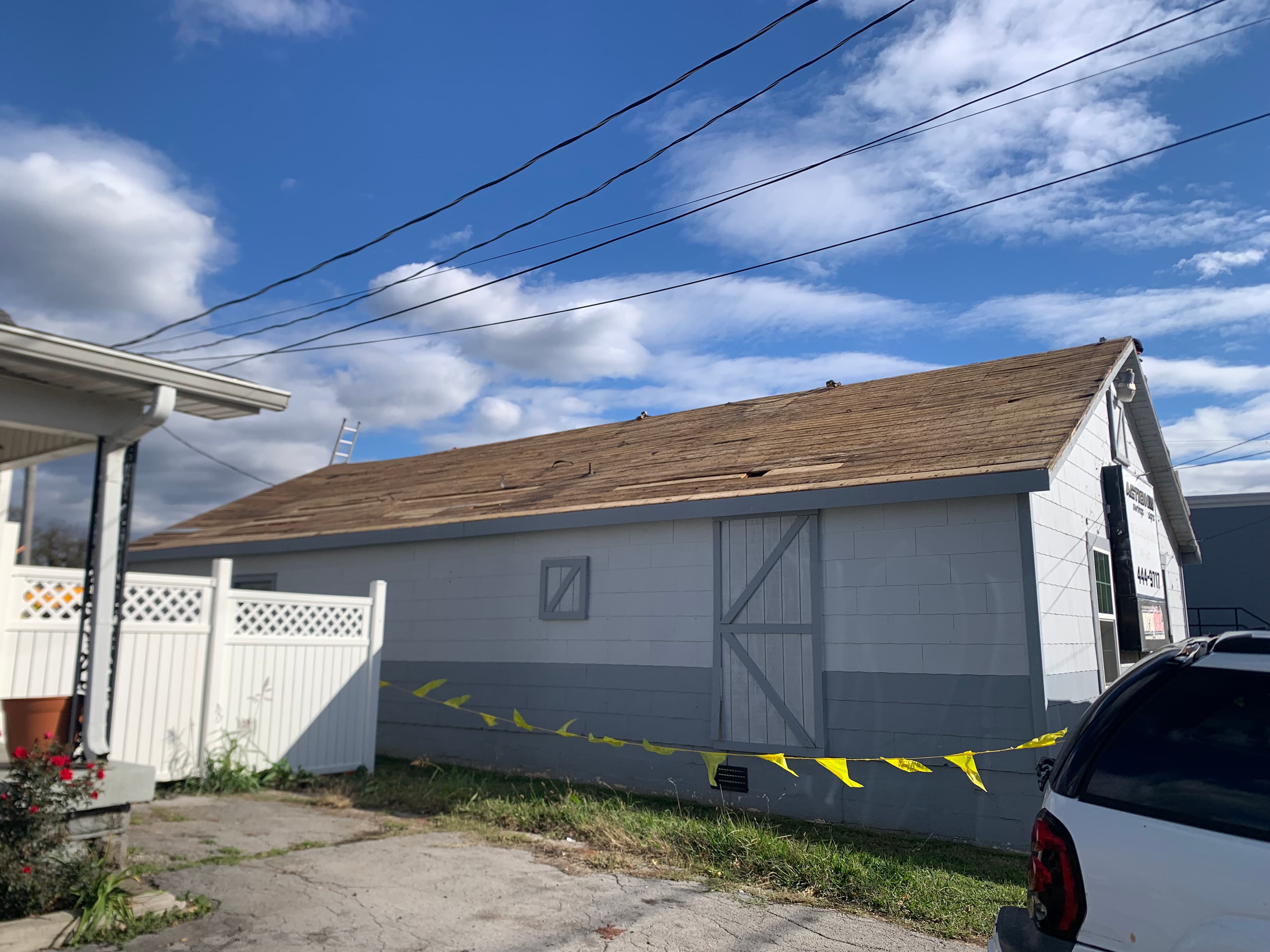
Commercial Roofing in Camden, South Carolina
Inspection, documentation, and insurance-supported roof replacement for commercial and multifamily properties across Camden.
Commercial & Multifamily Roofing Across the Columbia, SC MSA
Red Door Roofing serves commercial, multifamily, hospitality, healthcare, and equestrian-facility property owners across Camden, with concentrated project experience along Broad Street, DeKalb Street, the US-1 and US-521 commercial corridors, the Springdale Race Course adjacent hospitality district, and the MUSC Health Kershaw Medical Center campus. Camden's commercial inventory is shaped by three distinctive assets: the steeplechase hospitality economy built around Carolina Cup, the Kershaw County healthcare network anchored by MUSC Health Kershaw Medical Center, and the historic Broad Street masonry downtown. Our scopes reflect the region's dual exposure to springtime supercells and inland wind remnants of Atlantic-basin named storms, and every inspection is documented with a photo-keyed PDF tied to a scaled roof diagram. When no damage is found we issue a Certificate of Clearance. We are licensed through the Red Door family of companies' South Carolina general contractor credential.
Red Door Roofing serves commercial, multifamily, hospitality, healthcare, and equestrian-facility property owners across Camden and the Kershaw County market, the oldest inland city in South Carolina with a founding date of 1732 and a commercial identity that has been shaped for more than a century by the Springdale Race Course, the Carolina Cup steeplechase, and the associated equestrian-hospitality economy. Our crews document every inspection with photo-keyed PDF reports tying wind-uplift findings, hail-bruise patterns, ponding measurements, flashing conditions, and penetration integrity to scaled roof diagrams so property managers, lenders, and carrier desk adjusters can evaluate the assembly without climbing the ladder themselves. Camden's commercial footprint is defined by a distinctive combination of assets: the Springdale Race Course and its event-weekend hospitality infrastructure, the MUSC Health Kershaw Medical Center formerly KershawHealth network that anchors the county's healthcare economy, the US-1 and US-521 commercial corridors, the historic Broad Street downtown with its early-twentieth-century masonry buildings, and a growing inventory of equestrian-facility barns, training centers, and boarding operations with specialty long-span metal and steep-slope assemblies. Our scopes consistently account for the unique demands of steeplechase-weekend and training-season hospitality: no disruptive work during event windows, vibration-sensitive staging near equestrian operations, and specialized metal-roof maintenance protocols for long-span barn and arena assemblies. Camden's building stock trends toward early-twentieth-century historic Broad Street masonry, mid-century ranch-style commercial on US-1, and newer medical and ambulatory construction near the hospital campus. Every proposal references Kershaw County or City of Camden permitting pathways, historic-district review where applicable, and the manufacturer-specific wind-uplift classification for the installed assembly. When our post-event inspection finds no storm-related damage we issue a photo-documented Certificate of Clearance. Red Door Roofing is licensed through our family of companies' South Carolina general contractor credential.
Camden Business Parks & Office Districts We Serve
Our commercial roofing work in Camden concentrates around the metro's largest office parks and corporate districts. Each of these business parks contains multiple commercial and mixed-use tenants where tenant-in-place scheduling, after-hours production windows, and coordinated material staging matter as much as the roof scope itself. Commercial-grade flat roof systems and pitched multifamily assemblies are both well represented across these parks - our inspections walk every roof section, every transition, and every drain to build a complete condition document suitable for carrier, lender, and asset-manager review.
- MUSC Health Kershaw campus adjacent corridor
- Springdale Race Course hospitality cluster
- Broad Street historic commercial
- DeKalb Street professional offices
- US-1 commercial frontage
- US-521 logistics node
- Liberty Hill business park
- Camden Industrial Park
Primary Camden Commercial Corridors
Camden's commercial and multifamily stock clusters along a handful of primary corridors. Our inspection and replacement work tracks along these corridors where commercial density, tenant complexity, and storm exposure concentrate. Routing and material staging around these corridors is part of every Camden project plan - peak commuter hours, event calendars, and fire-lane requirements all factor into how we schedule.
- Broad Street historic downtown
- DeKalb Street commercial
- US-1 retail spine
- US-521 commercial
- Springdale Drive hospitality
- West DeKalb Street professional
Camden Multifamily Districts
Multifamily roof replacement demands phased scheduling so tenants stay in place. Our work across Camden's multifamily districts follows building-by-building production schedules with tenant-notice templates and noise-window coordination per property. Asset managers receive portfolio-level closeout documentation; property managers receive a phased Gantt-style schedule they can share with residents and operations teams; leasing teams receive advance notice for unit-turn and move-in coordination.
- US-1 multifamily
- West DeKalb garden-style
- Springdale adjacent
- Camden central multifamily
- Kershaw Road apartments
Camden Storm & Severe-Weather History
Camden experiences a bimodal severe-weather pattern. The springtime supercell window runs from mid-March through mid-May with pea-to-quarter hail and microburst straight-line wind the dominant commercial-roof threats. The Atlantic named-storm window runs from late August through early October and produces the largest single-event wind loading. Open-terrain equestrian training fields on the west side of Camden carry documented wind-fetch amplification that accelerates long-span metal roof fastener fatigue. Our Camden inspection backlog typically peaks immediately after both windows, and we schedule all post-event walks around the Carolina Cup steeplechase calendar and training-season peak windows to avoid equestrian-operations disruption.
Camden sits in the South Carolina midlands and eastern piedmont bimodal severe-weather corridor with documented exposure to springtime supercells tracking east across Kershaw County from the upstate piedmont and to the inland wind remnants of Atlantic-basin named storms pushing northwest from the South Carolina coast. Regional reference events include the 2016-10-08 Hurricane Matthew tropical-storm-force wind event, the 2018-09-14 Hurricane Florence major Pee Dee and eastern midlands impact with multi-day wind loading and freshwater flooding that saturated Wateree River basin commercial basements and exposed chronic ponding on aging tapered-insulation systems, the 2019-09-05 Hurricane Dorian outer-band exposure, the 2022-09-28 Hurricane Ian remnants that produced wind gusts across Kershaw County, the 2023-08-30 Hurricane Idalia inland track, and the 2024-09-26 Hurricane Helene event that drove the most significant interior South Carolina wind damage in recent memory with widespread Kershaw County power loss, tree-impact roof damage on historic Broad Street masonry buildings and equestrian barn assemblies, and accelerated discovery of latent single-ply seam failure on newer medical and retail assemblies. Springtime supercells routinely produce pea-to-quarter hail and microburst straight-line wind across the US-1 and US-521 commercial corridors, and the open-terrain equestrian training fields on the west side of Camden carry documented wind-fetch amplification that accelerates long-span metal roof fastener fatigue. Our inspection backlog typically peaks from mid-March through mid-May and again from late August through early October. We schedule all post-event walks around the Carolina Cup steeplechase calendar and training season. Our documentation workflow keys every finding to the date of loss so carrier adjusters can cross-reference NOAA Storm Events Database entries, regional ASOS wind observations, and radar-derived hail swath estimates. Carrier determinations are always at the carrier's sole discretion.
Notable documented Camden-area events
2018-09-14 · Hurricane Florence
Major Pee Dee and eastern midlands impact with multi-day wind loading and freshwater flooding. Saturation of Wateree River basin commercial basements and ponding documentation on aging tapered-insulation systems.
2019-09-05 · Hurricane Dorian
Outer-band exposure with wind gusts and tree-fall roof impact across Kershaw County historic masonry stock.
2022-09-28 · Hurricane Ian remnants
Wind gusts across Kershaw County, flashing and edge-metal displacement on equestrian-barn long-span metal assemblies and historic Broad Street masonry buildings.
2024-09-26 · Hurricane Helene
Most significant interior South Carolina wind event in recent memory. Widespread Kershaw County power loss, tree-impact roof damage on historic Broad Street and equestrian barns, and accelerated single-ply seam-failure discovery on newer medical and retail assemblies.
Insurance Process in Camden
Most Camden commercial policies carry percentage wind-and-hail deductibles, typically 1 to 5 percent of insured building value, translating to five- and six-figure out-of-pocket obligations on mid-size equestrian, hospitality, and medical properties. We flag the deductible structure during intake. Named-storm deductibles may layer on top for Atlantic-basin events. The carrier makes the final determination on coverage and scope.
Camden hospitality and medical-office lenders routinely require third-party commercial roof condition reports with remaining-useful-life estimates at refinance. Our photo-keyed PDF format meets typical agency, CMBS, and hospitality-franchise servicer documentation requirements.
Commercial Roof Systems Common in Camden
Historic Broad Street masonry runs legacy built-up and modified-bitumen. Mid-century US-1 commercial runs modified-bitumen and early-generation single-ply. Newer medical and retail runs mechanically-attached TPO or PVC with tapered polyiso. Equestrian barns and training centers run long-span standing-seam metal on purlin framing with specialty ridge and eave details. Hospitality runs a mix of TPO, standing-seam metal, and steep-slope shingle depending on era.
Camden Landmarks & Properties We've Served Near
Our commercial and multifamily roofing work crosses paths with Camden's most recognizable properties and corridors. These landmarks anchor the commercial districts we work in daily - they're not just tourism references, they're the neighborhoods where property managers ask us to inspect multifamily, retail, hospitality, and office stock.
- Springdale Race Course
- Carolina Cup venue
- MUSC Health Kershaw Medical Center
- Historic Camden
- Broad Street
- DeKalb Street
- Wateree River
- Camden Archives and Museum
Property Types We Serve in Camden
- Springdale Race Course
- MUSC Health Kershaw Medical Center
- Historic Broad Street commercial buildings
- Carolina Cup hospitality cluster
What a Camden Commercial Roof Inspection Includes
Every Camden commercial inspection we perform produces a photo-keyed PDF report built for the way South Carolina adjusters, lenders, and asset managers actually work. We walk the full roof system - every slope, every drain, every penetration, every transition - and document what we see with photos referenced to a building or unit location. No generic stock photos. No marketing filler. Just the evidence a carrier needs to make a scope determination on a real commercial property.
On multifamily buildings we document building-by-building, which matters because a 300-unit Camden complex may show damage concentrated on two of eight roofs. Adjusters want that level of granularity, and the documentation protects the owner from a blanket-scope claim that gets pared back in review.
The inspection report identifies your existing roof system (TPO, EPDM, PVC, modified bitumen, BUR, asphalt shingle, metal, or a mixed portfolio), estimates remaining useful life, flags flashing and penetration condition, and notes any observed damage with date-of-loss alignment where applicable. We also call out situations where we recommend repair rather than replacement - our business is not built on upselling.
Working With Camden Adjusters and Carriers
Most Camden commercial claims don't fail on the damage - they fail on documentation gaps or scope- supplement misunderstandings with the adjuster. Our inspection reports are formatted to match what Camden-area commercial adjusters routinely request: photo-keyed damage evidence, roof-system identification, a priced scope against local labor and material norms, and a repair-vs-replacement recommendation grounded in observed condition.
When an adjuster's initial scope misses legitimate work - underlayment, code-required upgrades, perimeter metal, additional penetrations - we submit a supplement with supporting documentation. Reasonable supplements with good evidence are typically approved. We don't submit questionable supplements, and we don't push scope that wasn't clearly warranted by what we photographed. Camden adjusters are experienced, and credibility is the currency we operate on.
Typical Camden Commercial Roof Project Timeline
A typical Camden commercial roof project runs 30–120 days from inspection to installation completion. Here's how that calendar breaks down on a mid-size property:
- Week 1: on-site inspection, photo-keyed report delivered to owner
- Weeks 2–3: claim filed, adjuster assigned, on-roof walk with adjuster + contractor
- Weeks 3–6: initial scope received, supplement filed for any missed work, approved scope returned
- Weeks 6–10: material procurement, tenant-notice distribution, phased production schedule built
- Weeks 10–16: on-roof production, daily photo documentation, weekly progress check-ins
- Weeks 16–17: final walk, punch-list completion, closeout documentation to lender and carrier
Multifamily properties in Camden with 100–300 units typically run on the longer end of that range; smaller commercial buildings close faster. Material lead times on TPO, EPDM, and PVC are the usual timeline variables. We share a phased Gantt schedule so operations, leasing, and asset-management teams can plan around the work.
Springdale Race Course and Equestrian-Facility Roof Work
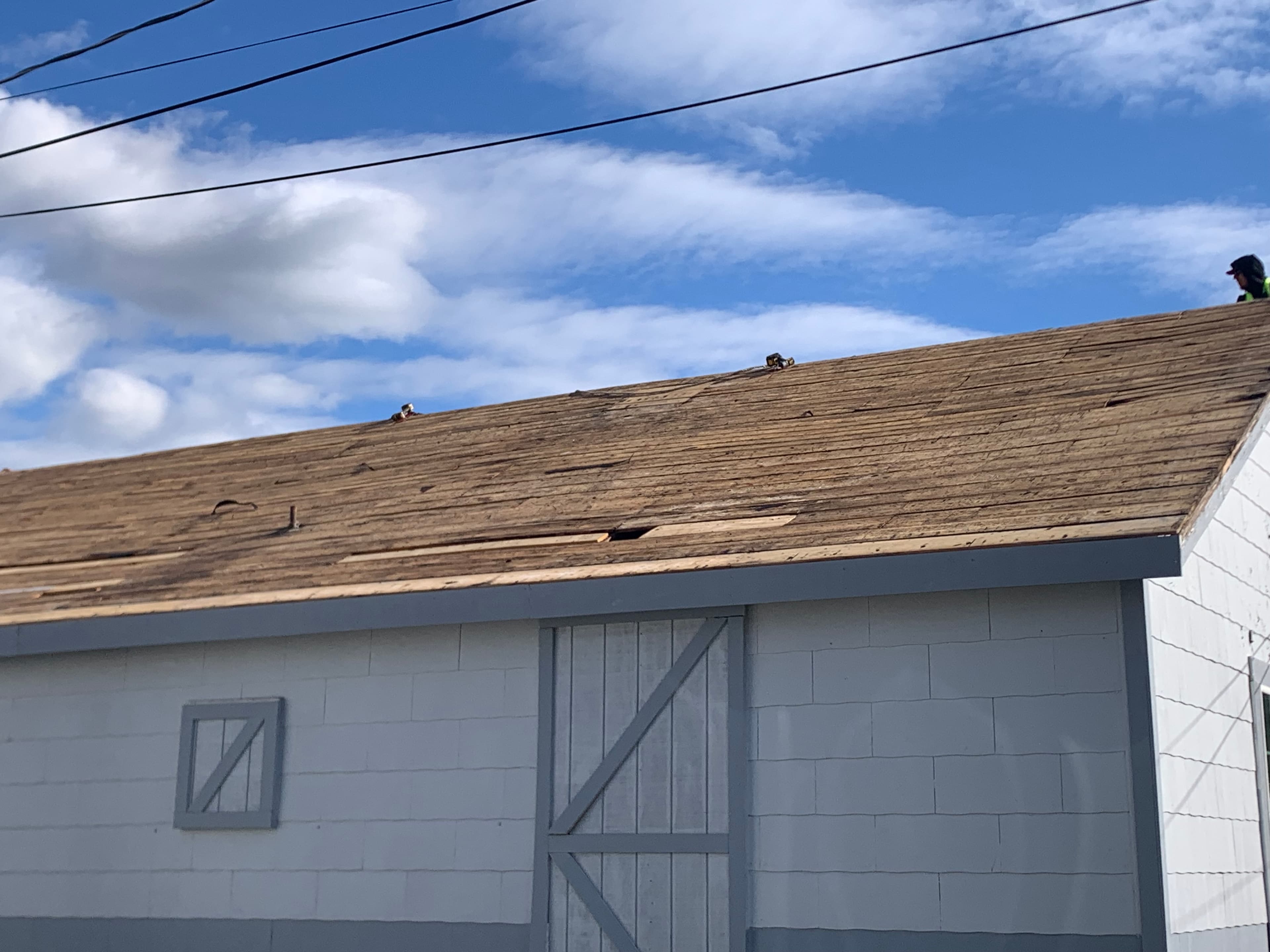
The Springdale Race Course and the surrounding equestrian training, boarding, and hospitality infrastructure represent Camden's most distinctive commercial roofing submarket. Long-span barn and arena assemblies carry standing-seam or agricultural metal on purlin framing, and these assemblies are subject to differential thermal expansion that elongates fastener holes, wind-fetch amplification in open-terrain locations that drives fastener fatigue, and accelerated sealant-bead degradation at every transom and skylight penetration. Our inspection scopes for this submarket include clip-and-fastener audits, specialty ridge and eave detail evaluation, and photo-documented sealant-bead condition at every penetration.
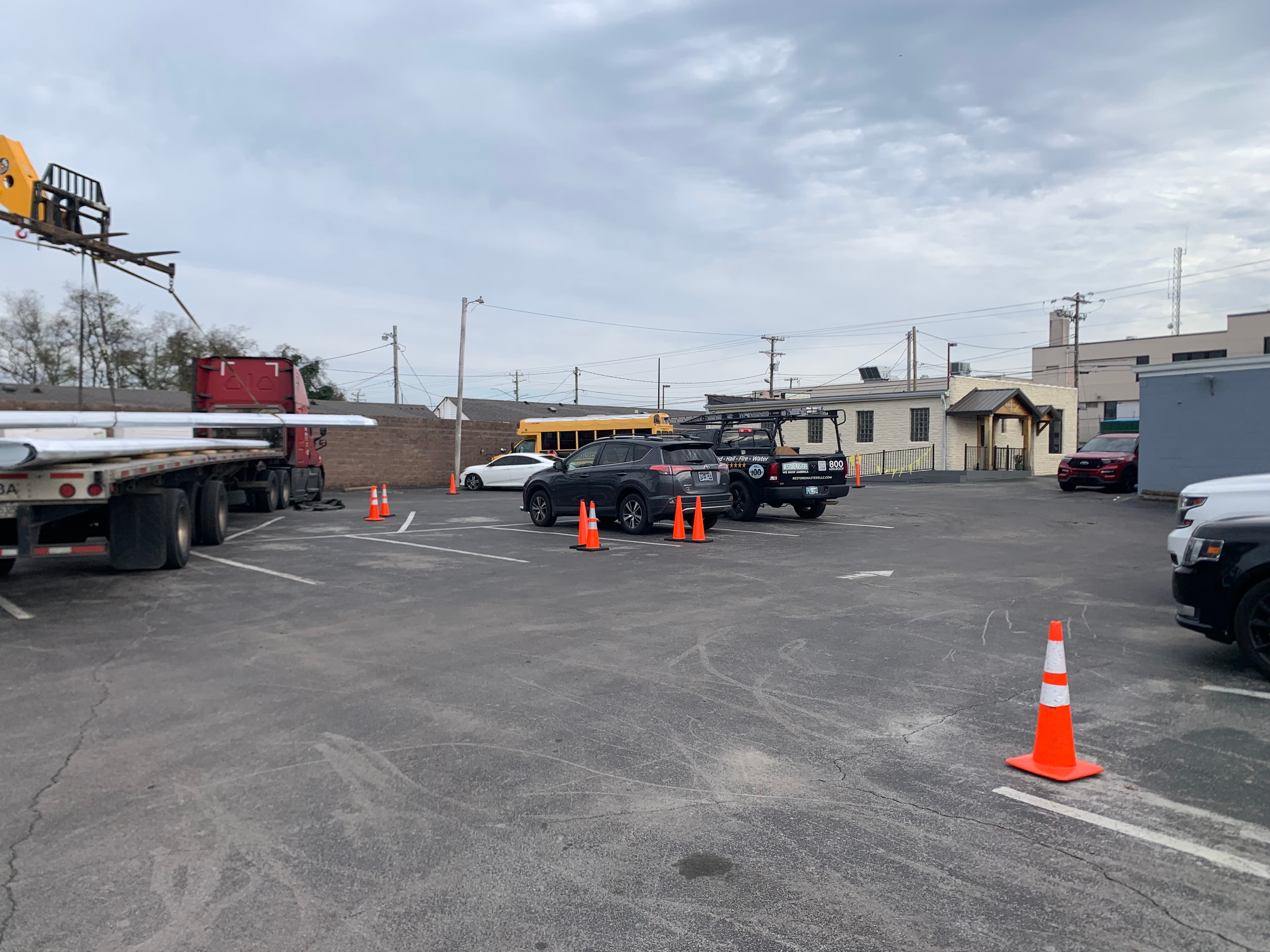
Work is scheduled around the Carolina Cup weekend and the broader steeplechase training and racing calendar to avoid vibration and noise disruption to equestrian operations. We coordinate directly with the facility operator at least 14 days in advance on staging, crane picks, and material delivery windows. The final photo-keyed PDF includes a per-structure as-built record with fastener count, clip replacement log, and sealant-bead refresh documentation so the facility operator has a permanent record suitable for insurance and lender files.
- Clip-and-fastener replacement on elongated holes
- Specialty ridge and eave detail restoration
- Sealant-bead refresh at every penetration
- Work scheduled around Carolina Cup and training calendars
Storm Cadence and Claim Documentation Workflow
Camden's bimodal storm exposure drives two distinct inspection cadences each year. The springtime supercell window from mid-March through mid-May produces pea-to-quarter hail and microburst straight-line wind damage showing up as soft-metal bruising, granule displacement on shingle slopes, fastener displacement on long-span metal, and localized membrane fracture on older single-ply. The Atlantic named-storm window from late August through early October produces the large single-event wind loading that tears edge metal, opens seams, and lifts flashings. Open-terrain equestrian training fields carry documented wind-fetch amplification that drives accelerated long-span metal roof fastener fatigue beyond flat-terrain code assumptions.
Every post-event inspection is documented with a photo-keyed PDF that ties every finding to a scaled roof diagram and to the date of loss. When applicable we supplement the file with NOAA Storm Events Database references, regional ASOS wind observations, and radar-derived hail swath estimates. Adjusters receive the complete package in advance of the ladder-assist walk. Carrier determinations are always at the carrier's sole discretion. We do not guarantee insurance outcomes. Well-documented, date-anchored evidence materially improves the odds that legitimate storm damage is paid.
MUSC Health Kershaw Medical Center Adjacent Commercial Re-Roofs
The MUSC Health Kershaw Medical Center network anchors Kershaw County healthcare and supports a cluster of adjacent professional-office, ambulatory-care, and medical-services buildings that define the commercial healthcare submarket in Camden. Medical tenants require infection-control risk-assessment documentation as a pre-construction submittal, HVAC intake protection during tear-off, and coordination with the practice manager on low-odor adhesive windows and loud-work schedules. Tear-off sequencing is driven by patient-contact hours, and penetration reseals are documented with before-and-after photos tied to the scaled roof diagram in the final PDF.
Our scopes for this submarket consistently include upgraded edge metal to current FM wind-uplift classification, tapered polyiso redesign to correct chronic ponding around HVAC curbs and skylight arrays, and manufacturer-specified warranty registration that matches the building owner's asset-management standards. When our post-event inspection finds no damage we issue a Certificate of Clearance that practice managers and building owners can file without further follow-up. Hospital-affiliated ambulatory buildings under health-system ownership receive our standard third-party commercial roof condition report format as part of the closeout deliverable.
- Infection-control risk-assessment submittal
- HVAC intake protection and low-odor adhesive windows
- Before-and-after penetration-reseal photos
- Certificate of Clearance for no-damage inspections
Why Camden Property Owners Choose Red Door Roofing
30+ years, Red Door family
Built on 30 years of commercial experience across the Southeast. Notable clients include Best Western, Harbor Freight, Tractor Supply, and Vanderbilt Medical Clinic.
Carrier-ready documentation
Photo-keyed inspection reports formatted for Camden-area adjuster and lender workflows. No guarantees on claim outcomes - the carrier calls that.
Tenant-in-place phasing
Multifamily work phased by building block with tenant-notice templates, noise windows, and operations- team documentation. Tenants stay in place.
No-obligation inspection
If our Camden inspection finds no qualifying damage, we issue a Certificate of Clearance - suitable for lender, insurer, and asset-manager files. No further commitment.
Camden Commercial Roofing FAQs
How do you handle equestrian-facility long-span metal roof work?
Do you work around Carolina Cup steeplechase hospitality windows?
Do you coordinate with MUSC Health Kershaw Medical Center for adjacent medical-office roof work?
Can you work on historic Broad Street buildings?
Does Red Door Roofing work on commercial buildings throughout Camden?
What is a Certificate of Clearance and when is one issued?
How does the Camden commercial permitting pathway work?
Do you schedule work around the Carolina Cup and steeplechase season?
What roof systems are most common on Camden commercial buildings?
How do wind and hail deductibles affect Camden commercial claims?
Nearby South Carolina Cities We Also Serve
Our commercial roofing coverage extends across South Carolina. These three Camden-adjacent cities are part of our routine service footprint.
Need a Camden inspection?
Call us directly at 1-855-GO4REDD or request a no-obligation inspection online. Most Camden-area inspections are scheduled within days of the request.
Request InspectionSchedule a Camden Roof Inspection
No obligation. Documented findings you can use for insurance, lender, or asset-manager records.
30+ Years of Red Door Family Experience · 16 States
Free · No obligation · No follow-up sales calls