Where Cedar Fits in Southeast Commercial Specifications
Cedar shake and cedar shingle roofing occupies a distinctive niche in the Southeast commercial and multifamily market. It's not a mainstream commercial specification - asphalt shingle dominates pitched multifamily, TPO dominates low-slope commercial, and metal increasingly specifies newer industrial and premium suburban builds. Cedar specification concentrates in architectural-context applications where the natural aesthetic and premium positioning justify the material premium and maintenance commitment.
Where cedar specification makes sense across our Georgia, Alabama, and broader Southeast footprint:
- Upscale multifamily with architectural positioning - Atlanta Buckhead, Alpharetta, Sandy Springs, and Johns Creek luxury multifamily where tenant expectations and lease-rate premiums align with cedar's distinctive aesthetic.
- Historic-district commercial restoration - Savannah historic district, Charleston Low Country, Mobile historic districts, and Atlanta Inman Park/Virginia-Highland commercial where authentic architectural restoration is the specification driver.
- Institutional commercial - some church, private school, and institutional commercial with Arts-and-Crafts or Colonial Revival architectural context.
- Luxury boutique hospitality - small-footprint hospitality properties with distinctive architectural identity where cedar aesthetic supports the property's market positioning.
- Environmental/sustainability-positioned commercial - properties targeting LEED certification or similar sustainability credentials where cedar's natural/renewable profile contributes to certification targets.
Mainstream commercial specifications - office parks, industrial, warehouse, standard multifamily, mainstream retail, medical commercial - rarely default to cedar. The cost premium, maintenance commitment, and code-compliance complexity (fire-retardant treatment) typically outweigh the aesthetic benefit on mainstream commercial.
Cedar Shake vs Cedar Shingle - The Two Variants
Cedar Shake
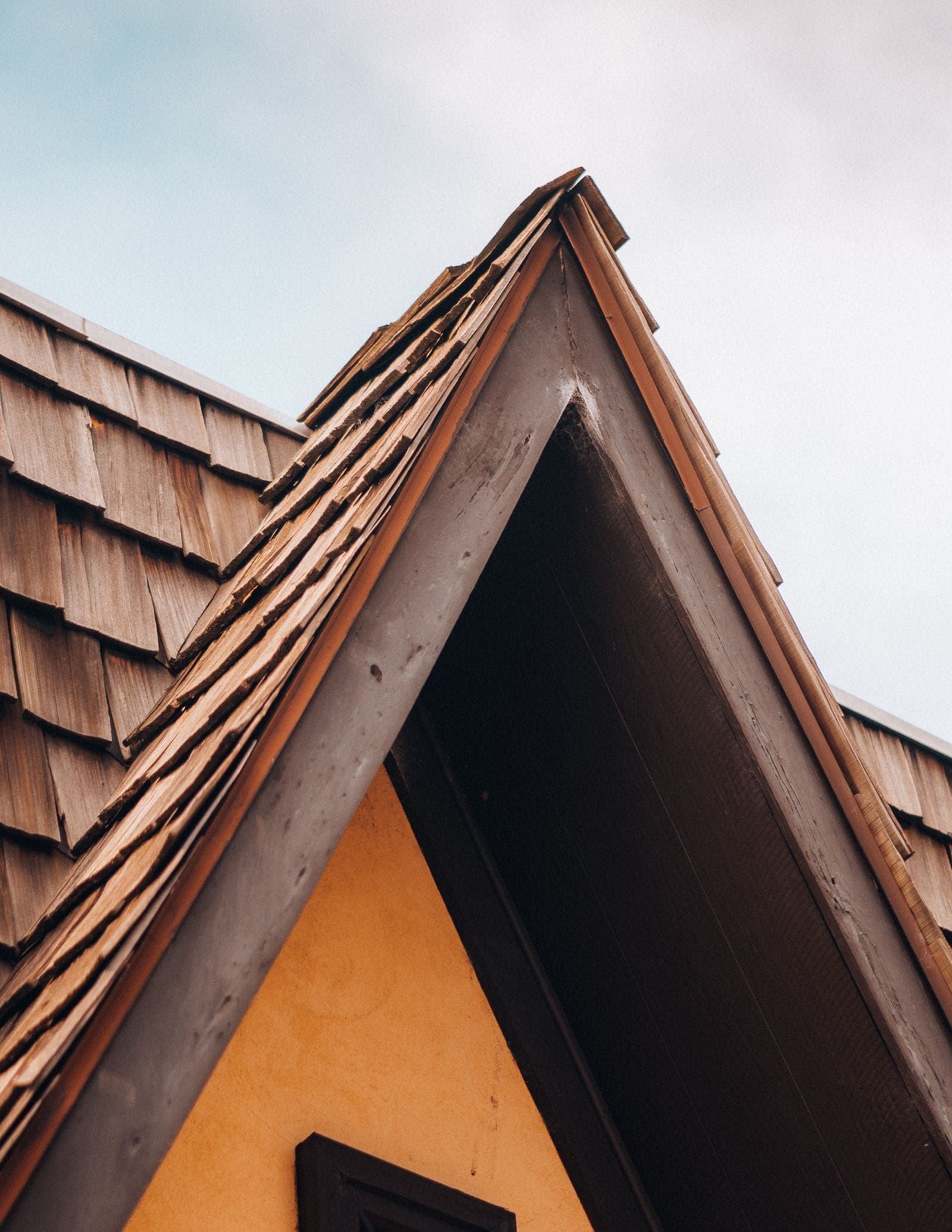
Cedar shakes are hand-split (or machine-split-and-resawn) with a rough, textured face and variable thickness profile - the distinctive rustic appearance that characterizes Pacific Northwest and Rocky Mountain architectural heritage. Split face produces natural variation; resawn backs provide dimensional consistency for installation. Premium hand-split-and-resawn shakes (split face, resawn back) sit at the top of the quality hierarchy.
Strengths: Distinctive rustic aesthetic, dimensional texture creating shadow lines and visual interest, durability from thicker dimension, higher wind-uplift performance than thinner shingles. Trade-offs: Higher material cost than cedar shingles, greater installation complexity due to dimensional variability, heavier weight, and larger shadow-reveal that some architectural contexts consider less refined.
Cedar Shingle
Cedar shingles are sawn on both sides with uniform thickness and smoother face - producing a more refined, tailored appearance common in Northeastern and Colonial Revival architectural tradition. Uniform dimension simplifies installation. Shingles are typically thinner than shakes.
Strengths: Refined aesthetic appropriate for formal architectural contexts, uniform dimension simplifies installation, lower material cost than shakes, lighter weight. Trade-offs: Shorter service life than thicker shakes, flatter profile without the dimensional texture of shakes, more susceptible to wind uplift and hail impact than thicker shakes.
Fire-Resistance Treatment - Code-Compliance Critical
Untreated cedar achieves Class C fire-resistance rating per ASTM E108 testing. Many commercial and multifamily building codes require Class A or Class B roofing material, which untreated cedar cannot satisfy. This is the most common specification barrier to cedar on Southeast commercial.
Pressure-treated cedar with chemical fire-retardant impregnation can achieve Class A or Class B rating. Treatment is applied at the manufacturing facility before delivery, and treated cedar typically costs 20-40% more than untreated. Treated cedar retains fire-resistance rating through the product's service life without requiring re-treatment - the chemical impregnation is a structural treatment rather than a surface coating.
For commercial, industrial, and multifamily projects in Georgia, Alabama, and Southeast jurisdictions requiring Class A or B rated roofing, pressure-treated cedar is a hard specification requirement. Untreated cedar is outside our commercial scope.
The Southeast Humid-Climate Cedar Challenge
Cedar specification in the humid Southeast climate requires honest acknowledgment of the climate-specific challenges. Cedar performs best in dry Western climates (Pacific Northwest, Rocky Mountains, interior West) and temperate Northeast climates with cold winters that discourage biological growth. The humid subtropical Southeast climate presents three specific challenges:
- Accelerated moisture-related degradation. Persistent humidity accelerates cedar's natural weathering process, compressing service life toward the lower end of published ranges.
- Biological growth pressure. Moss, algae, and fungal growth establish more aggressively in humid Southeast conditions. Periodic cleaning and targeted biological-growth treatment become active maintenance items rather than one-time considerations.
- Insect pressure. Carpenter ants, termites, and wood-boring insects in the Southeast present additional pressure on any exposed wood material. Pressure-treated cedar with borate or equivalent insect-resistance treatment addresses this; untreated cedar does not.
For architectural specifications where cedar is the aesthetic priority, these challenges don't disqualify the material - they raise the maintenance commitment and specification care. We set honest expectations with property owners about the ongoing maintenance cadence any Southeast cedar roof requires.
Cedar Roof Maintenance Requirements
Cedar roofs require more active maintenance than asphalt, metal, or tile systems. Standard maintenance items:
- Annual inspection for cracked, split, or weathered shakes/shingles requiring replacement
- Biological growth treatment (moss/algae removal) at 2-5 year cycles depending on tree canopy exposure and climate
- Selective shake/shingle replacement of individual weathered or damaged pieces
- Resealing at penetrations and flashings - HVAC curbs, vents, pipes, skylights
- Roof cleaning at 3-7 year cycles to remove debris, growth, and weathering residue
- Moisture inspection after major weather events
- Ventilation inspection - cedar roof performance depends materially on appropriate attic ventilation below the roofing
Neglected cedar degrades significantly faster than actively maintained cedar. Property managers and asset managers on cedar-roofed commercial properties benefit from a documented annual maintenance cadence.
Wind, Hail, and Hurricane Performance
Cedar performance under wind is generally strong on properly-installed systems with appropriate fastening. The textured face reduces wind uplift compared to smooth surfaces. Shake thickness and fastening pattern determine specific wind-uplift rating. Gulf Coast and coastal applications require enhanced fastening specifications for hurricane exposure - typically specified to ASCE 7-16 or higher wind-uplift standards.
Cedar performance under hail is variable. Larger hail stones (1.25+ inch) can split cedar shakes along the grain, particularly on older weathered material where grain structure has dried and cracked. Commercial insurance treatment of hail damage on cedar follows similar patterns to asphalt shingle - documented damage pattern determines claim scope, with carrier determination on coverage.
For market-specific context on Southeast commercial roofing, see our Atlanta commercial roofing, Savannah commercial roofing, and Birmingham commercial roofing pages. For the adjacent material specifications commonly compared with cedar, see our asphalt shingle material page, metal roofing material page, and tile roofing material page. For the related service conversations, see our commercial roof replacement service, roof inspection service, and roof repair service.
Not sure if this material is on your building?
Use our Roof Type Identifier to narrow it down, then request a no-obligation inspection for definitive identification.
Frequently Asked Questions
How long does a cedar shake roof last?
What's the difference between cedar shake and cedar shingle?
Is cedar shake a good choice for Atlanta, Savannah, or Charleston commercial?
Do cedar roofs require fire-resistance treatment?
What's the maintenance requirement for cedar roofs?
Can cedar roofs be repaired or do they require full replacement?
How does cedar handle hail and wind in Georgia and Alabama?
What does a cedar shake roof cost?
Does Red Door Roofing install cedar shake in the Southeast?
What are the environmental and sustainability considerations?
Thinking about Cedar Shake and Cedar Shingle Roofing for your property? We inspect and document your current system - no-obligation, with a photo-keyed report for lender, carrier, or asset-manager review.
Request Inspection