A maintenance plan is cheaper than an emergency — here's how to build one
The most expensive roof call we get is the one that starts with "water is coming through the ceiling right now." That call almost always traces back to something we would have caught and fixed for a few hundred dollars six months earlier — a drain that backed up, a flashing lap that opened up, a pipe boot that dried out and cracked. Emergency repairs cost more because they happen fast, often require premium scheduling, and by the time you're making that call the interior damage is already compounding.
A commercial roof maintenance plan doesn't prevent every problem. But it catches problems when they're still small. For Huntsville property managers running office stock in Cummings Research Park, multifamily near Redstone, or any of the light industrial and medical-adjacent product along the Memorial Parkway corridor, a documented plan is one of the cleaner ways to manage roof risk across a portfolio without surprises.
Here's how we approach building one.
What a plan actually contains
A commercial roof maintenance plan isn't a handshake and an annual visit. It's a documented agreement that covers:
- Visit frequency and timing — when you're going, and why those dates
- Scope of each visit — what gets inspected, cleaned, and repaired
- Minor repair allotment — what's included versus what triggers a separate repair work order
- Condition reporting format — how findings get documented and delivered
- Escalation path — what happens when a maintenance visit finds something bigger than the allotment
That last piece matters more than most PMs realize. A plan without a clear escalation path just creates confusion when the inspector finds something significant.
Setting the right visit frequency for Huntsville
North Alabama sits squarely in a spring hail corridor. The Madison County area sees meaningful hail events most years — not every storm makes the news, but 1" hail on a TPO or EPDM membrane will accelerate seam fatigue and puncture boots over time. That exposure pattern is why we typically recommend semi-annual visits for Huntsville commercial: one visit in spring after severe weather season wraps up, and one in fall before winter.
Spring visit catches: hail damage, debris accumulation from storms, any seam or flashing movement that happened under thermal cycling during winter, drain screens that got clogged by spring tree debris.
Fall visit catches: summer UV degradation on southern exposures, HVAC-adjacent membrane wear from mechanical traffic, any drainage issues before the heavier rain and occasional ice events that come with north Alabama winters.
A single annual visit works for lower-exposure properties with newer roofs and lighter mechanical traffic. But if you're managing technical commercial in Research Park with rooftop mechanical arrays, or multifamily with regular rooftop HVAC service by multiple vendors, semi-annual is worth the cost.
The core scope of each maintenance visit
Every visit should work through the same checklist so you can compare condition reports year over year. The scope we run on Huntsville accounts covers:
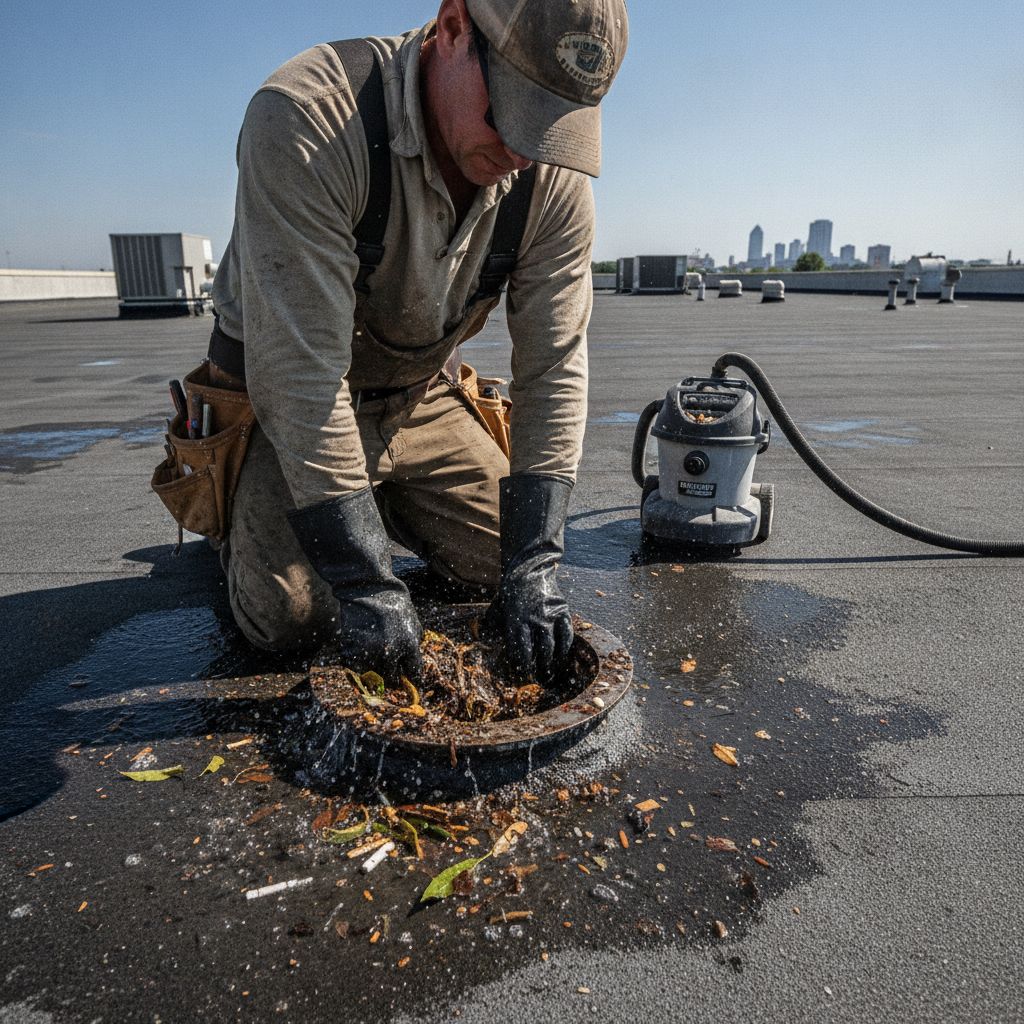
Drainage. Interior drains cleared of debris, drain screens inspected and reinstalled, scuppers and overflow scuppers checked for blockage. A flat roof in north Alabama that can't drain fast enough during a May storm will pond water that has nowhere to go — and ponding finds every weak point in a membrane.
Seam and flashing examination. Every linear foot of membrane seam, every termination bar, every penetration flashing. On TPO roofs — which are common on the Research Park office-park stock — seam integrity is the main vulnerability. On older built-up or modified bitumen roofs you'll find more parapet flashing movement.
Penetration checks. HVAC curbs, pipe boots, vent stacks, skylights. These are where water gets in. A boot that was fine two years ago may be cracked now from UV exposure and thermal cycling.
Debris removal. Equipment caps that blow off, tree debris, anything that's sitting on the membrane and holding moisture or hiding damage underneath.
Minor repair work. Sealant renewal at penetrations and terminations, small patches within the allotment, drain screen reinstallation — work that takes an hour or less per item and doesn't require a separate mobilization.
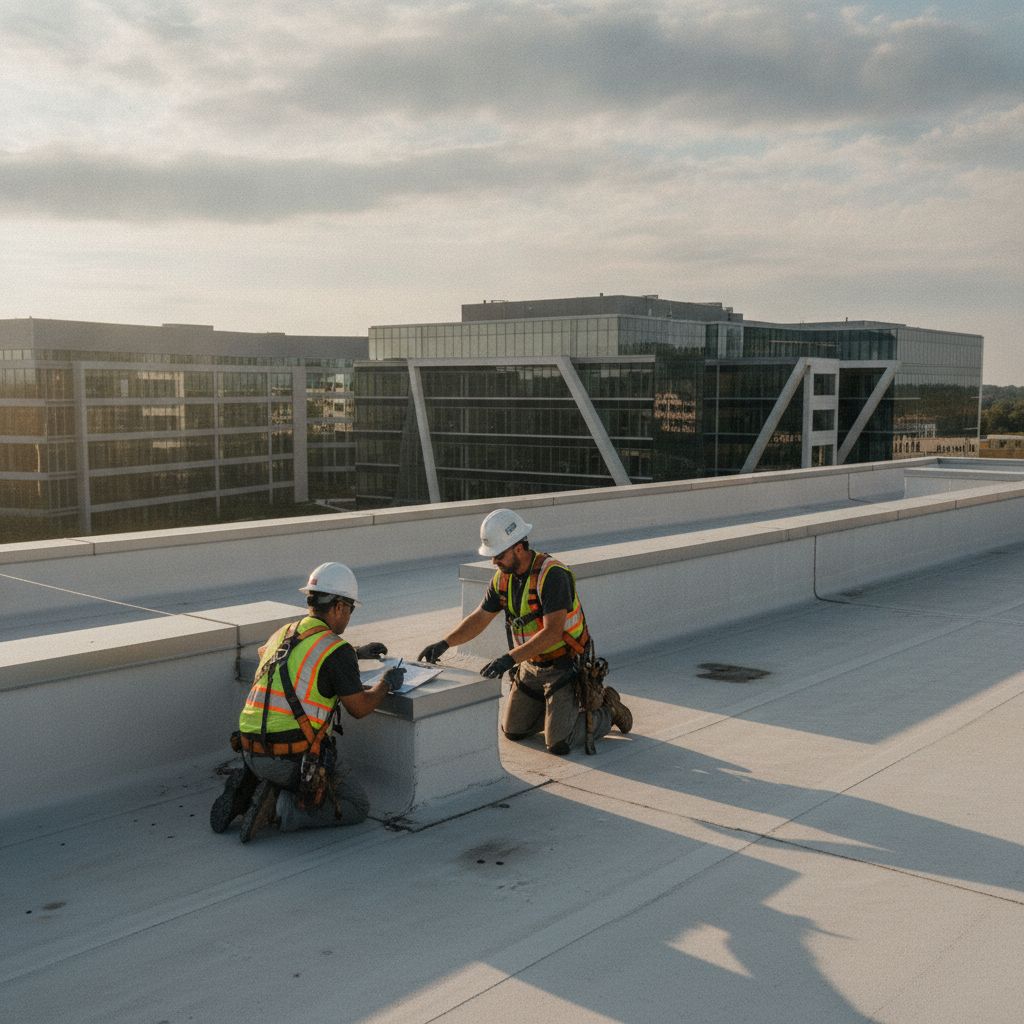
Photo-documented condition report. Every slope, every problem area flagged in the spring or prior visit, formatted as a PDF that goes into your property file. This is what protects you when a tenant files a water-damage claim and wants to know what the roof condition was.
Building the escalation path
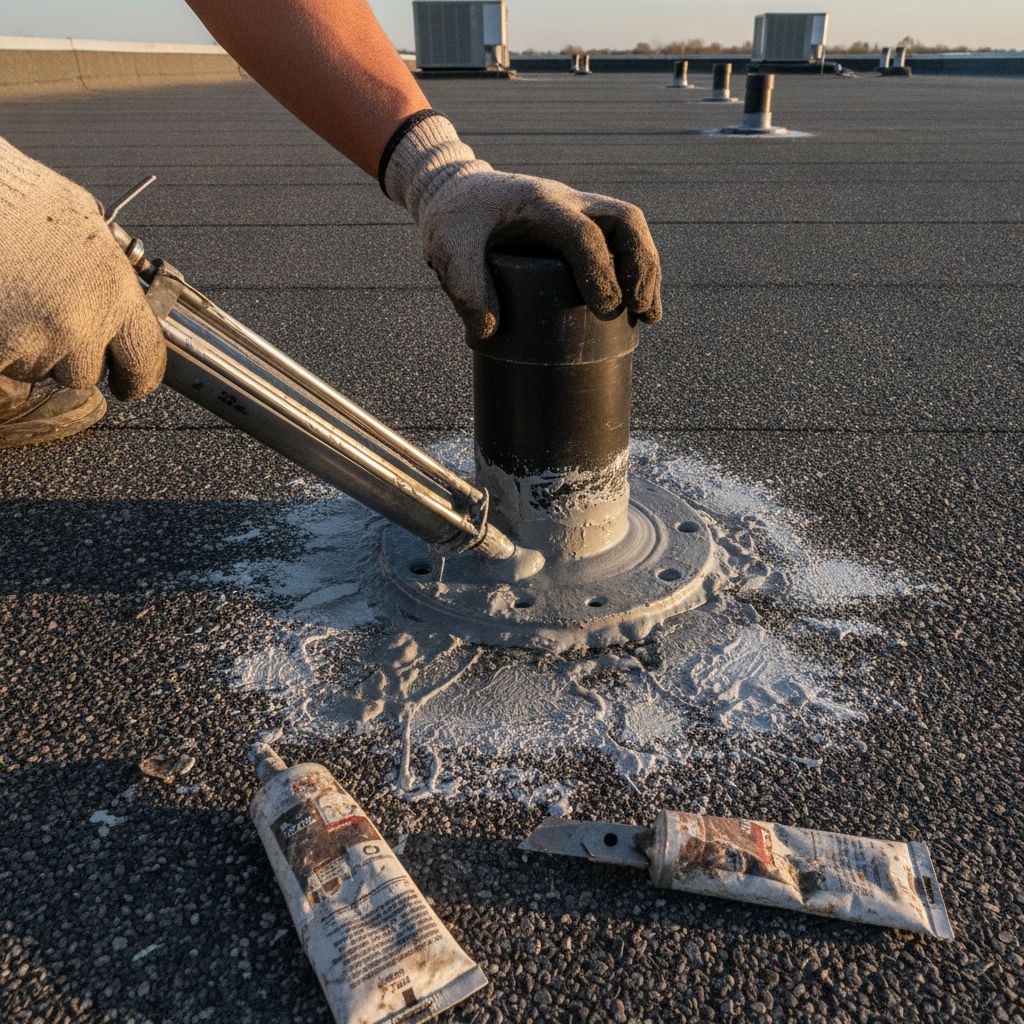
Your maintenance plan needs a clear answer to: what happens when the inspector finds something bigger?
In our experience, a well-structured plan captures most routine deterioration within the minor-repair allotment. But occasionally a visit turns up a seam failure that needs a proper lap repair, or a parapet that's moved enough to require a full flashing replacement, or hail damage significant enough to warrant an insurance conversation. Those scopes exceed maintenance work — they move into commercial roof repair territory.
The escalation path should be:
- Inspector identifies the issue and photographs it
- Condition report flags it with a severity level (monitor / repair within 90 days / repair before next rain event)
- PM receives the report and approves a repair work order, or decides to hold and monitor
- Repair is scoped and scheduled separately
That process keeps your maintenance cost predictable and your repair cost visible before it becomes urgent. The worst version is an inspector who patches something inadequately to avoid the escalation conversation — you end up with a failed patch and an emergency call six months later.
Timing your plan to Huntsville's storm calendar
If you want more detail on the full-year calendar — what to do in January versus May versus October — our storm season readiness calendar breaks it down month by month. For Huntsville specifically, the key timing considerations are:
- January–February: Get the spring visit scheduled before the busy post-storm period. Contractors in north Alabama book fast after a significant hail event — if you're not already on a maintenance program, you're competing for scheduling after every storm.
- March–May: Spring severe weather window. Any hail event worth documenting gets a post-storm inspection within a few days, separate from your regular scheduled visit.
- June–August: UV and mechanical traffic are the main threats. If you have a lot of rooftop HVAC service happening, a mid-season check of penetration flashings isn't overkill.
- September–November: Fall visit. Pre-winter drainage verification, any summer damage addressed before cold.
- December: Condition summary, budget planning for any replacements or major repairs flagged during the year.
What a plan costs versus what emergencies cost
I won't give you a single number because it depends on roof size, system type, access complexity, and what repair allotment you build in. What I can tell you from running these programs across north Alabama:
Semi-annual maintenance on a mid-size commercial building typically costs a small fraction of a single emergency repair mobilization — and emergency repairs don't include the interior damage, the tenant disruption, or the insurance headache.
The economics aren't complicated. Maintenance is predictable. Emergency repairs aren't.
Questions we get
Can you put a maintenance plan on a roof you didn't install? Yes. We run maintenance programs on roofs installed by other contractors all the time. We document the baseline condition on the first visit so everyone has a clear starting point. The only situation where we'd flag concern upfront is a roof already at end of useful life — maintaining a failed roof doesn't extend it, and we'd rather tell you that before you pay for an annual program.
Does a maintenance program help with my insurance? In our experience, some carriers and underwriters look favorably on documented maintenance programs — it demonstrates the property is actively managed. We can't make guarantees about how your specific carrier responds, but having a PDF condition report dated before a storm event is significantly more useful than having no documentation when you're trying to establish pre-storm condition.
What's the difference between a maintenance visit and an inspection? A standalone commercial roof inspection is a single-event, condition-assessment scope — typically used for acquisition due diligence, pre-insurance reporting, or a one-time check on an unknown roof. A maintenance visit includes that inspection scope plus the drainage work, minor repairs, and the ongoing relationship that lets us compare findings year over year. Most maintenance programs incorporate inspection as part of the visit.
How do I handle rooftop HVAC vendors damaging the roof between visits? Document your rooftop access policy and require your HVAC contractors to report any membrane contact or penetration work to property management. We recommend a brief post-service walkover by building staff whenever mechanical work happens on the roof. Caught early, a puncture from a dropped tool is a $150 patch. Caught a year later after it's been leaking into a ceiling assembly, it's something else entirely.
We have three buildings in the portfolio. Should they all be on the same schedule? Not necessarily. We often stagger visits across a portfolio so condition reports come in at different times and the repair budget isn't all hitting at once. It also means if one building needs an escalation, it's not competing with two other scheduled visits for crew time. We'll look at roof age, system type, and exposure for each building and recommend accordingly.

A commercial roof maintenance plan isn't a complicated document. It's a schedule, a scope, a repair allotment, and a reporting format. What makes it work is actually executing it on time every year — and having a contractor relationship established before you need an emergency call.
If you're managing commercial or multifamily in the Huntsville market and don't have a documented plan in place, that's the right starting point. Get the visit frequency right for your exposure, get the scope defined, and get the first condition report in your property file. Everything builds from there.
Want a professional assessment of your property? No-obligation inspection with photo-keyed documentation.
Request InspectionMore From the Blog
- Flat Roof Ponding Water in Memphis: Causes and FixesPonding water on Memphis flat roofs causes membrane damage and structural load. Here's how to diagno…
- Commercial Roofing in Albany, GASouthwest Georgia's storm record, Hurricane Michael's inland wind field, and what Albany commercial …
- Commercial Roofing in Athens, GAHow a 43,887-student university calendar, dense student-housing stock, and Northeast Georgia's sprin…