Multifamily roof replacement cost isn't a single number — it's a range shaped by system type, deck condition, building count, and how much phasing complexity the property adds. For Nashville-area portfolios, the installed cost on a full replacement typically runs somewhere between $4.50 and $9.00 per square foot, depending on those variables. But the number that breaks capital plans isn't the membrane cost. It's everything the initial budget didn't account for: rotted decking, failed gutters that need replacement at the same time, code-required upgrades to penetration details, and the operational overhead of keeping a 200-unit property running through a six-week install.
This post is about building a budget that survives contact with the actual job.
Why Per-Square-Foot Averages Mislead Portfolio Budgets
The square footage number is a starting point, not a budget. I've seen asset managers go into a capital call with a number built entirely on square footage and a phone quote, then get hit with a revised scope on week two because nobody walked the deck before the project went live.
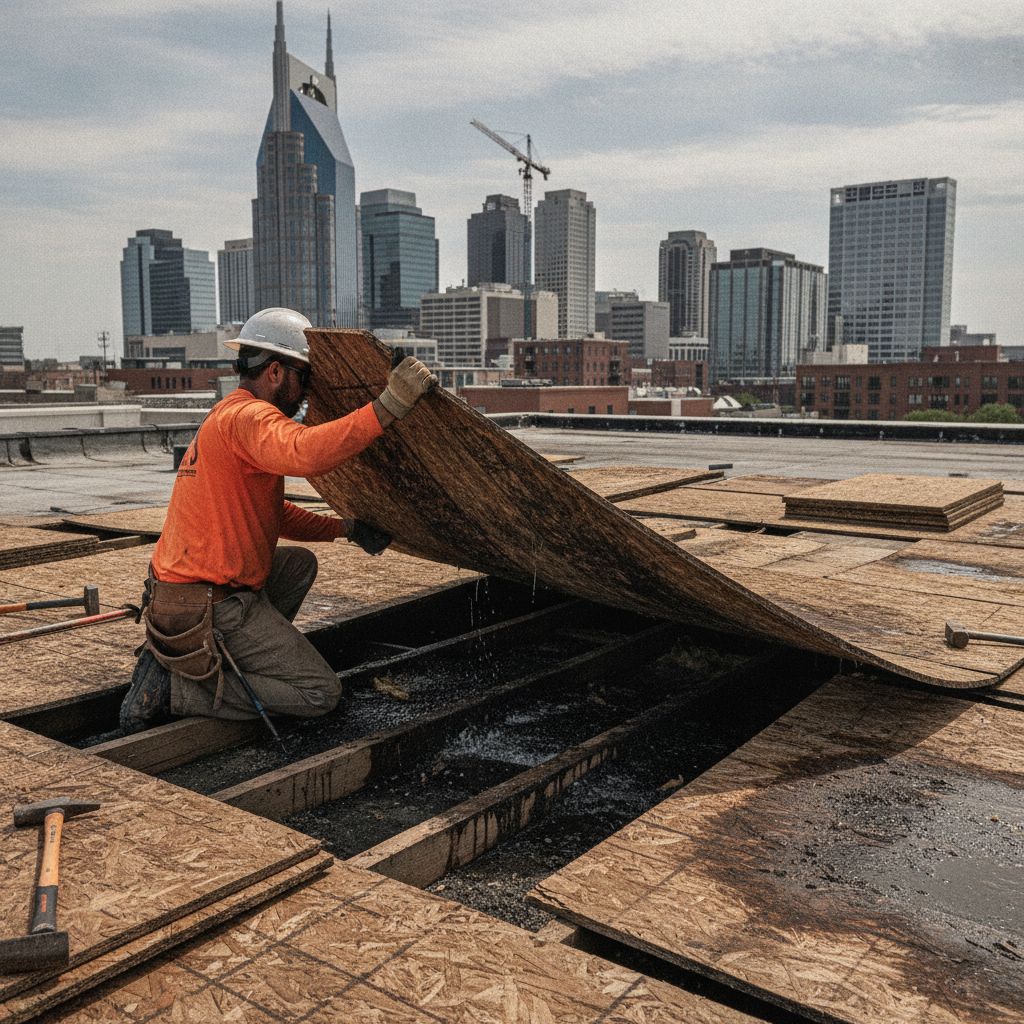
On a typical Nashville garden-style property — think the Antioch corridor, Donelson, or older stock in Bellevue — the shingle systems are often original to the building, sometimes 20 or 25 years in. When we pull those shingles, we find decking that looks fine from below but has been wet-cycling for years. Delaminated OSB, soft sheathing at valley runs, fastener pull-through at ridge lines. Deck replacement on a bad building can add $0.75 to $1.50 per square foot to the scope. On a 12-building property, that variance can swing the total project cost by $80,000 or more.
The other thing averages miss: low-slope sections. A lot of Nashville apartment communities built in the 1990s and early 2000s have a mix of pitched shingle roofs and low-slope TPO or EPDM sections over breezeways, carports, or flat-topped sections of the leasing office. Those systems price and spec differently, and if the original budget lumped everything into a single shingle rate, it's already wrong before the first crew shows up.
System Type Is the Biggest Cost Driver
Here's how the major system types generally stack up for Nashville multifamily, in rough installed cost terms:
Architectural asphalt shingle is the default on pitched garden-style stock. It's the most common system we install across Cool Springs and Franklin properties, and it's cost-effective when the deck is solid. A clean shingle replacement on a building with good decking runs at the lower end of that $4.50–$9.00 range. It also tends to be what insurance carriers are restoring after hail events, which are common enough in Middle Tennessee that storm damage is a real input to any portfolio capital plan.
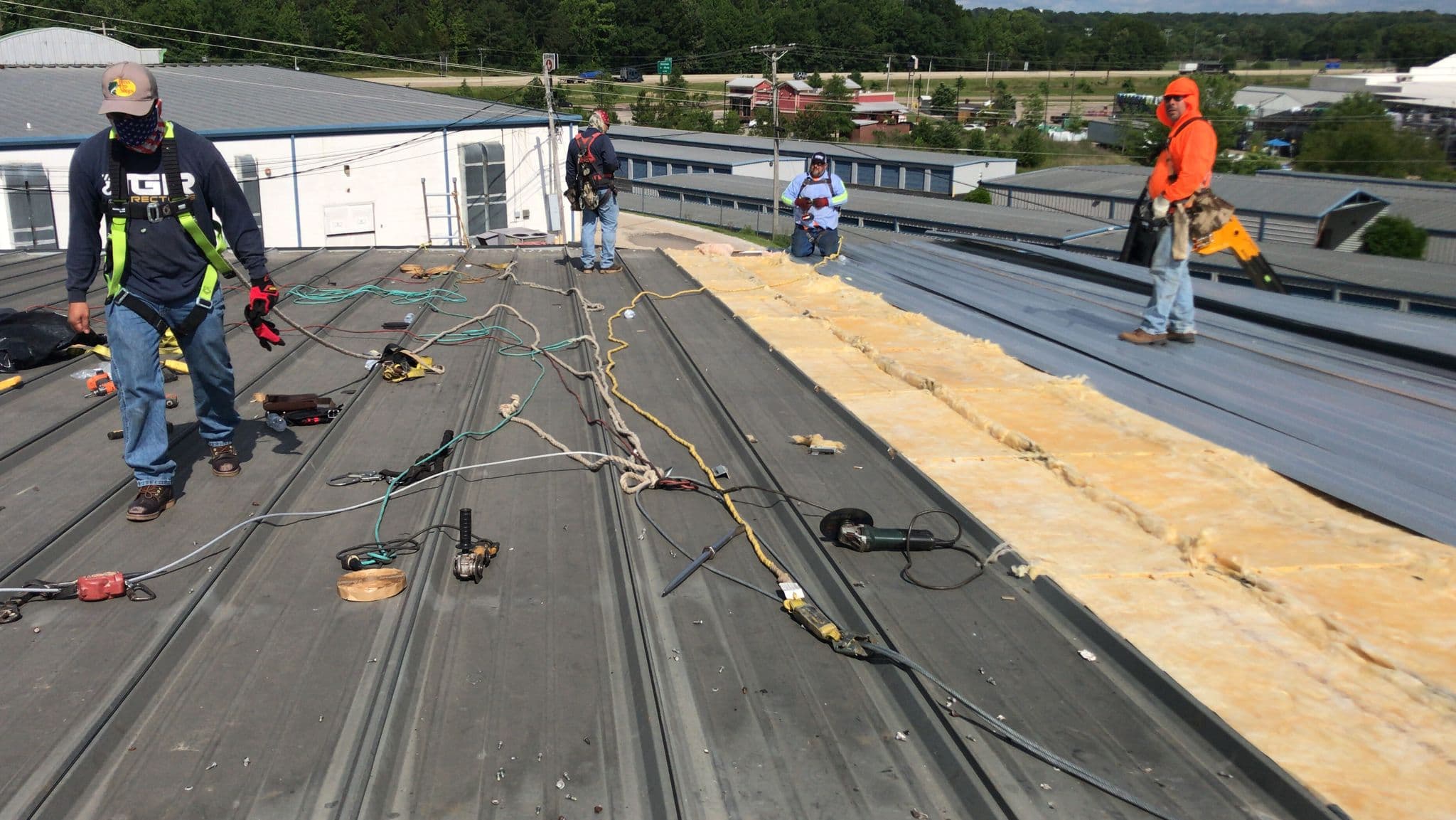
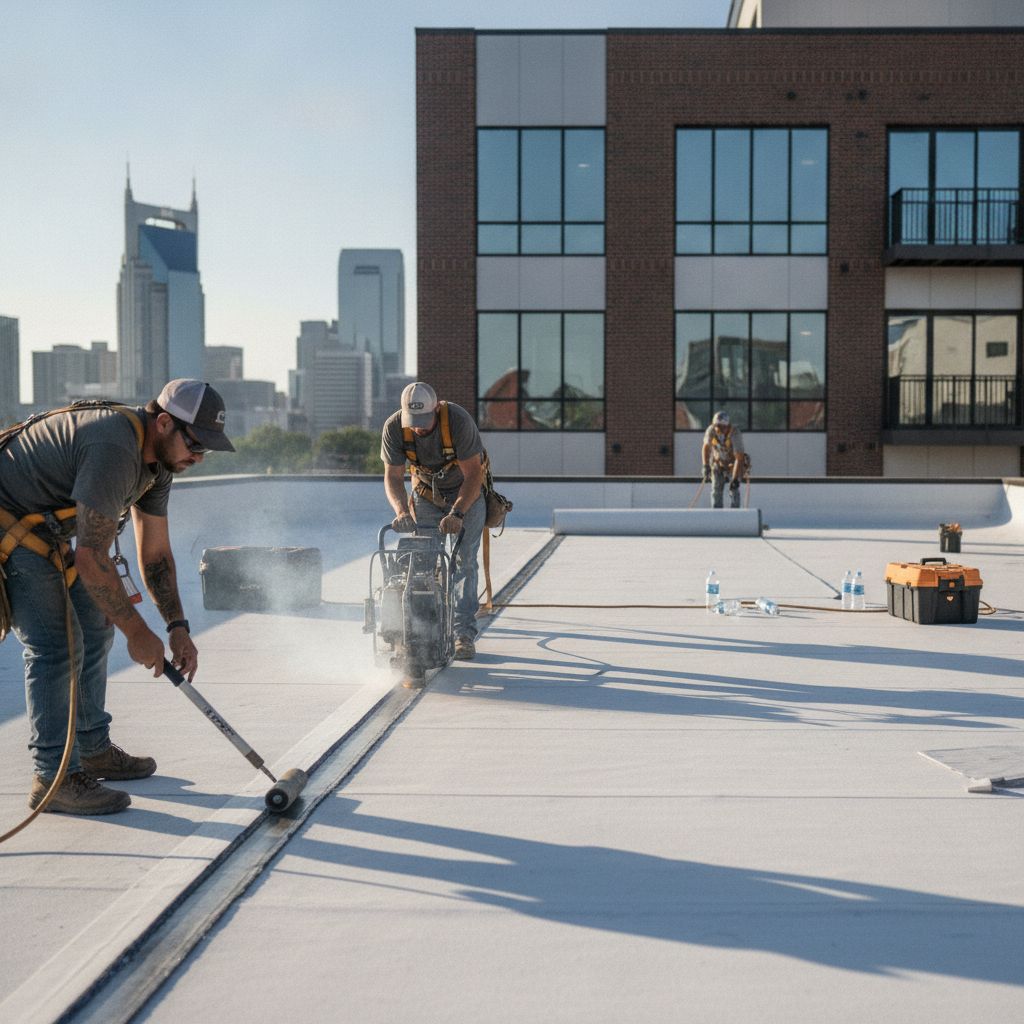
TPO on low-slope sections typically runs higher per square foot than shingle, but it's the right system for the application. TPO seams are heat-welded, which matters in Nashville's climate — hot, humid summers and enough freeze-thaw cycling in winter to stress mechanically-attached systems. We default to 60-mil TPO on most low-slope multifamily work here.
EPDM is still common on older Nashville stock, particularly properties built before 2000. It's not a bad system but it does age differently than TPO, and when we're assessing whether to restore EPDM or replace with TPO on a budget call, the answer usually depends on seam condition and remaining useful life.
Metal roofing shows up occasionally on Nashville multifamily, particularly on newer construction in the Cool Springs and Berry Hill areas. When it's there and in good condition, we're more often in a repair conversation than a replacement conversation — but when metal does need full replacement, the cost is at the top of that range and beyond.
Building the Actual Capital Number: What to Assess First
The biggest favor you can do for your capital plan is commission a proper condition assessment before you finalize any budget number. Not a phone quote off square footage — an actual roof-by-roof inspection with written findings, moisture readings, and deck condition notes.
On a portfolio assessment, we're looking at:
- Membrane age and visible condition — granule loss on shingles, seam integrity on low-slope, surface oxidation on TPO/EPDM
- Deck condition — this requires pulling select areas on shingle systems, not just walking the surface
- Drainage — clogged or improperly sloped drains are a chronic problem on Nashville garden-style properties built in the Donelson and Hermitage corridors; a new roof on bad drainage fails faster
- Flashing and penetration details — HVAC curbs, pipe boots, parapet caps; these are often the first failure points and frequently require upgrade to current code when a full replacement triggers a permit
- Gutter system condition — we often find that gutter replacement is necessary at the same time as the roof; budgeting them separately leads to scope gaps
Once you have building-by-building condition data, you can prioritize. Not every building needs replacement in the same fiscal year. A well-structured assessment gives you a triage sequence: two buildings need immediate action, four more are 18–24 months out, and the rest can carry into the next capital cycle.
Nashville-Specific Factors That Affect Your Budget
Middle Tennessee's hail exposure is real. The 2020 tornado event and multiple significant hail events since have made Nashville-area carriers more rigorous about documentation, and they've also made it more common for property owners to be working a partial insurance recovery alongside an out-of-pocket capital plan. When that's the case, the budget conversation gets more complicated — you need to know which buildings have storm-related damage that's carrier-eligible and which buildings are pure capital replacement driven by age.
We cover the insurance documentation side of this in our multifamily roofing service in detail. The short version: carrier recovery and capital replacement often run simultaneously on a portfolio, and scoping them together — rather than treating them as separate projects — typically produces better financial outcomes for the owner.
Nashville also has active permit enforcement. Metro Nashville building permits are required for full roof replacements, and code compliance on penetrations, ventilation, and decking attachment can add scope that wasn't in the original budget. Factor that in, especially on older properties where the existing system wasn't installed under current IBC requirements.
Phasing Across a Portfolio: How It Affects Cost and Timing
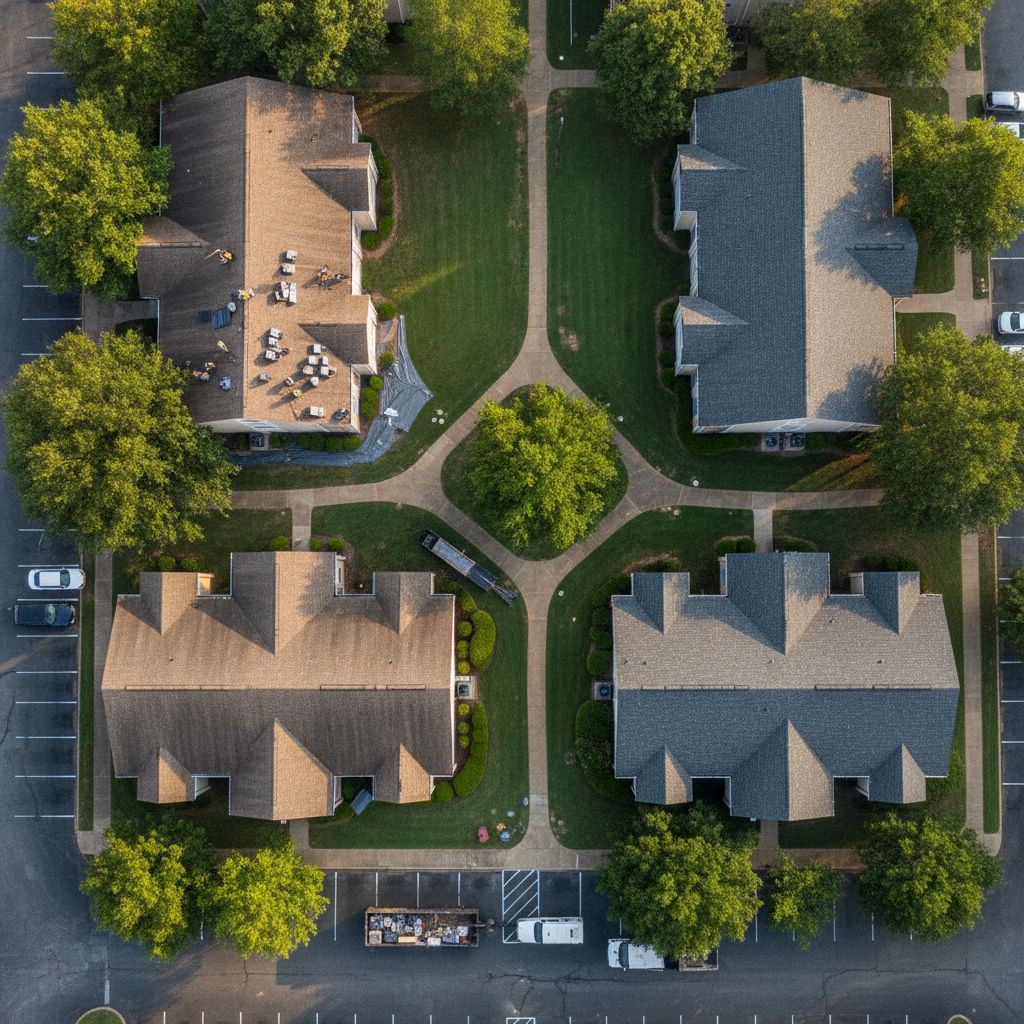
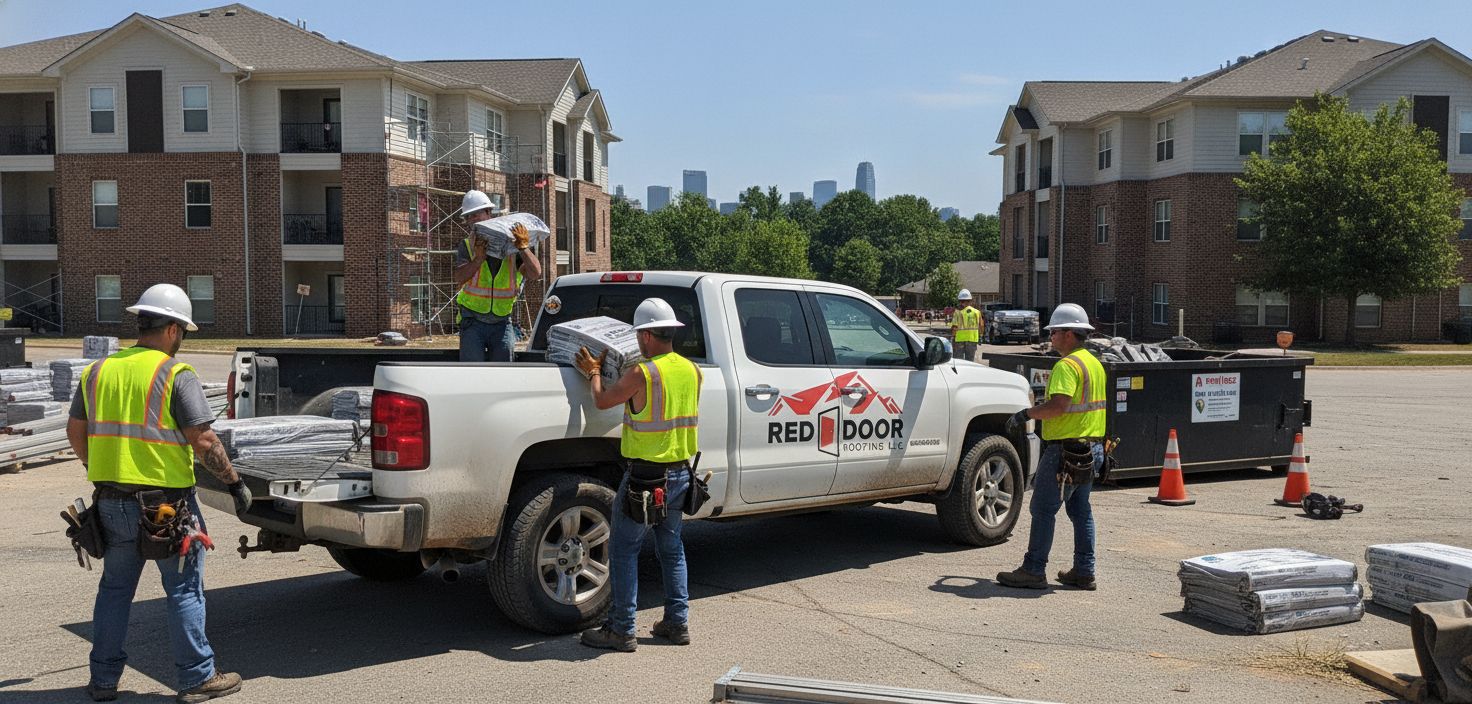
A 10-building property doesn't get replaced in a single mobilization. We phase by building, typically running two to three buildings simultaneously depending on crew size and material staging. The phasing plan matters to your budget because:
- Mobilization costs spread differently across phased work vs. a single building. Portfolio work is more efficient per building than standalone replacements.
- Material lead times affect the schedule. Shingles are generally available, but specialty TPO systems or specific manufacturer products can have lead times of three to six weeks. Budget the schedule accordingly.
- Occupied properties add operational overhead. Tenant notice letters, noise windows, parking coordination, walkway safety — these aren't material costs but they affect the project timeline, and timeline affects carrying costs on the capital.
On a 200–300 unit Nashville property, a full portfolio replacement typically runs four to eight weeks of active production, weather-dependent. We put a phased Gantt chart in front of the operations team before the first crew arrives so leasing and maintenance aren't surprised.
What a Realistic Portfolio Budget Looks Like
Here's a rough framing for a mid-size Nashville portfolio — not a quote, just a planning reference:
A 10-building, 250-unit garden-style property with predominantly pitched shingle roofs and some low-slope breezeways, total roof area around 85,000 square feet, built early 2000s, in average condition:
- Base shingle replacement (pitched sections): $4.75–$6.50/sq ft depending on deck condition
- TPO replacement (low-slope sections): $6.50–$8.50/sq ft
- Deck replacement allowance (budget reserve): $0.50–$1.25/sq ft on total area
- Gutter replacement (if needed): line-itemed separately; can run $8–$14 per linear foot installed
- Permit fees: varies by Metro Nashville jurisdiction; budget $500–$1,500 per building
- Total project range: $450,000–$750,000+ depending on actual deck and drainage findings
That's a wide range, and it's intentionally so. The only way to tighten it is a building-by-building assessment. Properties that come to us with an assessment already done get a tighter scope and fewer change orders. Properties that skip that step often find out why it mattered around week three.

Questions We Get
Q: Can we phase the budget across two fiscal years and replace half the buildings now?
Yes, and it often makes sense. A condition assessment gives you the prioritization data to justify which buildings get funded first. The buildings with the most advanced deterioration or active leak history go first; the ones with remaining useful life carry to next year's capital budget.
Q: How does insurance recovery interact with the capital plan?
When storm damage exists on some buildings, those buildings may be eligible for carrier recovery while the others are pure capital replacement. We document each building separately so the scope, costs, and recovery are cleanly separated. Your asset manager and lender both want that documentation clean.
Q: What drives change orders on multifamily roof replacements?
Deck condition is the number one driver. The second is drainage — failed or undersized gutters and drains that have to be addressed at the same time. A thorough pre-construction assessment reduces both. We can't guarantee zero change orders, but we can tell you exactly what we found before we start and give you a contingency recommendation.
Q: Do you provide documentation for reserve studies?
Yes. Our portfolio closeout process produces per-building condition reports, before/during/after photography, warranty registrations, and Roof Condition Certifications formatted for reserve study and lender compliance. That documentation has real value when a property trades.
Q: How far out should we start planning a portfolio replacement?
Six months minimum for a multi-building project. Material lead times, permit processing, and phasing coordination all take time. If you're working toward a specific fiscal year budget, come to us in the prior year so the assessment, scope, and schedule are locked before the capital commitment is made.
Capital planning for roof replacement isn't glamorous work, but getting it right protects the asset and avoids the worst-case scenario: an emergency replacement driven by active leaks, tenant complaints, and a capital call with no runway. Nashville's storm exposure and the age of the market's garden-style stock mean most portfolios have at least some buildings that are closer to that scenario than the deferred maintenance schedule reflects. A building-by-building assessment is the first step to knowing where you actually stand.
Want a professional assessment of your property? No-obligation inspection with photo-keyed documentation.
Request InspectionMore From the Blog
- Commercial Roof Maintenance Plan: Huntsville GuideHow Huntsville property managers build a commercial roof maintenance plan that prevents emergency re…
- Flat Roof Ponding Water in Memphis: Causes and FixesPonding water on Memphis flat roofs causes membrane damage and structural load. Here's how to diagno…
- Commercial Roofing in Albany, GASouthwest Georgia's storm record, Hurricane Michael's inland wind field, and what Albany commercial …