
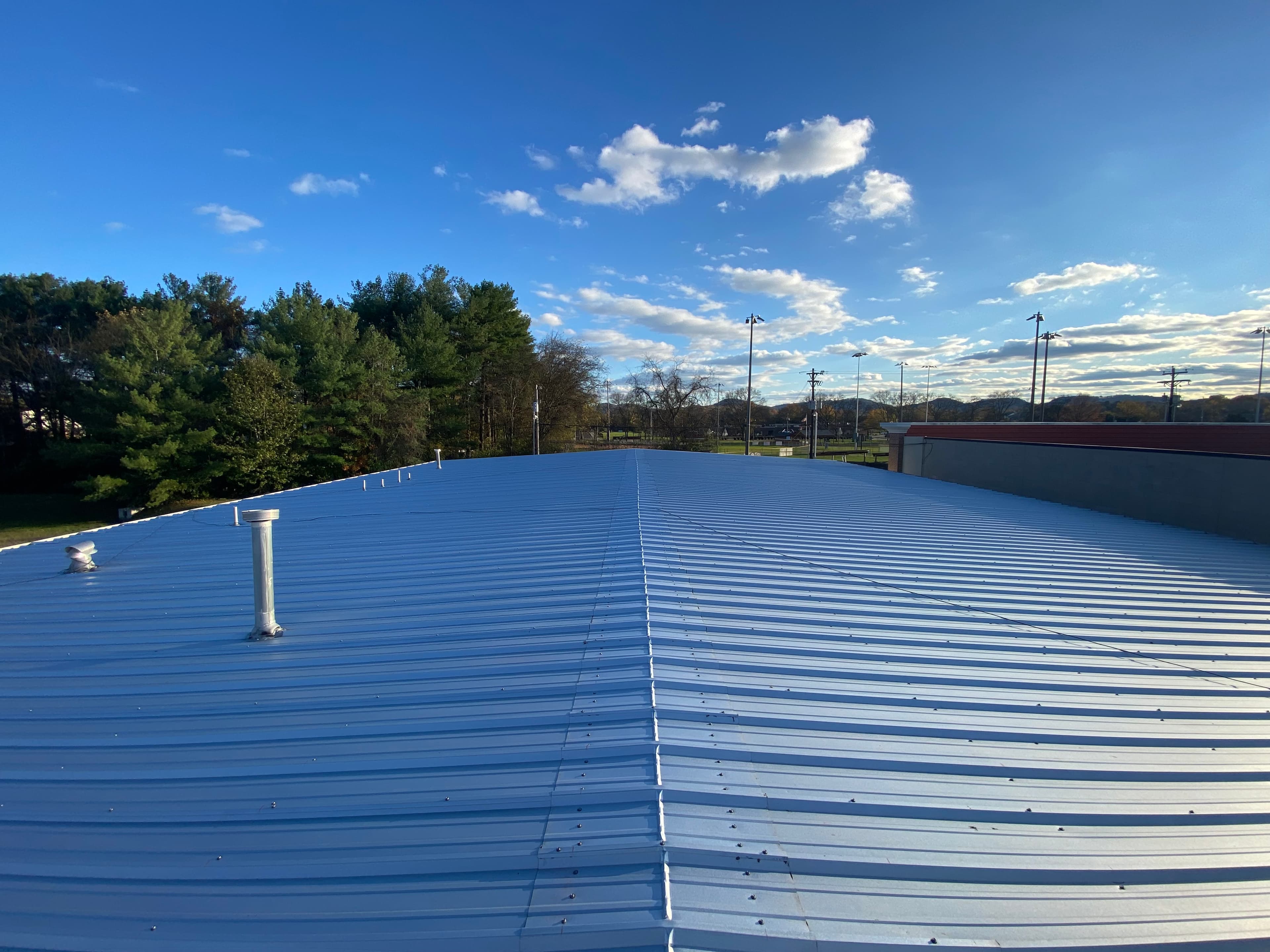
1. Granules in Gutters and Downspouts
Asphalt shingles and modified-bitumen flat roofs shed granules when hit. A few weeks of unusual gutter debris is a red flag.
2. Dented Flashings and Metal Trim
Hail impacts leave characteristic round indentations on gutter fronts, vent caps, and perimeter trim. These document the storm path and intensity.
3. Interior Water Signs
New ceiling stains, bubbling paint, or water in HVAC drip pans after a storm event all suggest roof-membrane compromise even when the membrane surface looks intact.
4. HVAC Unit Damage
Bent fins, dented condenser panels, and damaged housing on rooftop HVAC units document both storm path and intensity. Insurance adjusters look at HVAC damage as corroborating evidence for roof claims.
5. Neighboring Property Damage
If nearby buildings have visible storm damage, your roof probably does too - even if it doesn't appear to from the ground.
When to Call
Any combination of two or more of these signs warrants a professional roof inspection. Don't wait for visible interior damage - by then the membrane has usually failed in multiple spots.
What Happens Next
A Red Door Roofing inspection is no-obligation. We walk the roof, photograph findings, and produce a report. If damage is present we help with claim documentation; if not, we issue a Certificate of Clearance.
Want a professional assessment of your property? No-obligation inspection with photo-keyed documentation.
Request InspectionMore From the Blog
- Metal Roof Hail Damage: What Dallas PMs MissHail hits Dallas metal roofs differently than flat membranes. Here's what property managers overlook…
- Commercial Roof Coating: Skip the Tear-Off in GreenvilleWhen your Greenville commercial roof deck is still sound, a coating may add 10–20 years. Here's how …
- Storm Damage Roof Documentation: What Carriers NeedWhat a carrier-ready storm damage roof report must include to get Charlotte commercial insurance cla…