
A carrier-ready storm damage roof report lives or dies on one thing: whether the adjuster can verify your evidence without calling you back for more. In Charlotte's commercial market, that gap — between what most inspection reports contain and what adjusters actually need — is the single biggest reason first submissions stall or get denied.
This post walks you through exactly what has to be in that report before it goes to your carrier.

Why Charlotte Claims Get Pushed Back
Charlotte and the surrounding Piedmont gets hit with severe weather in patterns that create real documentation problems. Hail events move through fast — a storm that drops 1.25-inch hail in University City might drop nothing in South End twenty minutes later. The same storm can affect three of your properties differently, and adjusters know that.
When a claim comes in without location-specific weather data tied to the inspection, the adjuster's first question is always the same: how do we know this damage is from that event? That question alone can trigger a second inspection on the carrier's dime — with their inspector, on their timeline.
Carriers writing commercial property in Mecklenburg County have seen enough storm claims that they have internal benchmarks for what good documentation looks like. When your report doesn't match those benchmarks, you're not necessarily denied — you're just delayed, sometimes by months. And on a 200-unit multifamily in Steele Creek or a retail strip on Independence Boulevard, months of delay means months of deferred repairs, potential lease liability, and reserve exposure.
Element 1: Date-of-Loss Alignment to Federal Weather Records
This is the piece most property managers don't know to ask for. Your report needs to tie the observed damage to a specific weather event using NOAA Storm Events Database or NWS records pulled by ZIP code and approximate time window.
That means your inspector isn't just saying "we observed hail damage." They're cross-referencing the inspection findings against the federal record of what fell, when, and at what size — and that alignment goes into the report explicitly.
In Charlotte, this matters especially for the spring severe weather season (typically March through June) and for named tropical systems that clip the Piedmont from the southeast. We had properties along the I-85 corridor take meaningful wind damage from Tropical Storm Fred remnants back in 2021 — carriers wanted to know the exact event, not a general seasonal reference.
If your report can't answer "which storm caused this damage, and what's the federal weather record that confirms it was in this area on that date," you're giving the adjuster a reason to question scope.
Element 2: Photo-Keyed Evidence Mapped to an Overhead Schematic
Photos alone aren't enough. Adjusters review hundreds of claims. A PDF with 80 unsorted photos of damaged membrane and flashing tells them almost nothing about scope or location.
What works: an overhead schematic — ideally drone-derived — with numbered reference points, and every photo in the report indexed to a specific reference number on that schematic. The adjuster can pull up the overhead view, look at reference point 14, then pull up photo 14A and see exactly what's at that location.
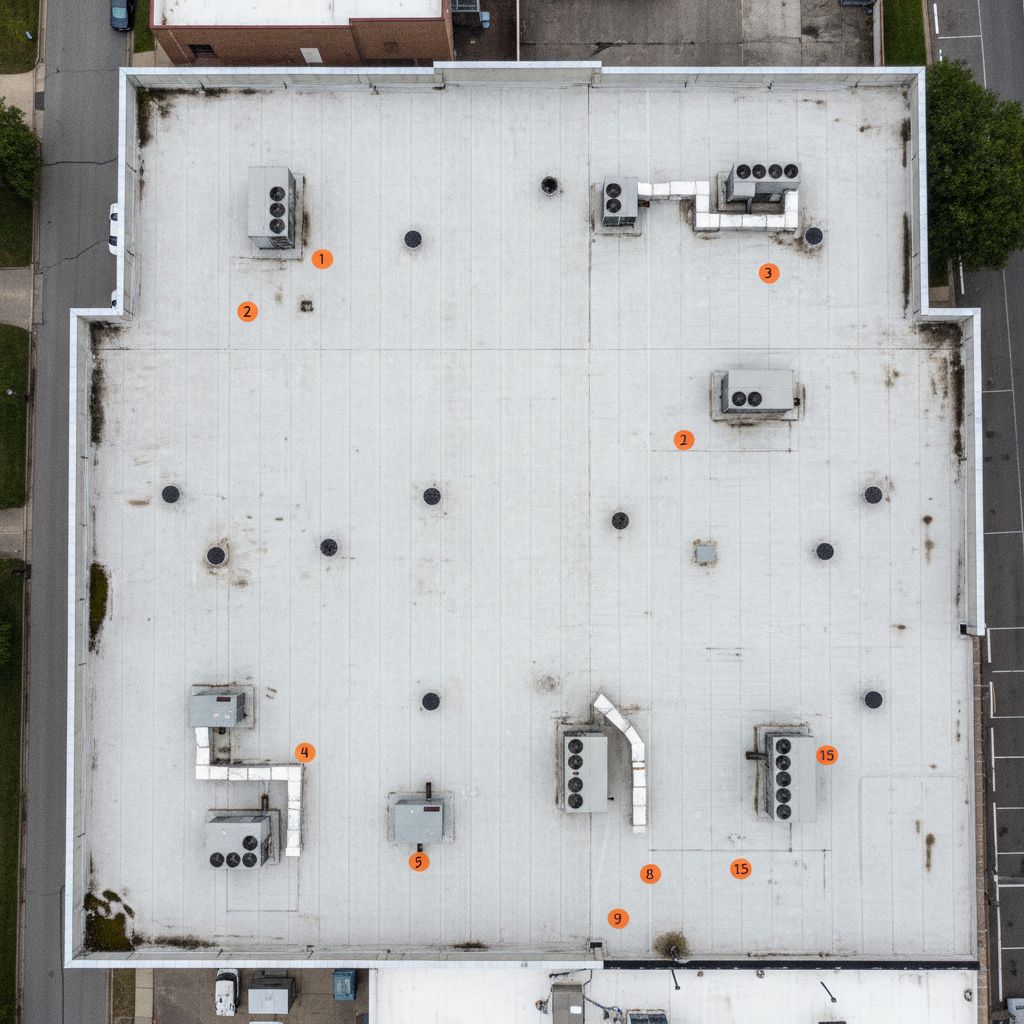
This isn't just cleaner presentation. It's verifiable evidence. The adjuster or their field inspector can physically walk to reference point 14 and confirm what the photo shows. When evidence is verifiable, it's harder to dispute.
On multifamily portfolios — say a garden-style complex with eight buildings off Albemarle Road — this means per-building documentation. Each building gets its own schematic section and its own photo index. Adjusters evaluating multifamily claims need to assess scope building by building. Lumping it all together forces them to do that work themselves, and they won't always do it in your favor.
Element 3: Roof-System Identification
The report needs to identify what system is actually on each roof section: TPO, EPDM, PVC, modified bitumen, BUR, metal standing-seam — with membrane thickness where documentable, approximate age, and manufacturer where that information is available.
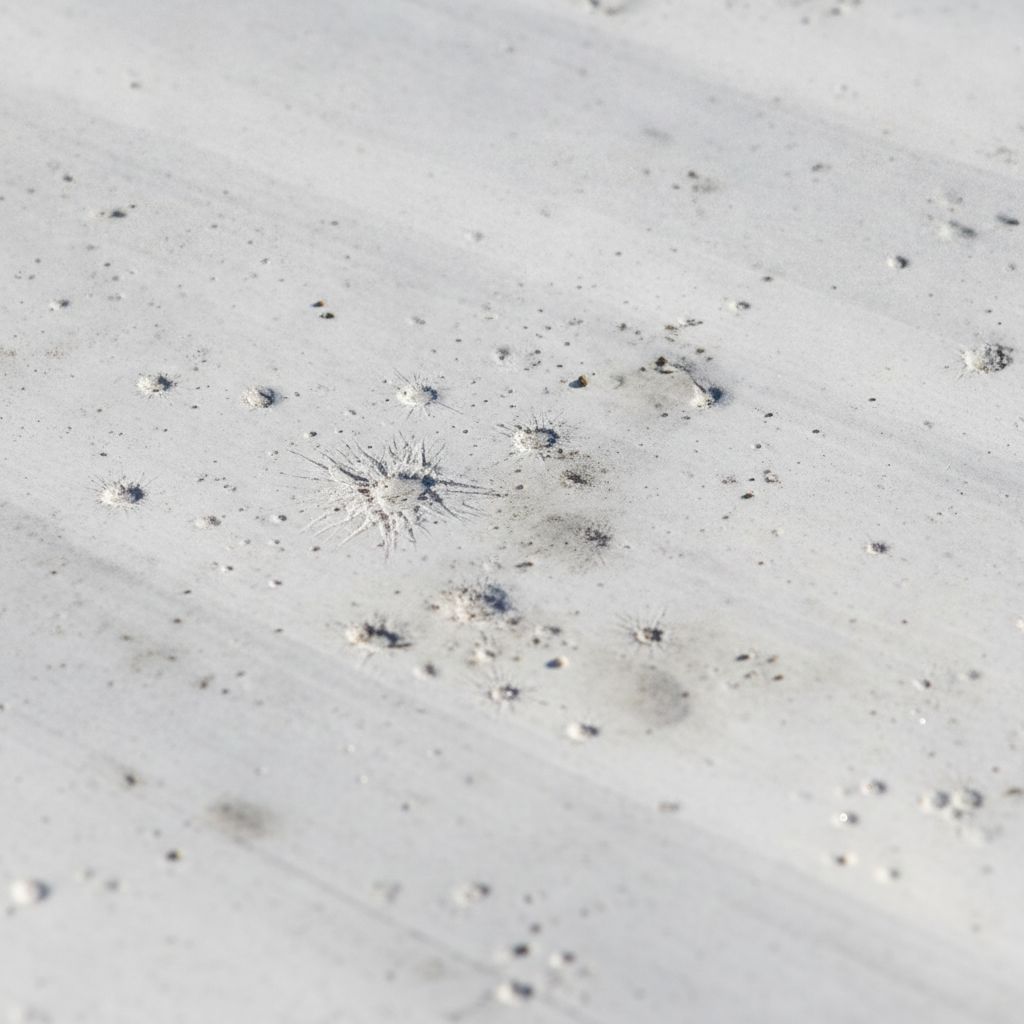
Why does this matter for a claim? Because damage thresholds differ by system. A 1-inch hail impact on a 45-mil TPO behaves differently than on a 60-mil membrane or a 3-ply modified bitumen cap sheet. Adjusters and their engineers know this. When your report doesn't document the system, the carrier defaults to conservative assumptions — which usually means lower scope, not higher.
Age and remaining useful life also matter. If your membrane is 22 years old and showing functional deterioration independent of storm damage, the carrier will factor that in. A good report documents RUL honestly and separates pre-existing wear from event-specific damage clearly. Trying to hide pre-existing conditions doesn't work — it just destroys your credibility with the adjuster on everything else.
Element 4: Damage Classification Per Defect
Every observed defect should be listed individually with four things: location reference (tied to the schematic), close-up photo plus contextual photo, a plain-language description of what's observed, and a severity classification.
We classify as critical, significant, minor, or maintenance-level. Carriers expect that kind of structure. What they don't want — and what kills claims — is a report that says "hail damage observed throughout" with no specifics. "Throughout" isn't a scope. It's a starting point for an argument.
This per-defect approach also protects you on partial claims. If the carrier approves repair scope on some sections and disputes others, a well-documented per-defect report gives you a clear basis for negotiation. Without it, you're arguing from a summary, and they're arguing from specifics.
Element 5: Moisture Survey Findings
Hidden moisture is often where the real scope lives. Hail and wind events that fracture membrane or compromise flashings allow water infiltration that won't show up as an active interior leak for weeks or months — not until the insulation is saturated enough to reach the deck or ceiling assembly.

A carrier-ready report for any significant Charlotte storm event should include infrared thermography results (typically scanned at dusk when temperature differentials reveal trapped moisture) and moisture-meter readings that validate the IR findings with quantitative data. Where wet insulation is confirmed, the scope needs to reflect it — because wet insulation that stays in place fails the roof system faster than the original damage did.
Without moisture survey data in your report, the adjuster has no basis to approve insulation replacement scope. And that scope is often where the meaningful money is.
Element 6: A Priced Scope Formatted for the Carrier's Tools
Documentation gets you to the conversation. A priced scope closes it.
Your report needs repair or replacement recommendations — an honest, prioritized assessment of what the evidence warrants — backed by a scope formatted to the carrier's estimating tools where applicable. Most major commercial carriers working Charlotte claims use Xactimate or comparable commercial estimating platforms. A scope that's already formatted to those tools, using current local labor and material norms, moves faster than a narrative estimate that has to be re-entered by a desk adjuster.
Where replacement is the recommendation, the scope should flag any code-upgrade triggers that will come with it: current R-value requirements, perimeter metal upgrades, fire-rated assembly requirements. These often fall under Ordinance and Law coverage — but only if they're identified and claimed. If your report doesn't flag them, they frequently get left on the table.
What a Clean First Submission Looks Like in Practice
To be clear about what we're describing here: this isn't a one-page inspection summary. A carrier-ready storm damage documentation package on a commercial property typically runs 40-80 pages for a single building, more for a multifamily portfolio. It's a structured PDF that an adjuster can work from start to finish without needing to call the inspector for clarification.
When it's built right, the first submission is also often the last — because there's nothing left for the adjuster to question.
Questions We Get
Q: Can I submit a claim with just photos from our maintenance staff?
In our experience, carrier-paid adjusters are trained to identify documentation gaps, and maintenance-staff photos without schematic mapping, system identification, or weather-record alignment almost always trigger a second inspection. You can submit whatever you have, but a thin first submission typically lengthens the process rather than shortening it.
Q: How soon after a storm do we need to get an inspection done?
As soon as safely possible, ideally within a few weeks of the event. Charlotte's spring storm season stacks events — a second hail event can complicate your ability to tie damage to a specific date of loss. The tighter the timeline between the weather event and your documented inspection, the cleaner the date-of-loss alignment.
Q: Our carrier wants their own inspector to come out. Should we still get our own report?
Yes. The carrier's inspector works for the carrier. Having your own independent, documented report — completed before or concurrent with their inspection — gives you a basis to compare findings and dispute scope if their assessment comes in short. We've seen significant scope differences between carrier inspections and independent inspections on the same Charlotte properties.
Q: Does the report need to come from a licensed contractor, or can a third-party inspector do it?
Carriers generally want the report from someone who can also execute the scope — a licensed roofing contractor with verifiable credentials. A third-party inspector report can support a claim, but the certifying party's license, manufacturer credentials, and professional affiliation carry weight in how seriously the carrier takes the documentation.
Q: What if the inspector finds no qualifying damage?
That's a legitimate outcome and worth documenting formally too. A signed Certificate of Clearance — stating that a qualified inspection was performed and no qualifying storm damage was present — protects you at renewal, supports lender files, and closes the loop on any tenant or asset-manager inquiries about the event. It's not a bad outcome. It's just a different deliverable.
Want a professional assessment of your property? No-obligation inspection with photo-keyed documentation.
Request InspectionMore From the Blog
- Warehouse Roof Warning Signs Before Birmingham WintersCatch commercial roof problems before cold weather turns them into emergencies. A Birmingham roofer'…
- Multifamily Roof Replacement Cost: A Portfolio Budget GuideHow Nashville property managers can forecast multifamily roof replacement costs across a portfolio a…
- TPO vs. Modified Bitumen: Atlanta Flat Roof GuideChoosing between TPO and modified bitumen for Atlanta commercial flat roofs? Here's how to match mem…