
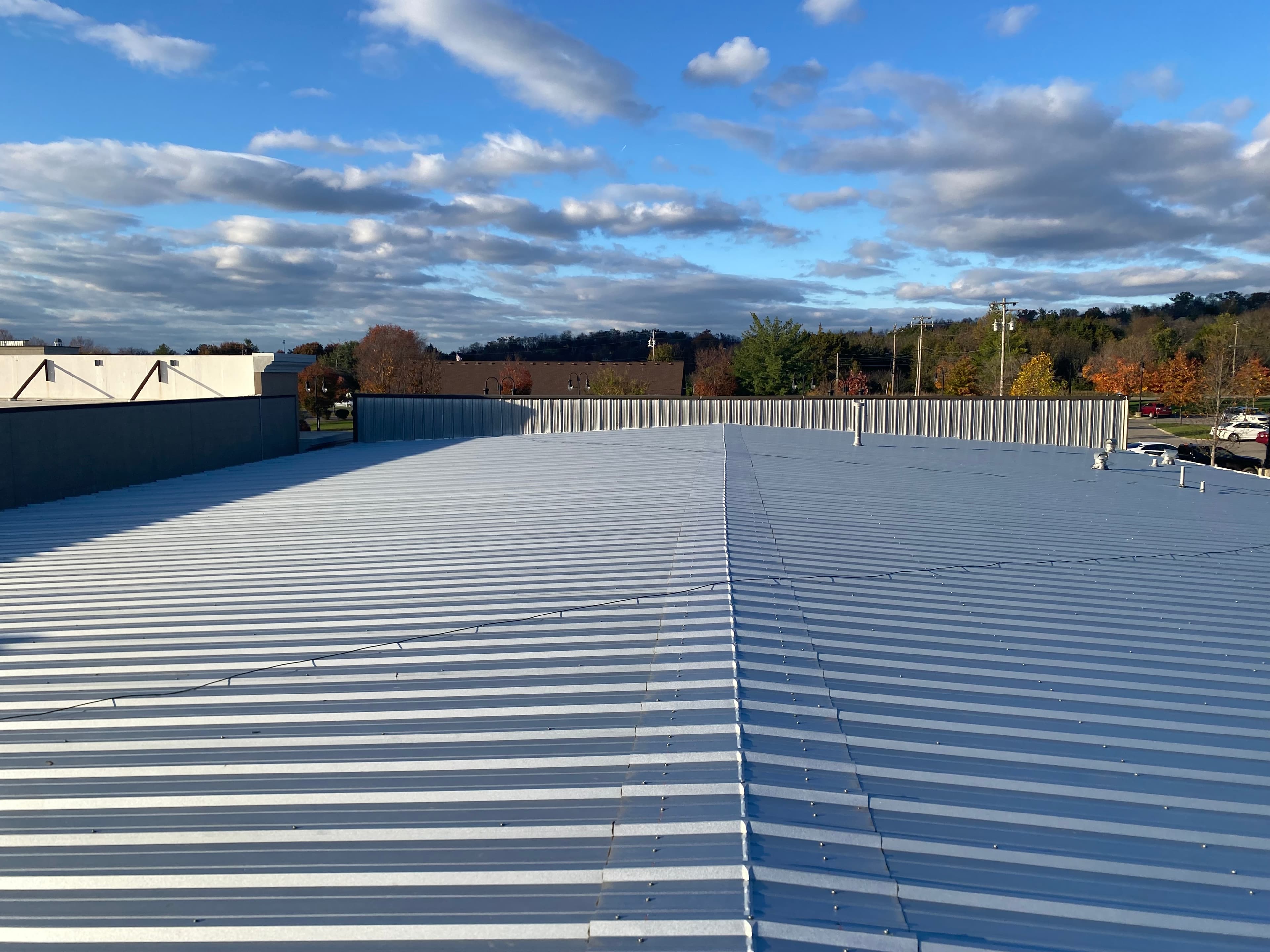
Metal roofs have a reputation for being tough. That reputation is mostly earned — but it gives a lot of Dallas property managers a false sense of security after a hail event. The roof didn't leak, nobody called, so it must be fine. That's the miss. And by the time it's not fine, the damage has had six to eighteen months to compound.
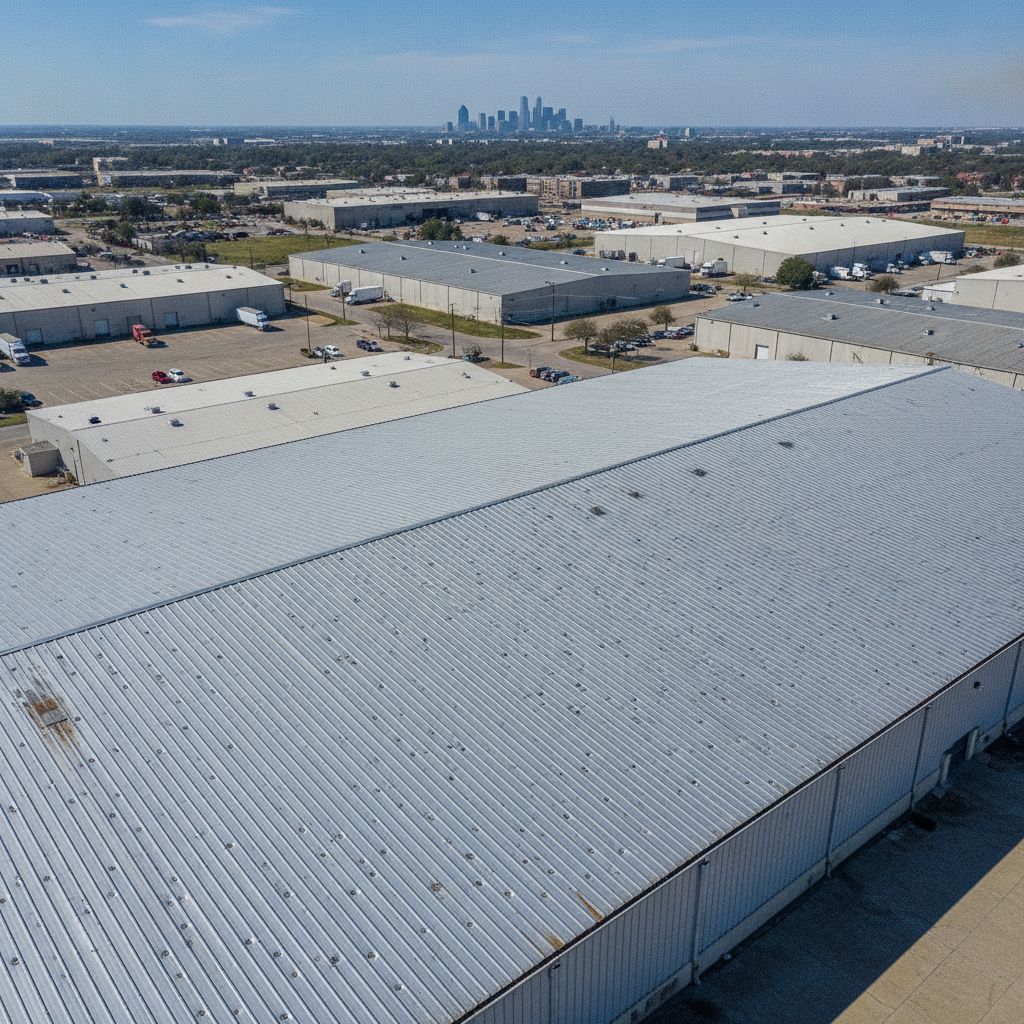
DFW gets hammered by hail. The corridor from Denton down through Tarrant and Dallas counties sits in one of the most active hail paths in the country. A storm that drops golf-ball-sized hail on a TPO flat roof gets a lot of attention because you'll find circular depressions and compromised seams fairly quickly. That same storm on a metal roof? It might look like a few shiny dents from the parking lot. Nothing dramatic. No emergency call. The clock is ticking, though.
Here's what we consistently find that property managers miss — and what it means for your building and your insurance position.
The Dent Isn't Always the Problem — the Seal Is
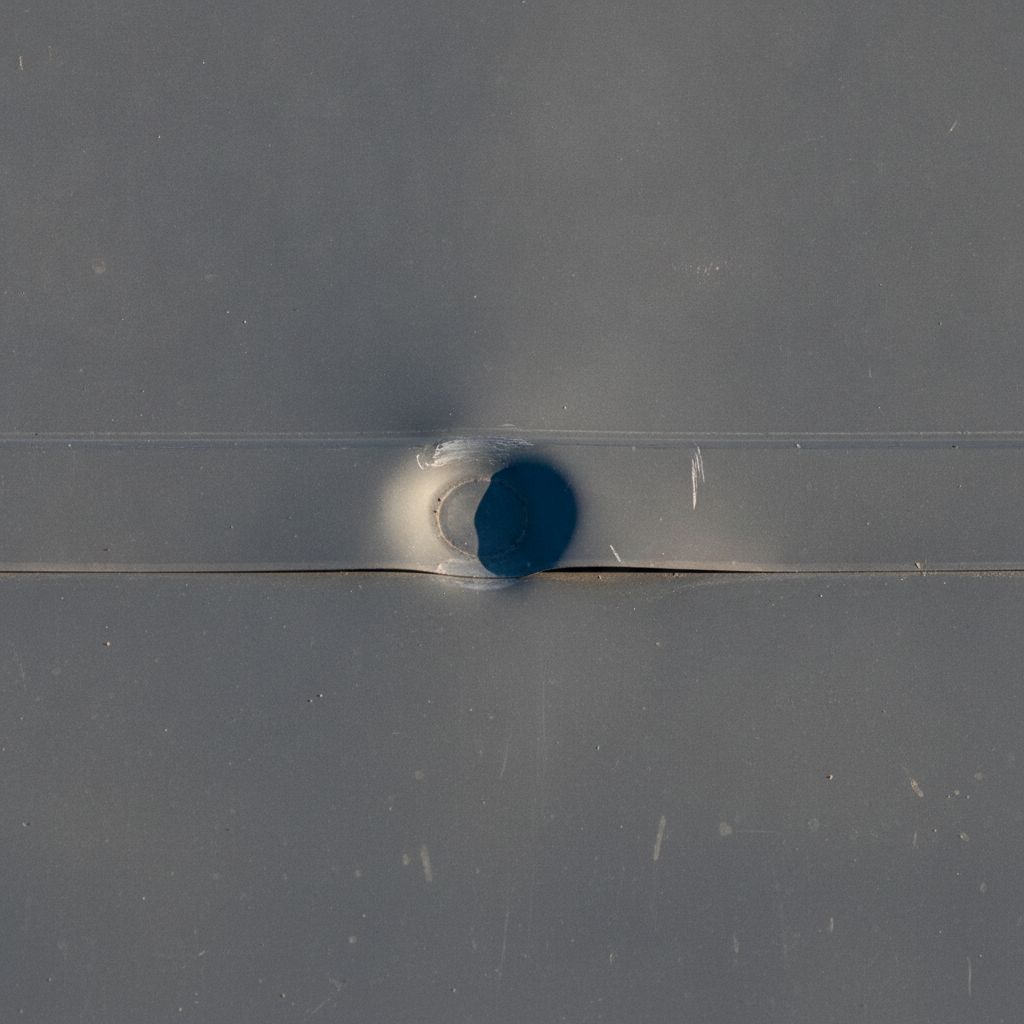
On an exposed-fastener metal roof, the waterproofing lives under the screw heads. Neoprene gaskets compress against the panel when the fastener is driven and create a weather-tight seal. Hail hits those panels at a steep angle with enough force to micro-compress the panel face and, in some cases, partially back out or cock a fastener — enough to break that gasket seal without leaving an obvious dent at the screw itself.
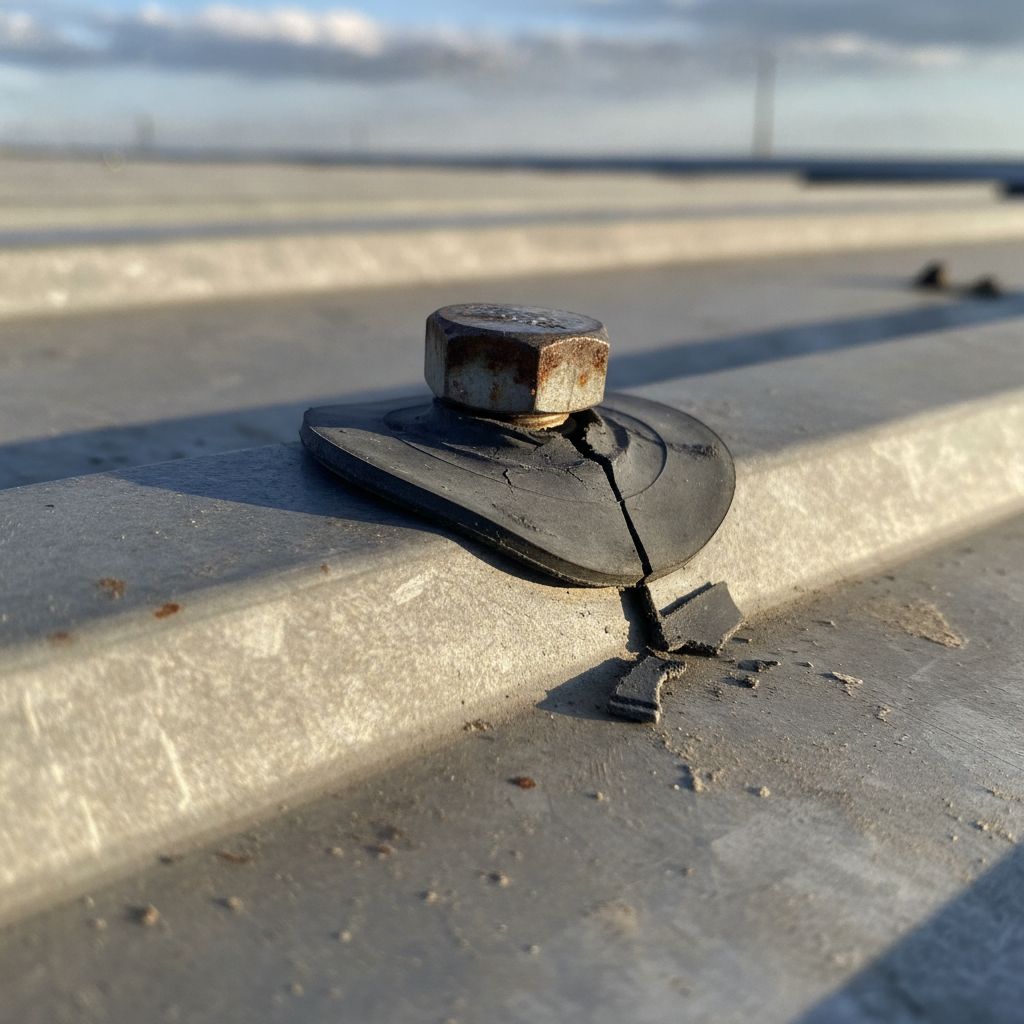
What you end up with is a gasket that looks fine from five feet away but has lost its compression. Water starts working under the head on the next rain. It can run down the underside of the panel and drip into insulation or onto structural decking for months before anyone sees a stain on a ceiling tile inside.
I've walked Dallas-area warehouse roofs — out along I-20, out toward Mesquite — where the tenants had no idea there was a problem until we flagged fourteen fastener locations in a single inspection. The roof was three years old. Completely preventable interior damage.
Standing-Seam Panels Hide a Different Problem
Standing-seam systems are more durable against hail — the raised seam is the waterproofing line, not exposed fasteners, so that failure mode largely disappears. What shows up instead is panel face denting, and here's where the cosmetic-vs-functional conversation gets complicated.
Most panel dents from hail in the 1- to 1.5-inch range are genuinely cosmetic. The seam integrity holds. Water doesn't get in. But there are two situations where those dents cross from cosmetic to functional:
Dents at or near clip locations. The hidden clip holds the panel to the structural deck. A hard impact directly over a clip can stress the panel-to-clip connection. Over time, thermal expansion and contraction cycles work that stress point and you can get panel movement that compromises the seam.
Coating damage. Most commercial standing-seam metal in the Dallas market carries a Kynar or similar fluoropolymer coating. Hail impact — especially from angular stones — can micro-fracture or chip that coating. You won't see it with the naked eye from any distance. But exposed bare metal in North Texas heat and humidity starts oxidizing within months. Rust on a painted metal roof that's supposed to last thirty years is not a cosmetic problem; it's a liability that compounds annually.
What a Post-Hail Metal Roof Walk Actually Covers
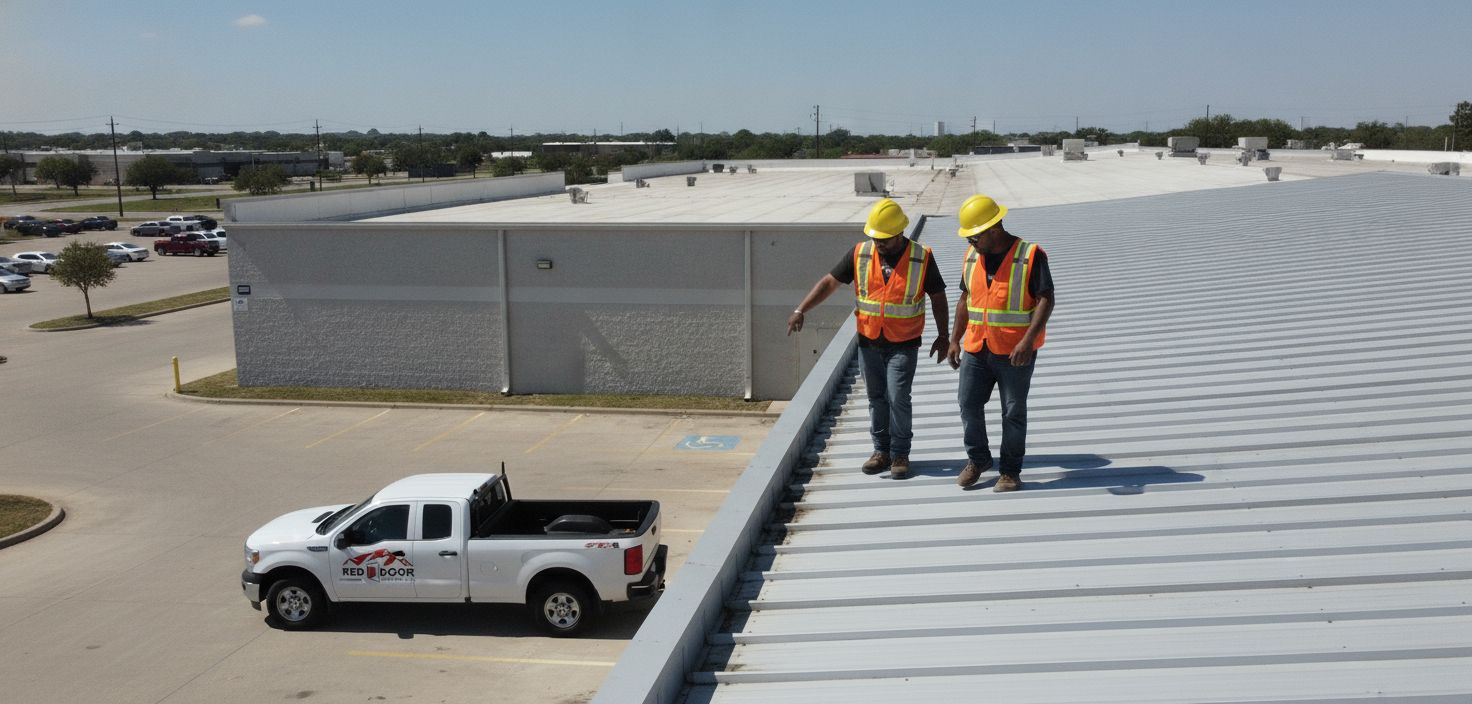
A proper post-hail inspection on a metal roof is not a quick walk-and-wave. Our crews are looking for:
- Panel face dents — catalogued by location, diameter, and depth. We use raking light and, where needed, drone footage to map the pattern across the full field.
- Coating integrity — close visual at representative dent locations; tape pull testing on suspect areas.
- Fastener seal status — manual torque check on exposed-fastener systems, visual inspection of gaskets at impact zones.
- Seam and clip integrity — tactile inspection at seam laps on standing-seam systems; any signs of panel movement or separation.
- Perimeter flashing and trim — metal-to-metal connections at eave trim, ridge cap, and parapet flashing take hail directly and dent or separate more obviously than panel faces.
- Penetrations — pipe boots, curb flashings, and HVAC curb edges are vulnerable spots where hail impact can crack aged sealant.
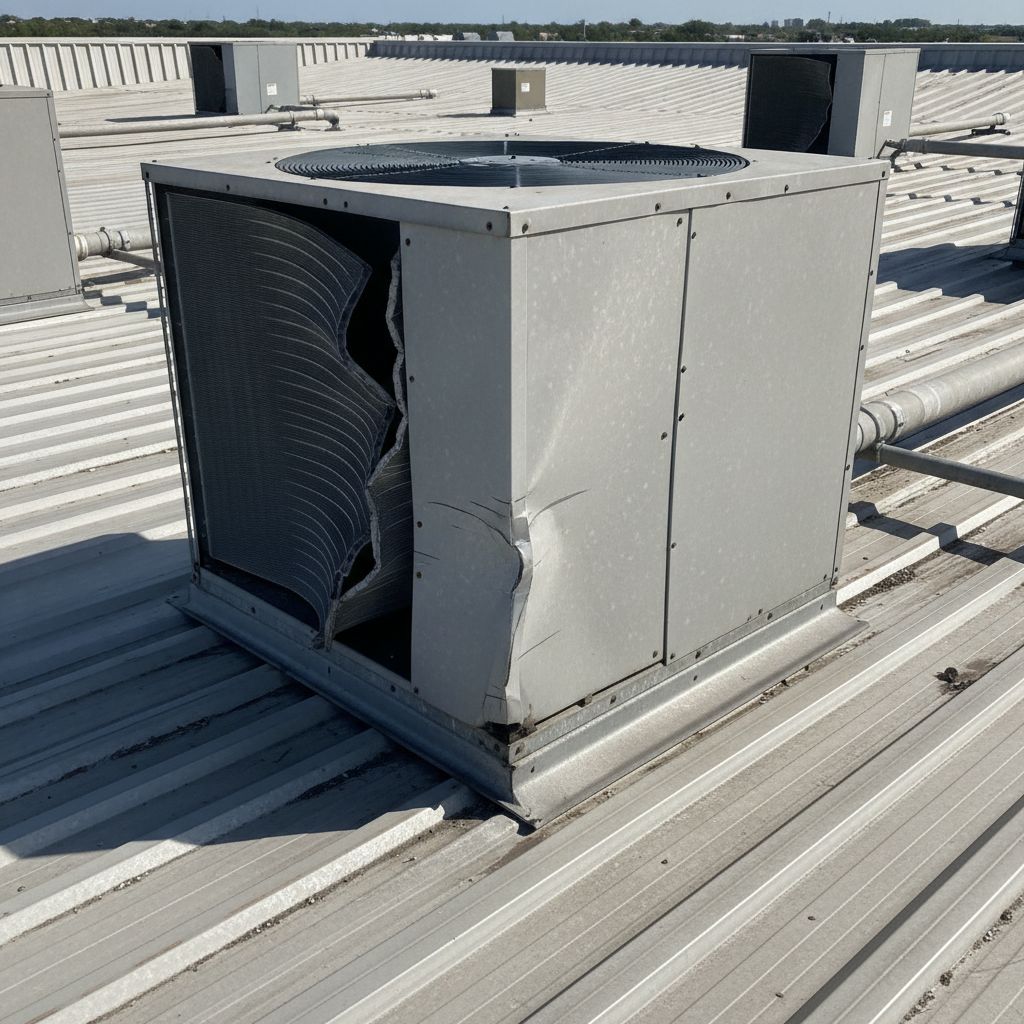
The HVAC equipment on the roof also matters — not just for its own sake, but as corroborating evidence. Bent condenser fins and dented HVAC housing document storm intensity at your specific property in a way that supports the broader roof claim. Don't overlook it.
The Insurance Position Problem
Dallas-area hail claims on metal roofs create a specific challenge: many carriers distinguish between cosmetic and functional damage in their policy language, and some commercial policies explicitly exclude cosmetic denting. If your policy has that exclusion, panel face dents alone may not generate a covered claim — but coating damage, seam compromise, and fastener seal failure are functional by definition.
The mistake we see is property managers either (a) not inspecting at all because the roof didn't leak, or (b) getting a quick look, hearing "it's just cosmetic dents," and closing the file. Neither outcome serves you well.
An inspection that clearly distinguishes cosmetic dents from functional coating breach, fastener seal failure, or seam stress gives your adjuster the documentation they need to make the right call. We're not in the business of manufacturing claims — if it's cosmetic, we'll tell you. But you need that determination in writing, from someone who walked the roof and knows what they're looking at.
Earlier documentation is always better. Hail damage on metal roofs weathers faster than most people expect. Coating chips start oxidizing within a season. Dent patterns that clearly show impact directionality become murkier as panels shift from thermal cycling. The NOAA storm records don't expire, but your physical evidence does.
Questions We Get
Can I inspect my metal roof myself after a storm? You can do a ground-level check — look for dented trim, damaged HVAC fins, gutter damage. That's useful early documentation. But the panel face, fastener, and coating inspection requires roof access and knowing what you're looking at. Hail impact patterns on metal look different from hail impact on membrane systems, and the distinction between a handling dent from installation and a fresh hail impact matters for your claim. Get a professional up there.
How big does hail have to be to actually damage a metal roof? In our experience, 1-inch hail can cause documentable coating damage on older or thinner-gauge panels, and 1.5-inch and above starts creating more meaningful panel denting and potential clip stress. Dallas storms frequently produce 1- to 2.5-inch stones — we've documented a lot of damage in that range across Tarrant and Dallas County properties over the years.
My roof didn't leak after the storm. Do I still need an inspection? Yes — and the fact that it didn't leak is exactly why the inspection is easy to skip and easy to regret. Metal roofs often hold water out for months after damage that's already compromising the coating or seal system. By the time you see interior symptoms, you've got rust starting and potentially insulation damage that wasn't there on day one.
How long after a Dallas hail event can I file a claim? Claim windows vary by carrier and policy, but most commercial policies allow one to two years from the date of loss. That said, filing sooner is consistently better. Damage patterns are cleaner, storm records are fresher, and you're ahead of the post-event claim surge that backs up adjuster schedules.
What's the difference between a standing-seam and exposed-fastener inspection? The failure modes are different enough that we approach them differently. Exposed-fastener inspections focus heavily on gasket integrity and fastener condition — that's where the water gets in. Standing-seam inspections spend more time on coating, panel face, and clip/seam integrity. Both require walking the roof; neither is something you can assess reliably from drone imagery alone, though drone footage is useful for mapping dent patterns across a large field.
If you manage a metal-roofed property anywhere in the DFW metro and you've had a significant hail event in the last twelve months without a documented inspection, it's worth getting eyes on it. We've covered what general hail signs look like in our commercial hail damage checklist and what hidden damage looks like across roof types in our hidden hail damage post — but metal roofs have enough specific quirks that they warrant their own look. Get that inspection on record before another storm season starts.
Want a professional assessment of your property? No-obligation inspection with photo-keyed documentation.
Request InspectionMore From the Blog
- Commercial Roof Coating: Skip the Tear-Off in GreenvilleWhen your Greenville commercial roof deck is still sound, a coating may add 10–20 years. Here's how …
- Storm Damage Roof Documentation: What Carriers NeedWhat a carrier-ready storm damage roof report must include to get Charlotte commercial insurance cla…
- Warehouse Roof Warning Signs Before Birmingham WintersCatch commercial roof problems before cold weather turns them into emergencies. A Birmingham roofer'…