The Three Systems
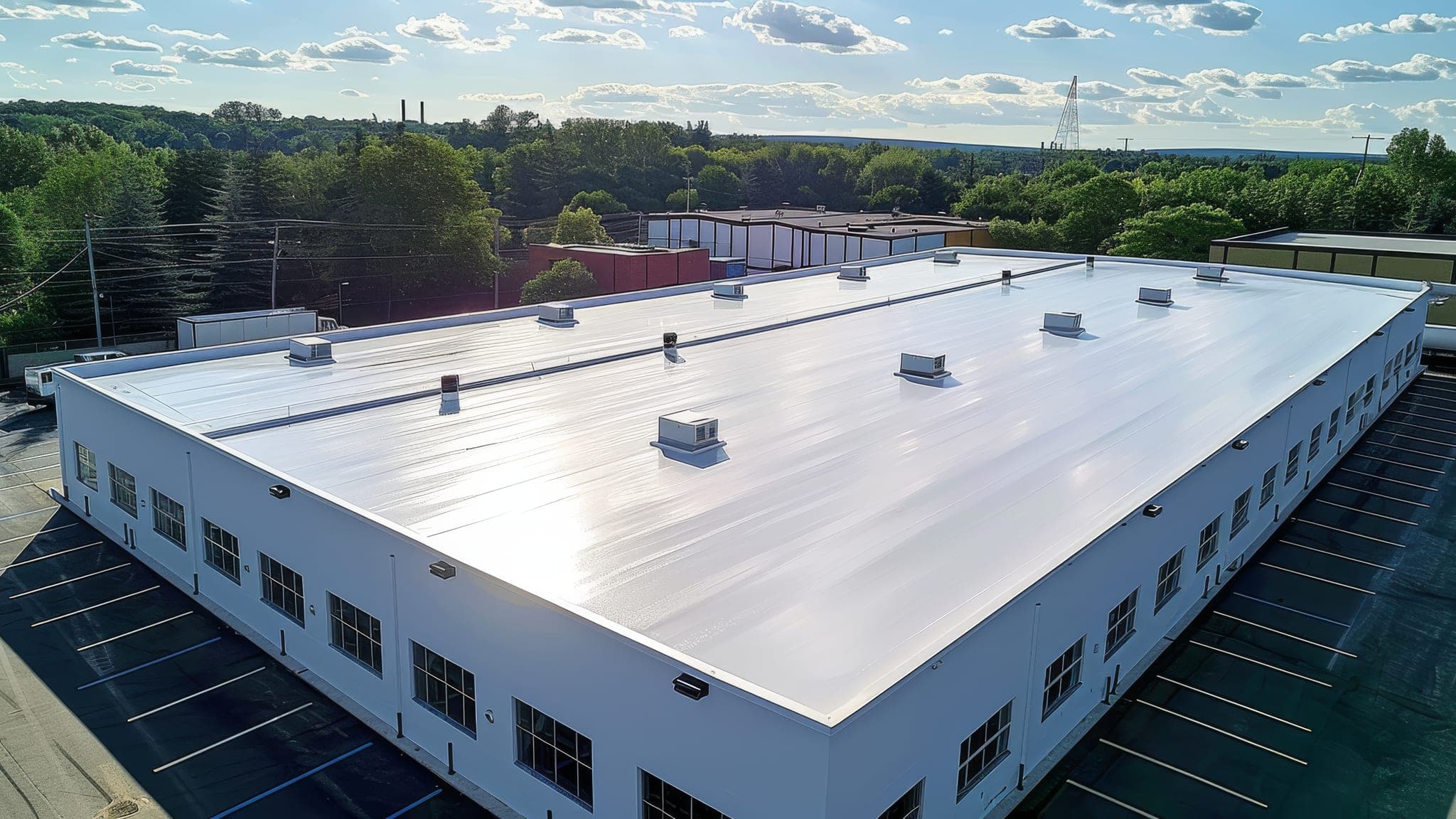
TPO (Thermoplastic Polyolefin). White, heat-weldable seams. Reflects sunlight. Lifecycle typically 15–20 years.
EPDM (Ethylene Propylene Diene Monomer). Synthetic rubber. Black or white. Adhered with tape or liquid. Lifecycle typically 20–25 years.
PVC (Polyvinyl Chloride). White, heat-weldable. Chemical-resistant. Premium pricing. Lifecycle 20+ years.
Climate Fit
In the Southeast's UV-heavy climate, reflective white surfaces (TPO, white EPDM, PVC) pay back in reduced HVAC load. Black EPDM is still specified in cooler climates or where aesthetics dictate.
Repairability
All three are field-repairable. TPO and PVC require hot-air welders for seam repairs - most commercial contractors carry them. EPDM uses tape or adhesive patches, which some crews find simpler for small repairs.
Chemical Exposure
PVC leads for grease, oil, and animal-fat exposure (restaurant and food-processing rooftops). TPO and EPDM handle typical commercial environments fine but can degrade faster near exhaust vents or grease traps.
Cost Ranking
Economical ← EPDM → TPO → PVC → Premium
Actual project pricing varies widely by labor market, membrane thickness, and accessory scope.
Recommendation Matrix
| Property | Recommended |
|---|---|
| New Southeast multifamily | TPO |
| Retrofit over existing BUR | EPDM (adhered) |
| Restaurant / food processing | PVC |
| Light industrial | TPO or EPDM |
| Budget-driven portfolio | EPDM |
What We Don't Recommend
- Mixing systems across a single roof section
- Specifying thin-gauge membrane to hit budget (re-spec the scope, not the thickness)
- Skipping flashing upgrades when re-membraning
Further Reading
For substrate-level depth on each system, start with the dedicated material pages: TPO Roofing, Flat Roof Systems comparison, and Metal Roofing. For an answer-first explainer of TPO specifically, see "What Is TPO Roofing?" - the commercial owner's working-knowledge guide covering composition, installation methods, mil thickness, lifespan drivers, and cost ranges.
Frequently Asked Questions
Is TPO or EPDM better for a Southeast flat roof?
When should I choose PVC over TPO for a commercial flat roof?
How long do TPO, EPDM, and PVC roofs last on a commercial building?
Related Guides
- ACV vs RCV Cheat Sheet for Commercial PoliciesPlain-language ACV vs RCV on commercial roof insurance - how carriers calculate depreciation, when R…
- Roof Certification vs Roof InspectionWhat insurance underwriters, lenders, and asset managers actually want from a roof certification - a…
- Storm Damage & Commercial Roof Insurance ClaimsA property owner's guide to documenting storm damage and navigating a commercial roof insurance clai…