Commercial Roofing in Cullman, Alabama
Inspection, documentation, and insurance-supported roof replacement for commercial and multifamily properties across Cullman.
Commercial & Multifamily Roofing Across the Cullman Micropolitan
Red Door Roofing's Cullman commercial portfolio is anchored by a Cullman Regional Medical Center healthcare footprint, a poultry-processing and agricultural-industrial core that spans multiple export-scale plants and cold-storage operations, and an I-65 retail and hospitality corridor at Exit 308 and Exit 310. Downtown Cullman carries heritage masonry buildings with built-up and modified-bitumen low-slope roofs, while the Cullman Industrial Park and Folsom Industrial Park host long-span metal and TPO roofs on automotive-supplier and light-manufacturing tenants feeding the Huntsville and Decatur plants. Multifamily inventory along US 31 and AL 157 includes garden-style workforce housing, age-restricted communities, and newer market-rate development. Every Red Door Roofing project in Cullman is documented in a photo-keyed PDF that ties drone orthomosaic imagery to on-roof photographs and dimensioned roof plans, so owners, lenders, and carriers review identical evidence.
Red Door Roofing serves commercial, multifamily, and agricultural-industrial property owners across Cullman and the broader Cullman County market, a German-heritage community along Interstate 65 that anchors north-central Alabama between the Birmingham metro and the Huntsville aerospace corridor. Cullman's commercial roofing footprint is unusual for a city of roughly nineteen thousand residents because the regional economy pulls volume from far outside the municipal boundary. Cullman Regional Medical Center operates a campus of clinical buildings, specialty offices, and support facilities that require round-the-clock climate stability, which places roofing performance on the same priority tier as generator uptime and HVAC redundancy. The city's poultry-processing plants, feed mills, hatcheries, and agricultural cold-storage operations generate interior moisture, airborne chemistries, and high mechanical vibration loads that accelerate membrane seam stress and metal fastener fatigue. Along the US 31 and AL 157 corridors, multi-tenant retail, bank branches, veterinary clinics, QSR restaurants, auto-service centers, and professional office parks cluster around the I-65 Exit 308 and Exit 310 interchanges, where lease turnover and franchise remodel cycles drive ongoing commercial roof work. Light-manufacturing tenants inside the Cullman Industrial Park and Folsom Industrial Park operate long-span metal and TPO roofs over machine shops, plastics injection, metal fabrication, and automotive-supplier lines that feed tier-one plants in Huntsville and Decatur. Older downtown Cullman, centered on the historic warehouse district and the Cullman County Courthouse square, carries a heavy inventory of low-slope built-up and modified-bitumen roofs over masonry buildings that trace back to the city's 19th-century rail-and-agriculture founding. Red Door Roofing documents every inspection with a photo-keyed PDF that ties drone imagery, on-roof photographs, and moisture-scan findings to a dimensioned roof plan, so building owners, asset managers, and insurance carriers can review the same evidence package. When no storm damage is found during an inspection, a Certificate of Clearance is issued so ownership has a dated record for lender files, tenant disclosures, and future claim comparisons.
Cullman Business Parks & Office Districts We Serve
Our commercial roofing work in Cullman concentrates around the metro's largest office parks and corporate districts. Each of these business parks contains multiple commercial and mixed-use tenants where tenant-in-place scheduling, after-hours production windows, and coordinated material staging matter as much as the roof scope itself. Commercial-grade flat roof systems and pitched multifamily assemblies are both well represented across these parks - our inspections walk every roof section, every transition, and every drain to build a complete condition document suitable for carrier, lender, and asset-manager review.
- Cullman Industrial Park
- Folsom Industrial Park
- Cullman Regional Medical Center Campus
- Cullman County Agri-Business Center area
- North Cullman Business Park
- US 31 North Commercial District
- AL 157 East Commercial Corridor
- Cullman Interchange Business District (I-65 Exit 308)
Primary Cullman Commercial Corridors
Cullman's commercial and multifamily stock clusters along a handful of primary corridors. Our inspection and replacement work tracks along these corridors where commercial density, tenant complexity, and storm exposure concentrate. Routing and material staging around these corridors is part of every Cullman project plan - peak commuter hours, event calendars, and fire-lane requirements all factor into how we schedule.
- US Highway 31 North
- US Highway 31 South
- AL Highway 157
- AL Highway 69
- 2nd Avenue SW (Downtown Cullman)
- Cherokee Avenue SW
Cullman Multifamily Districts
Multifamily roof replacement demands phased scheduling so tenants stay in place. Our work across Cullman's multifamily districts follows building-by-building production schedules with tenant-notice templates and noise-window coordination per property. Asset managers receive portfolio-level closeout documentation; property managers receive a phased Gantt-style schedule they can share with residents and operations teams; leasing teams receive advance notice for unit-turn and move-in coordination.
- US 31 North multifamily corridor
- Cullman High School / AL 157 area apartments
- South Cullman workforce housing
- Hanceville Road age-restricted communities
- Downtown-adjacent mixed-use rental
Cullman Storm & Severe-Weather History
Cullman County averages multiple severe-weather events annually between March and May, with a secondary November severe window. Hail in the 1.00 to 1.75 inch range is the dominant commercial roof threat, and EF-scale tornado activity is a recurring regional risk documented through the 2011 Super Outbreak and subsequent spring outbreaks. Red Door Roofing tracks NOAA Storm Events data by ZIP code and maintains dated-event inspection logs per property so owners can correlate visible roof conditions with specific storm dates. Photo-keyed PDF documentation establishes pre- and post-event baselines.
Cullman sits inside north-central Alabama's peak severe-weather corridor, and the city's roofing cadence is shaped by a documented history of high-end tornado events and hailstorms that rank among the most destructive in the southeastern United States. The 2011-04-27 Super Outbreak cut a concentrated damage swath through Cullman County, producing EF3 and EF4 tornadoes that leveled rural structures, damaged the downtown square, and generated insurance claim volume measured in the tens of thousands across Cullman and neighboring DeKalb and Jackson counties. The 2019-03-03 severe weather outbreak brought widespread wind and hail damage across north Alabama, and the 2023-01-12 central Alabama tornado outbreak pushed supercell activity along the I-65 spine with documented touchdowns south and west of the city. Spring supercell windows from March through May and a secondary November window produce recurring hail events in the 1.00 to 1.75 inch range, which is the threshold where asphalt shingle bruising, metal panel denting, TPO and EPDM membrane punctures from wind-driven debris, and accessory damage to flashings, pipe boots, and HVAC curbs appear across commercial stock. Red Door Roofing documents each storm-response inspection with dated high-resolution photographs, drone orthomosaics, and measured impact counts per roof slope or low-slope field area, and all findings are compiled into a photo-keyed PDF referenced by roof section. Deductible percentages on commercial and multifamily policies in Cullman County commonly run 1% to 5% of insured value for wind and hail perils, and the carrier makes the final determination on covered scope, depreciation, and replacement cost recovery.
Notable documented Cullman-area events
2011-04-27 · EF3/EF4 Tornado Outbreak (Super Outbreak)
Widespread catastrophic damage across Cullman County with a direct hit on downtown Cullman and rural structures across the county.
2019-03-03 · Severe weather outbreak
Wind and hail damage reported across north Alabama counties including Cullman.
2023-01-12 · Central Alabama tornado outbreak
Supercell activity along the I-65 spine with tornado touchdowns in central AL and wind damage extending into Cullman County.
2024-03-14 · Spring thunderstorm complex
Hail and straight-line wind reports across north Alabama with documented commercial roof damage.
Insurance Process in Cullman
Commercial and multifamily policies across Cullman County commonly carry 1% to 5% wind-and-hail percentage deductibles on insured building value, and named-storm deductibles are not standard for this interior-Alabama market. The carrier makes the final determination on covered scope, depreciation, and RCV recovery. Red Door Roofing does not guarantee insurance outcomes, does not negotiate claim terms with carriers on behalf of owners, and delivers photo-keyed PDF evidence that ownership uses directly with its retained adjuster, agent, or claim professional across the entire claim cycle from first notice of loss through final payment or Certificate of Clearance.
Photo-keyed PDF inspection reports and Certificates of Clearance are formatted for lender asset files, CMBS reporting, and carrier claim review. Certificates of insurance are issued to named parties on request.
Commercial Roof Systems Common in Cullman
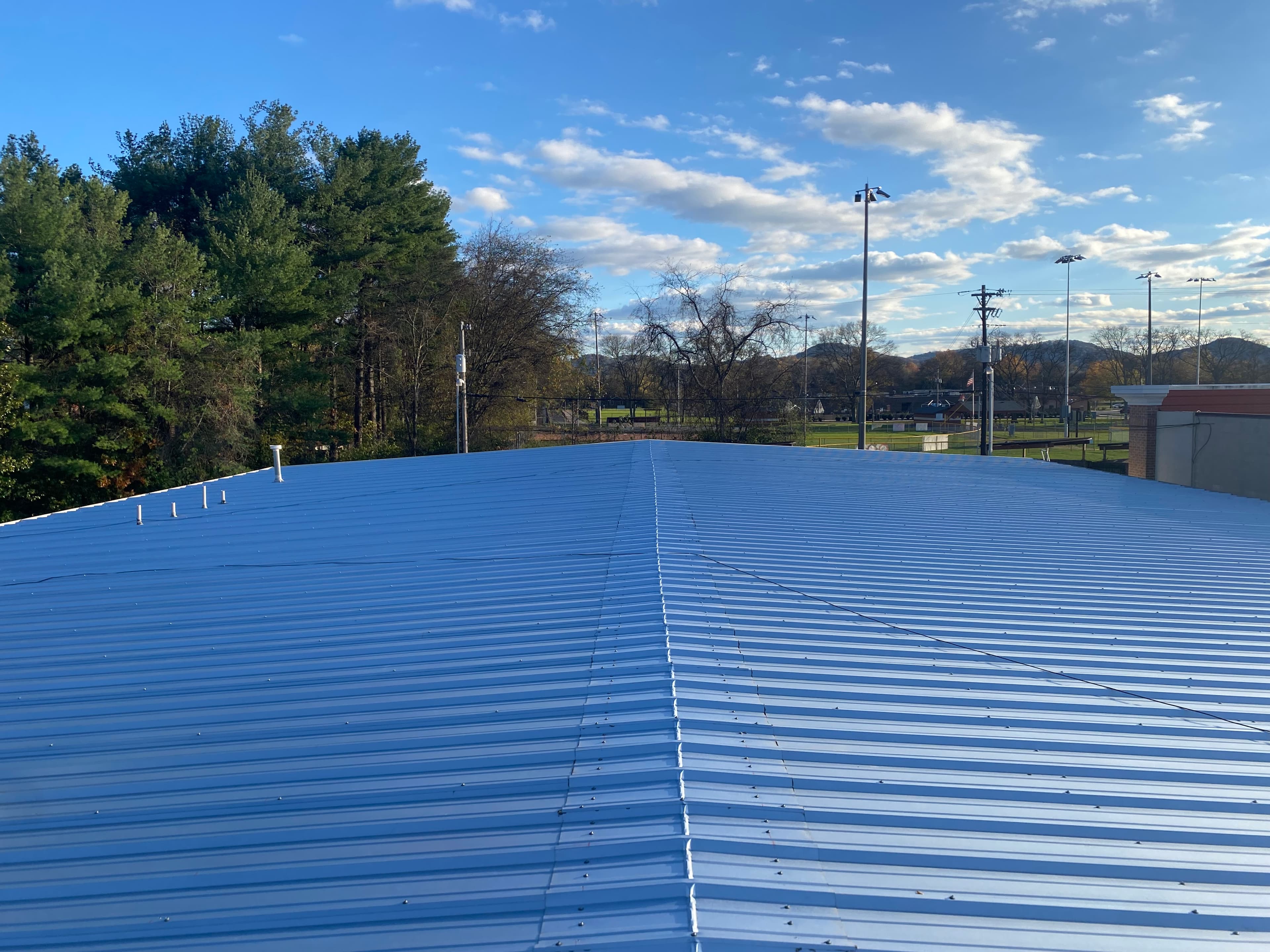
Mechanically attached and fully adhered TPO, EPDM, modified bitumen, built-up roofs on legacy downtown masonry, standing-seam and R-panel metal on poultry and ag-industrial, and asphalt shingles on hospitality and office conversions.
Cullman Landmarks & Properties We've Served Near
Our commercial and multifamily roofing work crosses paths with Cullman's most recognizable properties and corridors. These landmarks anchor the commercial districts we work in daily - they're not just tourism references, they're the neighborhoods where property managers ask us to inspect multifamily, retail, hospitality, and office stock.
- Cullman Regional Medical Center
- Ave Maria Grotto
- Cullman County Courthouse
- Sportsman Lake Park
- Clarkson Covered Bridge
- Smith Lake
- Duchess Bakery (downtown Cullman)
- Cullman County Agricultural Trade Center
Property Types We Serve in Cullman
- Cullman Regional Medical Center
- Cullman County Courthouse
- Ave Maria Grotto (St. Bernard Abbey)
- Cullman Civic Center
What a Cullman Commercial Roof Inspection Includes
Every Cullman commercial inspection we perform produces a photo-keyed PDF report built for the way Alabama adjusters, lenders, and asset managers actually work. We walk the full roof system - every slope, every drain, every penetration, every transition - and document what we see with photos referenced to a building or unit location. No generic stock photos. No marketing filler. Just the evidence a carrier needs to make a scope determination on a real commercial property.
On multifamily buildings we document building-by-building, which matters because a 300-unit Cullman complex may show damage concentrated on two of eight roofs. Adjusters want that level of granularity, and the documentation protects the owner from a blanket-scope claim that gets pared back in review.
The inspection report identifies your existing roof system (TPO, EPDM, PVC, modified bitumen, BUR, asphalt shingle, metal, or a mixed portfolio), estimates remaining useful life, flags flashing and penetration condition, and notes any observed damage with date-of-loss alignment where applicable. We also call out situations where we recommend repair rather than replacement - our business is not built on upselling.
Working With Cullman Adjusters and Carriers
Most Cullman commercial claims don't fail on the damage - they fail on documentation gaps or scope- supplement misunderstandings with the adjuster. Our inspection reports are formatted to match what Cullman-area commercial adjusters routinely request: photo-keyed damage evidence, roof-system identification, a priced scope against local labor and material norms, and a repair-vs-replacement recommendation grounded in observed condition.
When an adjuster's initial scope misses legitimate work - underlayment, code-required upgrades, perimeter metal, additional penetrations - we submit a supplement with supporting documentation. Reasonable supplements with good evidence are typically approved. We don't submit questionable supplements, and we don't push scope that wasn't clearly warranted by what we photographed. Cullman adjusters are experienced, and credibility is the currency we operate on.
Typical Cullman Commercial Roof Project Timeline
A typical Cullman commercial roof project runs 30–120 days from inspection to installation completion. Here's how that calendar breaks down on a mid-size property:
- Week 1: on-site inspection, photo-keyed report delivered to owner
- Weeks 2–3: claim filed, adjuster assigned, on-roof walk with adjuster + contractor
- Weeks 3–6: initial scope received, supplement filed for any missed work, approved scope returned
- Weeks 6–10: material procurement, tenant-notice distribution, phased production schedule built
- Weeks 10–16: on-roof production, daily photo documentation, weekly progress check-ins
- Weeks 16–17: final walk, punch-list completion, closeout documentation to lender and carrier
Multifamily properties in Cullman with 100–300 units typically run on the longer end of that range; smaller commercial buildings close faster. Material lead times on TPO, EPDM, and PVC are the usual timeline variables. We share a phased Gantt schedule so operations, leasing, and asset-management teams can plan around the work.
Cullman Regional Medical Center and the healthcare roofing footprint
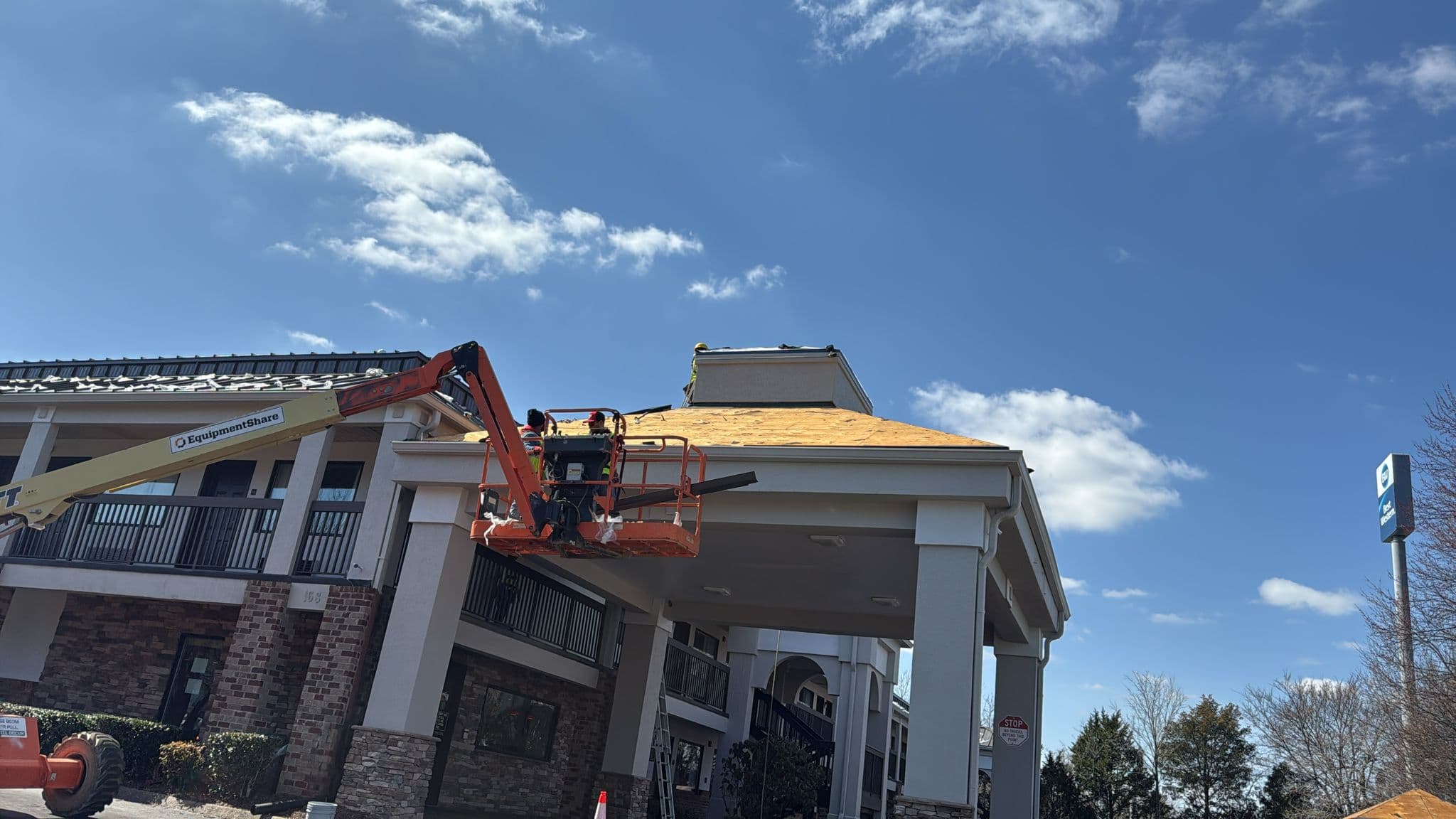
Cullman Regional Medical Center anchors the city's healthcare commercial market and represents the most operationally sensitive roof inventory in the county. The main hospital campus, outpatient specialty buildings, the cancer center, imaging suites, and physician-office pavilions collectively form a multi-roof portfolio where a single membrane failure can affect operating rooms, pharmacy climate control, imaging-equipment stability, and patient-room quiet-hour compliance. Red Door Roofing approaches healthcare roofs with dated infection-control and interim-life-safety coordination so that tear-off, debris management, and hot-work restrictions are aligned with the hospital's ICRA protocols. Photo-keyed PDF documentation captures pre-construction conditions, daily progress, and completed scope in a format that facilities directors can forward directly to hospital leadership, the Joint Commission file, and the insurance carrier if the work is claim-driven.
The medical office buildings and ambulatory clinics that orbit the hospital campus carry a mix of TPO, modified bitumen, and standing-seam metal roofs, and each building is inspected on its own photo-keyed report so that landlord-tenant reimbursement arrangements, triple-net expense pass-throughs, and lender reserve studies reference identical documentation. Red Door Roofing coordinates staging, crane picks, and HVAC curb replacement with specialty contractors already operating inside the campus, and scope items are broken out by roof section so the hospital's capital-planning team can sequence large replacements across multi-year budget cycles.
Because Cullman Regional Medical Center serves a wide rural catchment across Cullman, Winston, Blount, and Walker counties, patient volume is concentrated at particular times of day and during seasonal peaks, and Red Door Roofing schedules all active roof work around surgical and imaging calendars. Every project plan includes a weather-watch protocol so tear-off stops before dry-in when radar shows a closing supercell window, which is common during north Alabama's March-to-May and November severe seasons. Documented interim-life-safety measures, dust-control barriers, and coordinated elevator and utility shutdowns are referenced inside the photo-keyed PDF so the hospital's compliance officer, the carrier, and the lender all review identical daily-log evidence. Certificates of Clearance are issued per inspected roof section on any post-storm visit that finds no damage, giving the campus a dated baseline that can be compared against future events without reopening the file.
- ICRA-compliant staging and debris management for hospital work
- Photo-keyed PDF reports formatted for Joint Commission file retention
- Coordinated HVAC curb and mechanical penetration rework
- Multi-year capital planning for campus-wide membrane phasing
Poultry processing, agricultural industrial, and the I-65 logistics corridor
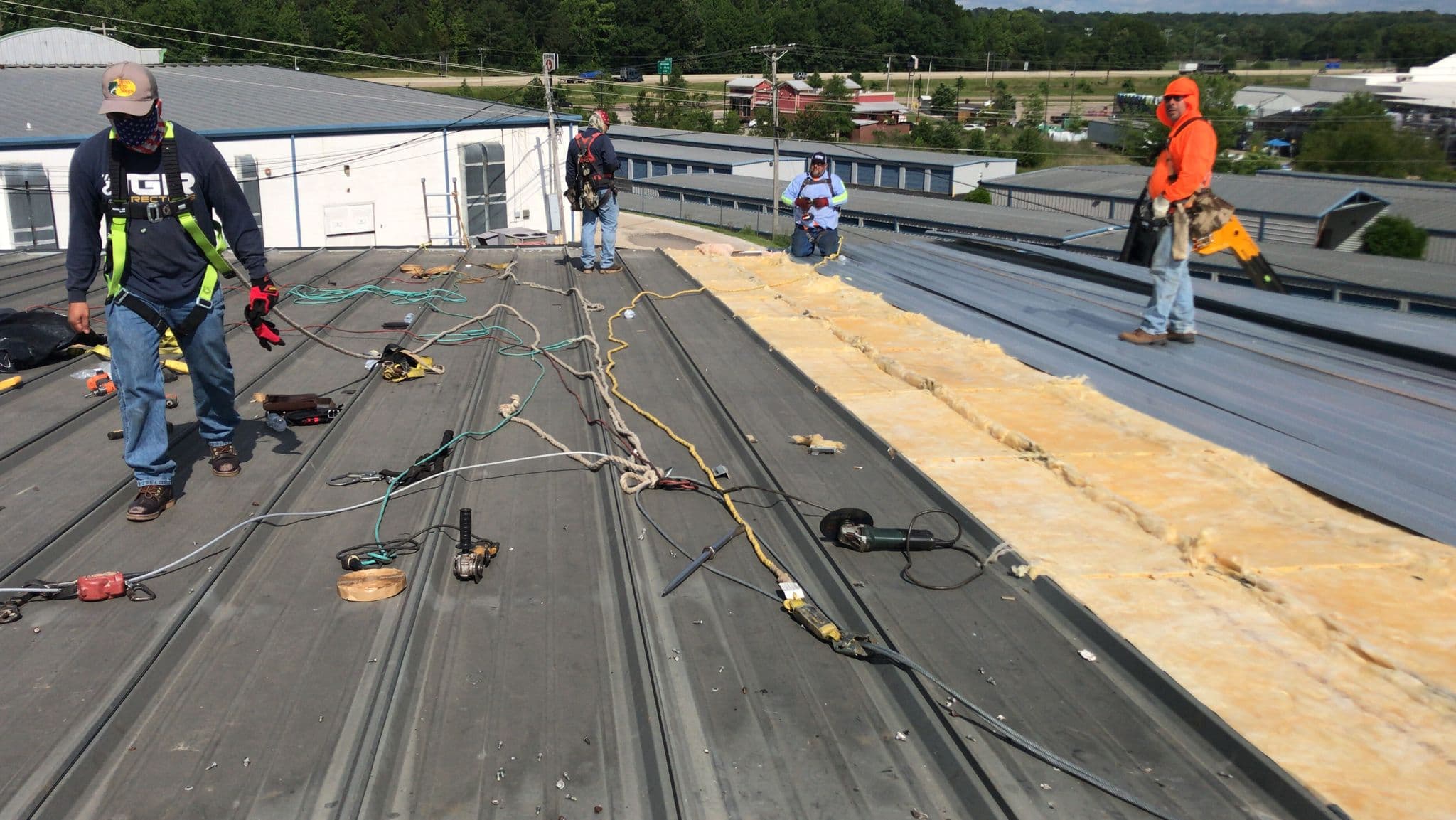
Cullman County is one of the most significant poultry-processing centers in the Southeast, and the roofing demands of plant operations, hatcheries, feed mills, and cold-storage facilities are unlike any other commercial segment in the region. Interior humidity, chemical wash-down routines, and exhaust-stack emissions accelerate coating wear, seam degradation, and fastener corrosion. Red Door Roofing builds plant-specific inspection protocols that include seam-probe sampling, infrared moisture scans on insulated metal panel roofs, documented fastener pull tests, and photo-keyed PDF reporting cross-referenced to the plant's sanitation-zone map. Scheduling is coordinated with production shifts so tear-off and dry-in work never overlaps with live wash-down or sanitation cycles.
The broader I-65 logistics and light-manufacturing corridor, including the Cullman Industrial Park and Folsom Industrial Park, serves automotive-supplier tenants shipping to Huntsville, Decatur, and Birmingham. These roofs are typically TPO or standing-seam metal over tilt-up or pre-engineered metal structures, and Red Door Roofing prepares phased replacement scopes that maintain truck-dock and yard circulation throughout construction. Photo-keyed PDF deliverables are formatted for tenant, landlord, and lender review.
Cullman County's poultry cluster also generates a surrounding ecosystem of feed mills, grain-handling facilities, and agricultural cold-storage buildings that each carry distinct roof-performance demands. Feed mills and grain elevators have airborne dust loads that deposit on flashings and in drain strainers and accelerate low-slope ponding when drain maintenance slips. Cold-storage facilities carry thermal gradients that stress insulation and vapor-retarder assemblies and make moisture infiltration particularly damaging. Red Door Roofing's photo-keyed PDF inspections on agricultural commercial assets include infrared moisture scan imagery where warranted, dated drain-condition documentation, and measured slope-to-drain verification where ponding is suspected. Storm-response inspections after dated hail events check every fastener row, every skylight, and every mechanical curb on long-span metal and low-slope sections. Certificates of Clearance on sound agricultural roofs carry the same weight for carrier files and lender reserve studies as they do on more conventional commercial stock.
Downtown Cullman, courthouse square, and German-heritage commercial stock
Downtown Cullman retains a dense inventory of late-19th and early-20th-century masonry commercial buildings organized around the Cullman County Courthouse square and the German-heritage street grid laid out by city founder Col. Johann Cullmann. These buildings predominantly carry low-slope built-up, modified-bitumen, and occasional coated-metal roofs, many of which have seen multiple re-cover cycles and carry embedded parapet, cornice, and skylight conditions that complicate tear-off and replacement. Red Door Roofing inspects these roofs with attention to masonry through-wall flashing, cornice cap integrity, and historic skylight detailing, and the photo-keyed PDF deliverable documents every transition.
Historic-register and historic-district buildings are scoped with materials and detailing that preserve exterior appearance while upgrading water management and wind performance. Red Door Roofing coordinates with the city's planning and historic-preservation staff where required, and Certificates of Clearance are issued when downtown roofs are inspected and found to be sound, which gives owners a dated baseline as insurance markets continue to tighten on aging commercial stock.
The downtown Cullman commercial district also carries a growing inventory of mixed-use redevelopment projects where upper-floor residential, short-term-rental, and creative-office tenants sit above street-level retail and restaurant commercial. These tenants cannot tolerate water infiltration events or prolonged construction noise, and Red Door Roofing schedules tear-off and replacement work around event calendars, tourism peaks tied to Ave Maria Grotto and the Cullman Oktoberfest celebration, and retail-tenant seasonality so business interruption is minimized. Photo-keyed PDF inspections on mixed-use heritage stock capture both the low-slope field condition and the vertical parapet, fire-wall, and neighboring-roof transition detailing that commonly drives leak origin on multi-building downtown rows. Every mixed-use inspection packages the evidence into a single owner file that lender, tenant, and insurance stakeholders reference together. Certificates of Clearance are issued on sound mixed-use roofs and are especially valuable when ownership is preparing a refinance, an investor-sale package, or a preservation-grant application.
- Masonry parapet and cornice flashing documentation
- Historic-district coordination for downtown replacements
- Certificates of Clearance for sound legacy roofs
- Photo-keyed PDF transitions at every penetration
Why Cullman Property Owners Choose Red Door Roofing
30+ years, Red Door family
Built on 30 years of commercial experience across the Southeast. Notable clients include Best Western, Harbor Freight, Tractor Supply, and Vanderbilt Medical Clinic.
Carrier-ready documentation
Photo-keyed inspection reports formatted for Cullman-area adjuster and lender workflows. No guarantees on claim outcomes - the carrier calls that.
Tenant-in-place phasing
Multifamily work phased by building block with tenant-notice templates, noise windows, and operations- team documentation. Tenants stay in place.
No-obligation inspection
If our Cullman inspection finds no qualifying damage, we issue a Certificate of Clearance - suitable for lender, insurer, and asset-manager files. No further commitment.
Cullman Commercial Roofing FAQs
How does Red Door Roofing handle poultry-processing plant roofs in Cullman?
Can Red Door Roofing coordinate phased roof replacements on Cullman multifamily properties?
Does Red Door Roofing perform drone inspections in Cullman?
What happens if a Cullman roof is cleared with no damage after a hailstorm?
Does Red Door Roofing inspect commercial properties in Cullman?
How does the commercial insurance claim process work after a Cullman hailstorm?
What roofing systems are most common on Cullman commercial buildings?
Is Red Door Roofing licensed in Alabama?
How soon can a commercial inspection be scheduled in Cullman after a storm?
What does a Certificate of Clearance from Red Door Roofing mean?
Nearby Alabama Cities We Also Serve
Our commercial roofing coverage extends across Alabama. These three Cullman-adjacent cities are part of our routine service footprint.
Need a Cullman inspection?
Call us directly at 1-855-GO4REDD or request a no-obligation inspection online. Most Cullman-area inspections are scheduled within days of the request.
Request InspectionSchedule a Cullman Roof Inspection
No obligation. Documented findings you can use for insurance, lender, or asset-manager records.
30+ Years of Red Door Family Experience · 16 States
Free · No obligation · No follow-up sales calls