
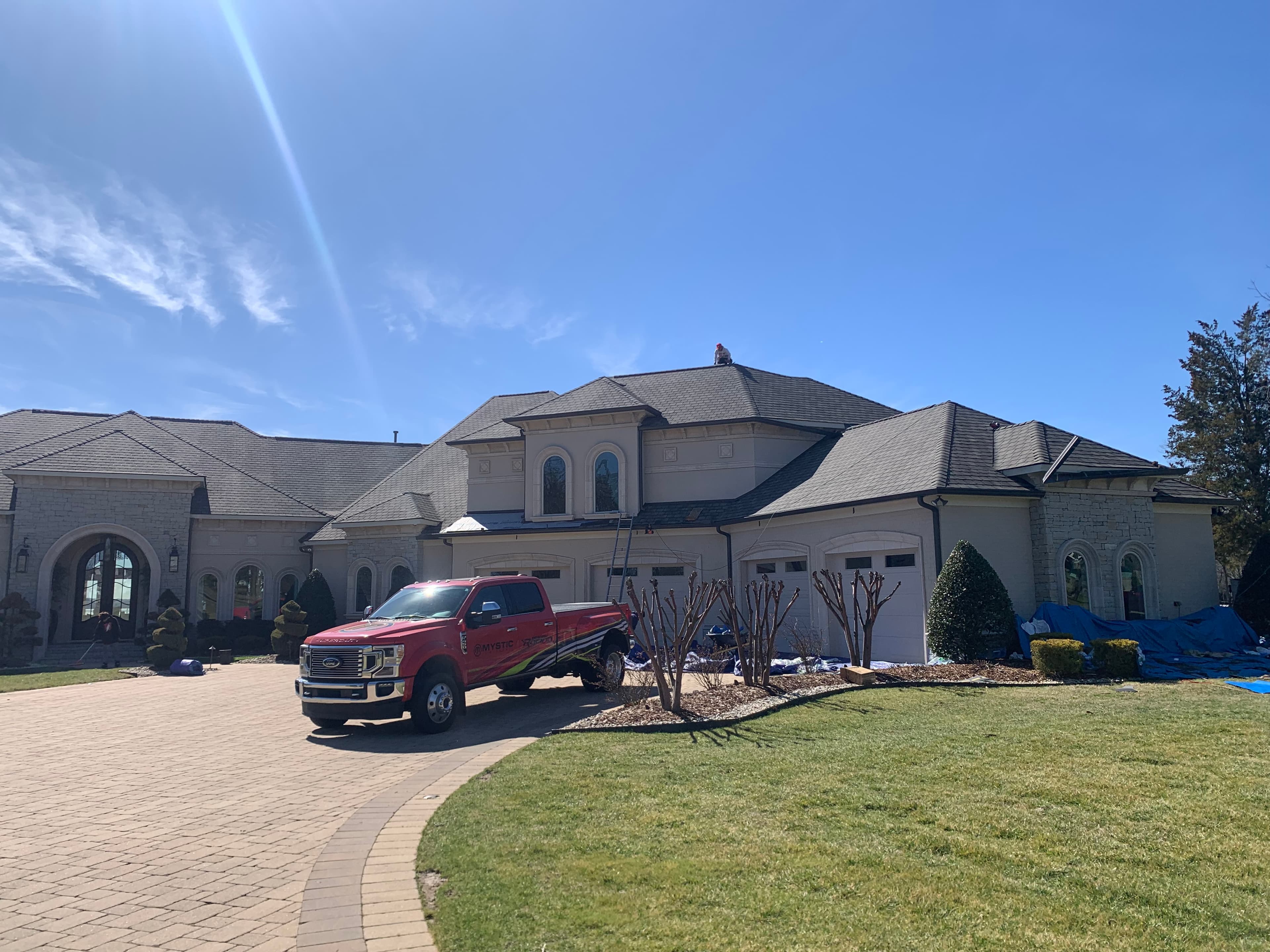
Commercial Roofing in Brunswick, Georgia
Inspection, documentation, and insurance-supported roof replacement for commercial and multifamily properties across Brunswick.
Commercial & Multifamily Roofing Across the Brunswick MSA (Glynn County) - coastal Georgia commercial gateway and Golden Isles resort corridor
Brunswick is coastal Georgia's southeast commercial gateway and the anchor of the Golden Isles resort corridor, with a commercial character unlike any other Georgia commercial market. The Port of Brunswick (Georgia Ports Authority's Colonel's Island and East River terminals) is the largest roll-on/roll-off (Ro-Ro) port in the United States for new-vehicle imports - Mercedes-Benz, Porsche, Audi, BMW, Hyundai, and other automakers use Brunswick as a primary U.S. gateway - plus the largest breakbulk volume on the east coast, and port-adjacent industrial and logistics commercial spans Colonel's Island, East River Terminal, and the US-17 and I-95 supply-chain corridor. FLETC Glynco (Federal Law Enforcement Training Center) is one of the largest federal training installations in the Southeast and drives a substantial federal-contractor commercial footprint. The Golden Isles resort economy - Jekyll Island State Park, St. Simons Island, and Sea Island - drives a seasonal hospitality, resort, and heritage-property commercial inventory with peak summer and spring-break demand cycles. Southeast Georgia Health System anchors coastal Georgia's primary healthcare commercial district outside Savannah. Historic downtown Brunswick commercial rounds out a commercial inventory spanning mixed-use retail, professional services, hospitality, and legacy industrial.
Red Door Roofing serves commercial, multifamily, industrial, federal-contractor, hospitality, and healthcare property owners across Brunswick and the Glynn County coastal commercial market, Georgia's southeast-coast commercial gateway and the anchor of the Golden Isles resort corridor. Brunswick's commercial inventory reflects four overlapping economies that make the Glynn County market distinct from every other Georgia commercial corridor. The Port of Brunswick (Georgia Ports Authority's Colonel's Island and East River terminals) is the largest roll-on/roll-off (Ro-Ro) port in the United States for new-vehicle imports - Mercedes-Benz, Porsche, Audi, BMW, Hyundai, and other automakers use Brunswick as a primary U.S. gateway - and the port plus the largest breakbulk volume on the east coast drives a dense industrial, logistics, and port-adjacent commercial inventory along US-17, I-95, and the Colonel's Island Parkway. The Federal Law Enforcement Training Center (FLETC) at Glynco is one of the largest federal training installations in the Southeast and drives a substantial federal-contractor and federal-agency commercial footprint across the Glynn County corridor. The Golden Isles resort economy - anchored by Jekyll Island, St. Simons Island, and Sea Island - drives a seasonal hospitality, resort, and equestrian commercial footprint with peak summer and spring-break demand cycles. Southeast Georgia Health System anchors coastal Georgia's primary healthcare commercial district outside Savannah. Brunswick sits in coastal Georgia's high-exposure severe-weather zone where Atlantic named-storm activity reaches its highest probability in the state. Glynn County commercial policies commonly apply percentage wind/hail deductibles on insured value with separate named-storm deductibles layered on Atlantic Basin hurricane exposure. Coastal Georgia commercial property - especially on the Golden Isles barrier-island hospitality corridor - faces compound exposure from named-storm wind, named-storm surge, and named-storm-associated flooding, and the premium and deductible structures on coastal commercial policies reflect that compound-exposure pattern. Hurricane Matthew (2016), Hurricane Irma (2017), Hurricane Dorian (2019), and Hurricane Idalia (2023) together reshaped coastal Georgia commercial-insurance expectations for the last decade, and Brunswick commercial property owners face a named-storm claims cadence that carrier field offices in Brunswick, Savannah, and Jacksonville, FL all coordinate on. Our Brunswick work concentrates on four property types. First, Port of Brunswick-adjacent industrial and logistics commercial across Colonel's Island, East River Terminal, and the US-17 and I-95 Ro-Ro and breakbulk supply-chain corridor - port-adjacent commercial roofing involves large single-building logistics structures with specialized rooftop-equipment configurations supporting cold-storage, warehouse ventilation, and supply-chain operations. Second, FLETC Glynco-adjacent federal-contractor and federal-agency commercial along US-17 and the FLETC access corridor, where federal-contractor facility requirements and security-cleared property access protocols layer on top of standard commercial-property workflow. Third, Golden Isles resort and hospitality commercial on Jekyll Island, St. Simons Island, Sea Island, and the Brunswick-area hospitality cluster, where heritage-resort preservation, coastal-exposure hurricane hardening, and seasonal-demand production scheduling all shape inspection and replacement workflow. Fourth, healthcare, multifamily, retail, and professional-services commercial across the Southeast Georgia Health System campus, the Glynn Avenue and Glynco Parkway commercial spine, and the historic downtown Brunswick commercial district. Every Brunswick commercial inspection produces a photo-keyed PDF report formatted for Glynn County adjusters, lenders, and asset managers - every slope, every drain, every penetration, every transition documented to a building or unit reference. If our inspection finds no qualifying damage, we issue a Certificate of Clearance suitable for lender, insurer, or asset-manager files at no cost or obligation. We support the carrier scope conversation end-to-end on documented claims, and Georgia commercial work operates under our Red Door family of companies' Georgia general contractor licensure so the licensing and insurance side is handled correctly the first time. Glynn County owners benefit from annual inspections plus pre-season (April–May) hurricane-prep inspections plus prompt post-event documentation on every coastal Georgia commercial portfolio.
Brunswick Business Parks & Office Districts We Serve
Our commercial roofing work in Brunswick concentrates around the metro's largest office parks and corporate districts. Each of these business parks contains multiple commercial and mixed-use tenants where tenant-in-place scheduling, after-hours production windows, and coordinated material staging matter as much as the roof scope itself. Commercial-grade flat roof systems and pitched multifamily assemblies are both well represented across these parks - our inspections walk every roof section, every transition, and every drain to build a complete condition document suitable for carrier, lender, and asset-manager review.
- Port of Brunswick Colonel's Island Terminal
- Port of Brunswick East River Terminal
- FLETC Glynco federal-contractor corridor
- I-95 Exit 29 (Brunswick/Golden Isles) hospitality cluster
- I-95 Exit 36 (Brunswick north) commercial
- Glynn Avenue commercial spine
- Glynco Parkway federal and commercial corridor
- Jekyll Island resort and hospitality
- St. Simons Island resort and hospitality
- Sea Island heritage resort commercial
- Southeast Georgia Health System healthcare district
- Historic downtown Brunswick commercial
Primary Brunswick Commercial Corridors
Brunswick's commercial and multifamily stock clusters along a handful of primary corridors. Our inspection and replacement work tracks along these corridors where commercial density, tenant complexity, and storm exposure concentrate. Routing and material staging around these corridors is part of every Brunswick project plan - peak commuter hours, event calendars, and fire-lane requirements all factor into how we schedule.
- I-95 (Exits 29 to 42)
- US-17 coastal commercial spine
- US-82 (Brunswick to Waycross)
- Glynn Avenue (historic downtown to Golden Isles)
- Glynco Parkway federal and commercial
- Newcastle Street downtown historic
- Colonel's Island Parkway port access
- Jekyll Island causeway
- St. Simons Island causeway
- Demere Road (St. Simons Island commercial)
Brunswick Multifamily Districts
Multifamily roof replacement demands phased scheduling so tenants stay in place. Our work across Brunswick's multifamily districts follows building-by-building production schedules with tenant-notice templates and noise-window coordination per property. Asset managers receive portfolio-level closeout documentation; property managers receive a phased Gantt-style schedule they can share with residents and operations teams; leasing teams receive advance notice for unit-turn and move-in coordination.
- Glynn Avenue multifamily corridor
- Glynco Parkway multifamily
- St. Simons Island multifamily and hospitality-conversion stock
- Brunswick-area garden-style communities
- US-17 multifamily corridor
- FLETC-adjacent multifamily (military-support housing alternatives)
Brunswick Storm & Severe-Weather History
Glynn County sits in coastal Georgia's highest-exposure severe-weather zone, with documented Atlantic named-storm activity reaching near-peak probability relative to the rest of the state. The 2016–2024 decade produced five documented named-storm events on Glynn County commercial stock - Matthew, Irma, Dorian, Ian, Idalia - and coastal Georgia carrier field offices in Brunswick, Savannah, and Jacksonville, FL treat named-storm documentation as the central element of coastal commercial claim scope review. Pre-season (April–May) inspections ahead of the Atlantic hurricane season plus prompt post-event documentation within two-to-four weeks after any named-storm impact preserve clean carrier documentation on Brunswick commercial property. Barrier-island hospitality commercial on Jekyll Island, St. Simons Island, and Sea Island faces compound exposure from named-storm wind, named-storm surge, and named-storm-associated flooding, and pre- and post-storm documentation is particularly material on barrier-island property where premium and deductible structures reflect the compound-exposure pattern.
Brunswick and Glynn County sit in coastal Georgia's highest-exposure severe-weather zone with documented Atlantic named-storm activity reaching near-peak probability relative to the rest of the state. Hurricane Matthew (October 2016) produced named-storm wind and surge across Glynn County and the Golden Isles. Hurricane Irma (September 2017) produced extended wind, surge, and inland-flooding exposure across coastal Georgia. Hurricane Dorian (September 2019) produced additional coastal wind and surge across the Golden Isles and the broader Glynn County coastline. Hurricane Idalia (August 2023) produced further coastal commercial claim activity on named-storm exposure. Glynn County commercial policies commonly apply percentage wind/hail deductibles on insured value with separate named-storm deductibles layered on Atlantic Basin hurricane exposure, and barrier-island commercial property on Jekyll Island, St. Simons Island, and Sea Island frequently carries additional named-storm surge coverage with distinct deductible structures beyond the standard wind/hail and named-storm layering. The named-storm claims cadence in coastal Georgia rewards pre-season (April–May) inspections ahead of the June-through-November Atlantic hurricane season plus prompt post-event documentation within two-to-four weeks after any named-storm impact. Notable documented events on local record include 2016-10-08 (Hurricane Matthew - named-storm wind and surge across coastal Georgia including Golden Isles); 2017-09-11 (Hurricane Irma - extended wind and flooding through coastal and inland Georgia); 2019-09-05 (Hurricane Dorian - coastal wind and surge across Golden Isles and Glynn County coastline); 2022-09-28 (Hurricane Ian remnants - extended wind through coastal Georgia); 2023-08-30 (Hurricane Idalia - named-storm exposure on Gulf Big Bend landfall with inland-track through south Georgia and coastal wind across Glynn County). Georgia commercial policies typically apply percentage wind/hail deductibles on insured value, and Glynn County adjusters cross-reference NOAA SPC records and National Hurricane Center tracks for date-of-loss validation. Our Brunswick inspection reports align with the photo-keyed, slope-oriented, named-storm-aware format coastal-Georgia adjusters routinely request.
Notable documented Brunswick-area events
2016-10-08 · Hurricane Matthew
Named-storm wind and surge across coastal Georgia including Golden Isles - commercial and hospitality claims across Glynn County
2017-09-11 · Hurricane Irma
Extended wind and flooding through coastal and inland Georgia - multi-year commercial claim cycle across Brunswick and Golden Isles
2019-09-05 · Hurricane Dorian
Coastal wind and surge across Golden Isles and Glynn County coastline - barrier-island hospitality commercial claims
2022-09-28 · Hurricane Ian remnants
Extended wind event through coastal Georgia commercial stock
2023-08-30 · Hurricane Idalia
Gulf Big Bend landfall with inland-track through south Georgia and coastal wind across Glynn County
Annual June–November · Atlantic named-storm season
Glynn County faces high-probability Atlantic named-storm exposure through the hurricane season - one of Georgia's highest-exposure commercial markets
Insurance Process in Brunswick
Georgia commercial policies commonly apply percentage wind/hail deductibles on insured value across Glynn County property, with separate named-storm deductibles layered on top for Atlantic Basin hurricane exposure. Barrier-island commercial property frequently carries additional named-storm surge coverage with distinct deductible structures beyond the standard wind/hail and named-storm layering. Glynn County commercial carriers and adjusters routinely cross-reference NOAA SPC records, National Hurricane Center tracks, and coastal-Georgia weather-observation archives for date-of-loss validation. Our Brunswick inspection documentation aligns with the photo-keyed, date-aligned, slope-oriented, named-storm-aware format that coastal-Georgia adjusters routinely request. Port-adjacent commercial and FLETC-adjacent federal-contractor commercial frequently carry additional operational-continuity and federal-contractor facility documentation requirements that layer on top of standard commercial-property insurance workflow; we coordinate documentation to align with all of them.
Glynn County commercial lenders and CMBS servicers routinely request Roof Condition Certifications at refinance and acquisition, and on barrier-island hospitality property lenders frequently request named-storm readiness documentation alongside standard roof-condition reports. Major carriers writing Brunswick commercial property (Chubb, Travelers, Liberty Mutual, regional coastal-Georgia carriers) accept photo-keyed inspection reports as standard claim documentation. Our format matches what their adjuster field expects on coastal-Georgia commercial claim scope, including named-storm and named-storm-surge deductible applicability determination on Atlantic-season exposure. Port-adjacent industrial and FLETC-adjacent federal-contractor commercial documentation coordinates with operational-continuity and federal-facility standards where applicable.
Commercial Roof Systems Common in Brunswick
Brunswick commercial stock splits along four roof-system families reflecting coastal-Georgia exposure constraints. TPO and EPDM dominate multifamily, office, and medical-office flat roofs from the 1990–2020 development wave along Glynn Avenue and Glynco Parkway. Metal standing-seam with enhanced wind-rating and corrosion-resistance specifications is common on newer port-adjacent, FLETC-adjacent, and coastal hospitality construction - coastal-exposure chloride corrosion drives roof-system specification toward higher-grade metal and fastener systems. Modified bitumen persists on older downtown Brunswick commercial and some Golden Isles heritage-resort commercial. Architectural asphalt shingle is standard on pitched multifamily, hospitality, and professional-services stock - coastal hospitality and resort property frequently specifies enhanced wind-rating (130+ mph) shingles.
Brunswick Landmarks & Properties We've Served Near
Our commercial and multifamily roofing work crosses paths with Brunswick's most recognizable properties and corridors. These landmarks anchor the commercial districts we work in daily - they're not just tourism references, they're the neighborhoods where property managers ask us to inspect multifamily, retail, hospitality, and office stock.
- Port of Brunswick
- FLETC Glynco
- Jekyll Island
- St. Simons Island
- Sea Island
- Southeast Georgia Health System
- Jekyll Island Historic District
- St. Simons Island Lighthouse
- Fort Frederica National Monument
- Mary Ross Waterfront Park
Property Types We Serve in Brunswick
- Port of Brunswick Ro-Ro auto-import and breakbulk industrial
- FLETC Glynco federal-contractor and federal-agency commercial
- Golden Isles resort and hospitality (Jekyll Island, St. Simons Island, Sea Island)
- Healthcare commercial across Southeast Georgia Health System
- Historic downtown Brunswick commercial and Newcastle Street retail
What a Brunswick Commercial Roof Inspection Includes
Every Brunswick commercial inspection we perform produces a photo-keyed PDF report built for the way Georgia adjusters, lenders, and asset managers actually work. We walk the full roof system - every slope, every drain, every penetration, every transition - and document what we see with photos referenced to a building or unit location. No generic stock photos. No marketing filler. Just the evidence a carrier needs to make a scope determination on a real commercial property.
On multifamily buildings we document building-by-building, which matters because a 300-unit Brunswick complex may show damage concentrated on two of eight roofs. Adjusters want that level of granularity, and the documentation protects the owner from a blanket-scope claim that gets pared back in review.
The inspection report identifies your existing roof system (TPO, EPDM, PVC, modified bitumen, BUR, asphalt shingle, metal, or a mixed portfolio), estimates remaining useful life, flags flashing and penetration condition, and notes any observed damage with date-of-loss alignment where applicable. We also call out situations where we recommend repair rather than replacement - our business is not built on upselling.
Working With Brunswick Adjusters and Carriers
Most Brunswick commercial claims don't fail on the damage - they fail on documentation gaps or scope- supplement misunderstandings with the adjuster. Our inspection reports are formatted to match what Brunswick-area commercial adjusters routinely request: photo-keyed damage evidence, roof-system identification, a priced scope against local labor and material norms, and a repair-vs-replacement recommendation grounded in observed condition.
When an adjuster's initial scope misses legitimate work - underlayment, code-required upgrades, perimeter metal, additional penetrations - we submit a supplement with supporting documentation. Reasonable supplements with good evidence are typically approved. We don't submit questionable supplements, and we don't push scope that wasn't clearly warranted by what we photographed. Brunswick adjusters are experienced, and credibility is the currency we operate on.
Typical Brunswick Commercial Roof Project Timeline
A typical Brunswick commercial roof project runs 30–120 days from inspection to installation completion. Here's how that calendar breaks down on a mid-size property:
- Week 1: on-site inspection, photo-keyed report delivered to owner
- Weeks 2–3: claim filed, adjuster assigned, on-roof walk with adjuster + contractor
- Weeks 3–6: initial scope received, supplement filed for any missed work, approved scope returned
- Weeks 6–10: material procurement, tenant-notice distribution, phased production schedule built
- Weeks 10–16: on-roof production, daily photo documentation, weekly progress check-ins
- Weeks 16–17: final walk, punch-list completion, closeout documentation to lender and carrier
Multifamily properties in Brunswick with 100–300 units typically run on the longer end of that range; smaller commercial buildings close faster. Material lead times on TPO, EPDM, and PVC are the usual timeline variables. We share a phased Gantt schedule so operations, leasing, and asset-management teams can plan around the work.
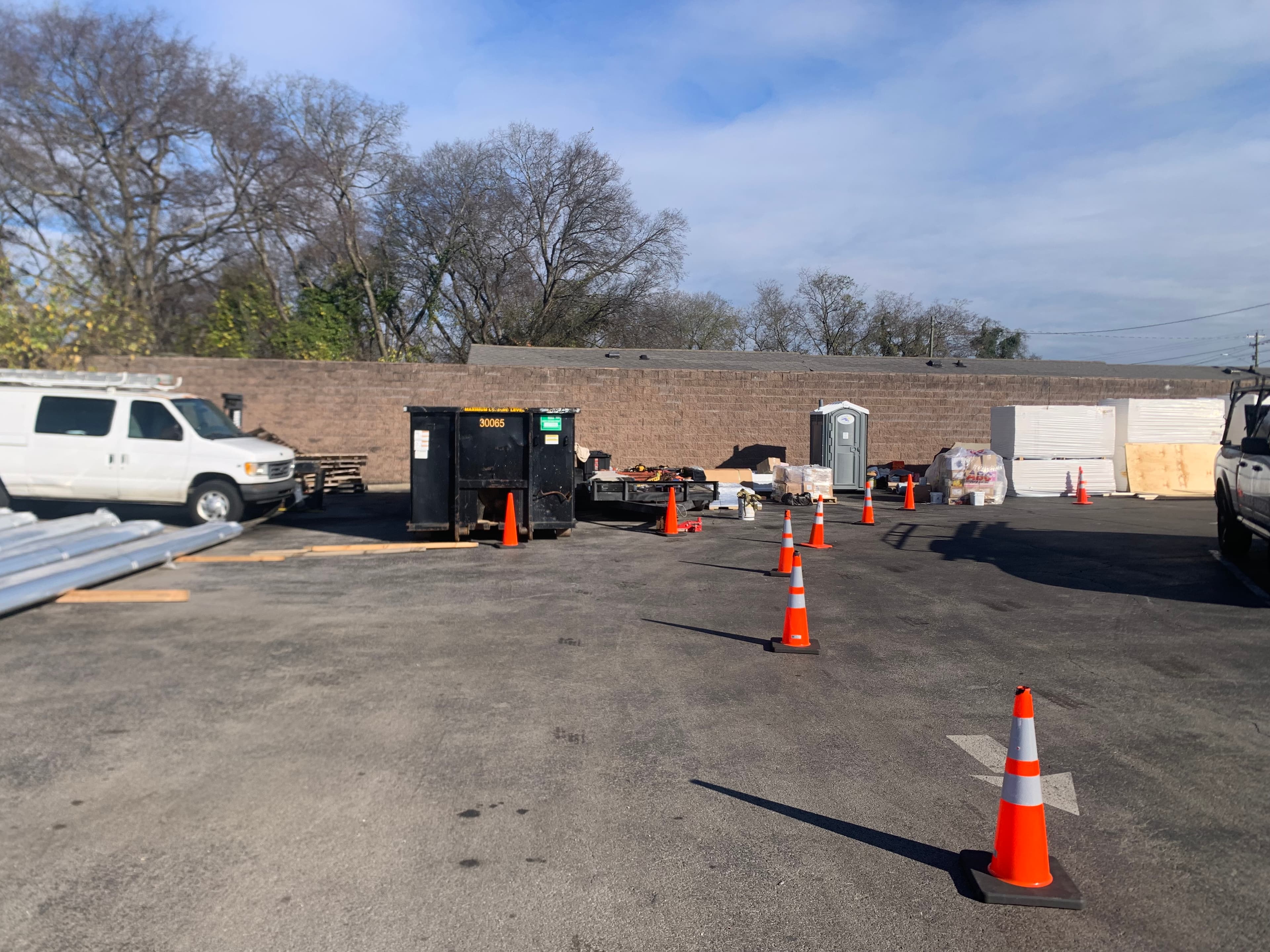
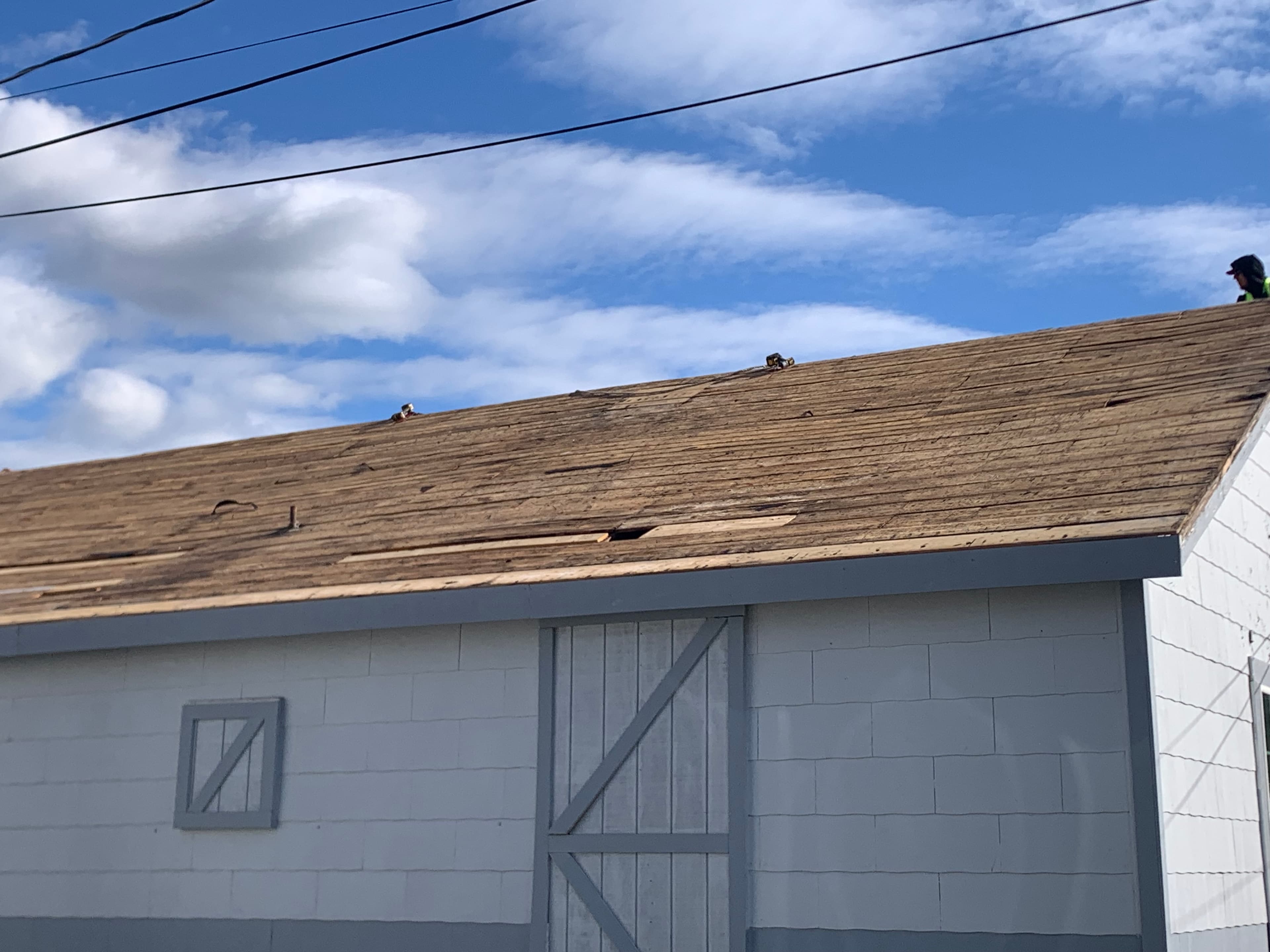
Port of Brunswick: Roofing the largest Ro-Ro auto-import port in the United States
The Port of Brunswick is the largest roll-on/roll-off (Ro-Ro) port in the United States for new-vehicle imports and the largest breakbulk volume on the east coast. Mercedes-Benz, Porsche, Audi, BMW, Hyundai, and other automakers use Brunswick as a primary U.S. gateway, and the port's Colonel's Island and East River Terminal operations together drive a dense industrial, logistics, and port-adjacent commercial inventory along US-17 and I-95. Port-adjacent commercial roofing involves large single-building logistics structures with specialized rooftop-equipment configurations - auto-import cold-storage, vehicle-processing ventilation, breakbulk warehousing, specialized supply-chain supporting infrastructure - and operational-continuity requirements tied to port-schedule coordination.
Our Brunswick port-adjacent commercial roofing work coordinates inspection windows around port operations, documents rooftop-equipment inventory alongside membrane condition, and aligns documentation with both commercial-property insurance and port-operational workflow. Port-adjacent roof systems typically run to TPO or PVC on logistics warehouse flat roofs with metal standing-seam on canopy and covered-dock construction. Coastal-exposure chloride corrosion drives roof-system specification toward higher-grade metal and fastener systems on port-adjacent property, and our inspection format documents corrosion evidence at flashings, fasteners, and metal-deck transitions as a routine part of coastal-industrial commercial roof documentation.
- Port of Brunswick is the largest Ro-Ro auto-import port in the United States
- Port-adjacent commercial includes auto-import cold-storage, breakbulk warehousing, vehicle-processing ventilation
- Operational-continuity coordination ties inspection and production windows to port-schedule requirements
- Coastal-exposure chloride corrosion drives higher-grade metal and fastener specifications
FLETC Glynco: Federal Law Enforcement Training Center commercial roofing
The Federal Law Enforcement Training Center (FLETC) at Glynco is one of the largest federal training installations in the Southeast, providing consolidated law-enforcement training for more than ninety federal agencies plus state, local, and international partners. The FLETC footprint drives a substantial federal-contractor and federal-agency commercial inventory across the Glynn County corridor, and the FLETC-adjacent commercial roofing market operates under security and facility-access constraints that require specialized coordination. Our FLETC-adjacent commercial roofing work routinely involves badge-escort access coordination, personnel background-check clearance, and documentation format that aligns with both commercial-property insurance standards and federal-contractor facility standards for DHS and other federal-agency supported property.
Rooftop-equipment density on FLETC-adjacent commercial varies by tenant mission. Some facilities support standard office and training-support HVAC loads. Others support specialized training-facility ventilation, secure-facility HVAC, communications infrastructure for multi-agency coordination, and computing infrastructure supporting consolidated federal-training operations. Our inspection documents the full rooftop-equipment inventory alongside membrane and flashing condition, because for FLETC-adjacent federal-contractor commercial the equipment-integration detail often drives both water-migration risk and operational-continuity risk across training-mission-critical commercial operations.
Golden Isles barrier-island hospitality: Coastal commercial roofing under compound named-storm exposure
The Golden Isles resort corridor - Jekyll Island State Park, St. Simons Island, and the exclusive Sea Island resort - drives a seasonal hospitality, resort, and heritage-property commercial inventory unlike any other Georgia commercial market. Barrier-island hospitality commercial on the Golden Isles faces compound exposure from named-storm wind, named-storm surge, and named-storm-associated flooding that no inland Georgia commercial market experiences, and the premium and deductible structures on barrier-island commercial policies reflect that compound-exposure pattern. Our Golden Isles resort commercial roofing work includes pre-season (April–May) hurricane-prep inspections ahead of the June-through-November Atlantic hurricane season, post-event named-storm documentation within two-to-four weeks after any named-storm impact, and coordination with heritage-resort preservation standards on older Golden Isles hospitality property.
Roof systems on Golden Isles barrier-island hospitality commercial range from heritage construction with slate, cedar shake, and copper standing-seam on the Sea Island and Jekyll Island Historic District heritage resort inventory, through enhanced-wind-rating metal standing-seam and enhanced-wind-rating architectural shingle on newer resort construction, to specialized TPO and PVC on contemporary resort-commercial flat-roof systems. Coastal-exposure chloride corrosion affects metal roof systems materially on barrier-island property, and our inspection format documents corrosion evidence alongside standard membrane and flashing documentation. Heritage-resort preservation coordination on Sea Island and Jekyll Island Historic District property adds an additional documentation layer to standard commercial-roof workflow.
Coastal Georgia named-storm claim cadence 2016–2024: Matthew, Irma, Dorian, Ian, Idalia
The 2016–2024 decade produced five documented named-storm events on Glynn County commercial stock - Hurricane Matthew (2016), Hurricane Irma (2017), Hurricane Dorian (2019), Hurricane Ian (2022), and Hurricane Idalia (2023). That compound-exposure frequency shaped the coastal-Georgia commercial-insurance and documentation landscape through the decade and continues to drive carrier, lender, and adjuster expectations on Glynn County commercial property. Hurricane Irma 2017 produced the most significant multi-year commercial claim cycle on coastal Georgia record, with supplement-review workflow and scope-dispute resolution across hundreds of Brunswick, Golden Isles, and coastal-Georgia commercial properties. The scope-and-supplement workflow that emerged from the Irma event now defines what coastal-Georgia carriers and adjusters expect on named-storm claims; our documentation format is calibrated to that workflow specifically.
Glynn County commercial policies commonly layer a separate named-storm deductible on top of the standard percentage wind/hail deductible, and barrier-island commercial property frequently carries additional named-storm surge coverage with distinct deductible structures. We document pre- and post-storm condition so owners can present a clean damage timeline; the carrier interprets which deductible applies to a given date-of-loss event. Pre-season (April–May) hurricane-prep inspections ahead of the Atlantic named-storm window plus prompt post-event documentation within two-to-four weeks after any named-storm impact are our standard recommendation for Brunswick commercial property. Coastal-Georgia lenders and CMBS servicers routinely request named-storm readiness documentation alongside standard roof-condition reports on refinance and acquisition, particularly on barrier-island hospitality property.
Why Brunswick Property Owners Choose Red Door Roofing
30+ years, Red Door family
Built on 30 years of commercial experience across the Southeast. Notable clients include Best Western, Harbor Freight, Tractor Supply, and Vanderbilt Medical Clinic.
Carrier-ready documentation
Photo-keyed inspection reports formatted for Brunswick-area adjuster and lender workflows. No guarantees on claim outcomes - the carrier calls that.
Tenant-in-place phasing
Multifamily work phased by building block with tenant-notice templates, noise windows, and operations- team documentation. Tenants stay in place.
No-obligation inspection
If our Brunswick inspection finds no qualifying damage, we issue a Certificate of Clearance - suitable for lender, insurer, and asset-manager files. No further commitment.
Brunswick Commercial Roofing FAQs
Does Brunswick commercial roof storm damage qualify for insurance replacement?
How do you handle inspection and work on Port of Brunswick industrial and logistics commercial?
How do you handle inspection and work on FLETC Glynco federal-contractor commercial?
How do Golden Isles barrier-island named-storm exposure patterns affect resort commercial roof planning?
Does commercial roof storm damage qualify for insurance replacement in Brunswick?
What commercial roof systems are most common in Brunswick?
How long does a commercial roof replacement take in the Brunswick area?
Which Brunswick corridors and landmarks has Red Door worked near?
What happens if no storm damage is found on my Brunswick roof?
Do you serve Port of Brunswick industrial and FLETC Glynco federal-contractor commercial?
Nearby Georgia Cities We Also Serve
Our commercial roofing coverage extends across Georgia. These three Brunswick-adjacent cities are part of our routine service footprint.
Need a Brunswick inspection?
Call us directly at 1-855-GO4REDD or request a no-obligation inspection online. Most Brunswick-area inspections are scheduled within days of the request.
Request InspectionSchedule a Brunswick Roof Inspection
No obligation. Documented findings you can use for insurance, lender, or asset-manager records.
30+ Years of Red Door Family Experience · 16 States
Free · No obligation · No follow-up sales calls