Commercial Roofing in Cumming, Georgia
Inspection, documentation, and insurance-supported roof replacement for commercial and multifamily properties across Cumming.
Commercial & Multifamily Roofing Across the Atlanta-Sandy Springs-Alpharetta MSA
Red Door Roofing serves commercial, multifamily, medical office, lifestyle-retail, and self-storage owners across Cumming and Forsyth County along the GA-400 corridor. Forsyth's commercial base skews toward class-A suburban office, medical office, lifestyle retail, garden and wrap multifamily, and light-industrial flex space, with a large and growing healthcare cluster around Northside Hospital Forsyth. We write scope on TPO, modified bitumen, EPDM, standing-seam metal, and high-performance asphalt systems, and we coordinate with property managers, asset managers, lenders, insurance carriers, and national tenant construction teams. Every inspection is delivered as a photo-keyed PDF with section-by-section documentation tied to a roof-plan reference, and we issue a Certificate of Clearance when no storm damage is found. Red Door operates under the Red Door family of companies' Georgia general contractor licensure and does not guarantee any specific insurance outcome on Forsyth County commercial claims.
Red Door Roofing provides commercial roofing services to property owners, facility managers, and multifamily operators across Cumming, Forsyth County, and the GA-400 corridor north of Atlanta. Forsyth County has grown into one of the fastest-expanding commercial markets in the Atlanta metro, with a daytime population far larger than the incorporated Cumming city limits would suggest and a commercial base that includes The Collection at Forsyth lifestyle center, Northside Hospital Forsyth and its surrounding medical office cluster, class-A suburban office along McFarland Parkway and Peachtree Parkway, multi-story and garden-style multifamily along GA-400, self-storage and light industrial along SR-20 and SR-369, and a heavy concentration of retail and restaurant pads feeding the county's fast-growing rooftops. We serve owners of lifestyle retail, suburban medical office, garden-style and wrap-style multifamily, self-storage portfolios, religious and educational institutional buildings, and light-industrial flex space. The dominant commercial low-slope systems in Forsyth County are mechanically attached and fully adhered TPO on newer construction, modified bitumen on older retail, and EPDM on some institutional roofs; architectural asphalt shingles dominate garden multifamily, smaller office, and churches. Red Door's inspectors deliver every inspection as a photo-keyed PDF that ties each field image to a numbered roof-plan section, so owners, asset managers, and insurance carriers share a consistent visual reference. When our inspection finds no hail or wind damage on a roof that was referenced to a specific storm event, we issue a Certificate of Clearance for the ownership file in writing. Red Door is licensed to perform commercial roofing work in Georgia through the Red Door family of companies' general contractor licensure, and our Forsyth County project history spans acquisition due-diligence, insurance-triggered replacement, and owner-funded capital replacement. We do not guarantee insurance outcomes. Scope, depreciation, recoverable depreciation, and deductible application remain the carrier's determination, and we position our field documentation so that owners and carriers each have a defensible record to work from.
Cumming Business Parks & Office Districts We Serve
Our commercial roofing work in Cumming concentrates around the metro's largest office parks and corporate districts. Each of these business parks contains multiple commercial and mixed-use tenants where tenant-in-place scheduling, after-hours production windows, and coordinated material staging matter as much as the roof scope itself. Commercial-grade flat roof systems and pitched multifamily assemblies are both well represented across these parks - our inspections walk every roof section, every transition, and every drain to build a complete condition document suitable for carrier, lender, and asset-manager review.
- Lakeside Business Park
- McFarland Industrial Park
- Windward Lakes Business Campus (adjacent)
- Sawnee Commerce Park
- Peachtree Corporate Park
- Cumming Business Center
- The Collection commercial pad sites
- GA-400 Exit 14 flex corridor
Primary Cumming Commercial Corridors
Cumming's commercial and multifamily stock clusters along a handful of primary corridors. Our inspection and replacement work tracks along these corridors where commercial density, tenant complexity, and storm exposure concentrate. Routing and material staging around these corridors is part of every Cumming project plan - peak commuter hours, event calendars, and fire-lane requirements all factor into how we schedule.
- GA-400 frontage from Exit 12 to Exit 17
- Peachtree Parkway
- McFarland Parkway
- SR-20 / Canton Highway
- Market Place Boulevard / The Collection
- Buford Highway / SR-20 east
Cumming Multifamily Districts
Multifamily roof replacement demands phased scheduling so tenants stay in place. Our work across Cumming's multifamily districts follows building-by-building production schedules with tenant-notice templates and noise-window coordination per property. Asset managers receive portfolio-level closeout documentation; property managers receive a phased Gantt-style schedule they can share with residents and operations teams; leasing teams receive advance notice for unit-turn and move-in coordination.
- GA-400 Exit 13 wrap multifamily cluster
- McFarland Parkway garden apartment corridor
- Peachtree Parkway class-A multifamily
- SR-20 east townhome and garden corridor
- Vickery Village mixed-use residential
Cumming Storm & Severe-Weather History
Forsyth County's severe-weather cadence concentrates in a spring supercell window running mid-March through early May, with a secondary window in August and September tied to tropical remnants from Gulf systems. Lake Lanier moisture can feed isolated microburst and pulse-severe activity in late summer. Damaging-wind events on the GA-400 corridor typically arrive as southwest-to-northeast squall lines with embedded microbursts producing discrete pockets of commercial damage, and hail swaths often clip the county at oblique angles, damaging one side of a building's roof more than the other. Photo-keyed PDF documentation tied to a specific NOAA Storm Events record is the standard workflow for any Forsyth County commercial claim we inspect.
Cumming and Forsyth County sit on the eastern edge of the north Georgia severe-weather corridor, where spring supercells tracking out of northern Alabama and middle Tennessee regularly sweep across the GA-400 and I-985 spines. The 2011-04-27 Super Outbreak produced EF3 and EF4 tornadoes across northeast Alabama and northwest Georgia with embedded damaging winds reaching well into Forsyth County commercial roofs. Tropical Storm Irma remnants on 2017-09-11 pushed tropical-force sustained winds across the north Atlanta suburbs, loosening edge metal, coping, and parapet flashings on TPO and modified-bitumen roofs along McFarland Parkway and Peachtree Parkway. The 2019-03-03 severe weather outbreak brought large hail and damaging winds across the metro, with documented claim activity on Forsyth retail and medical office buildings. The 2023-03-26 north Georgia supercell and the 2024-03-14 spring thunderstorm produced dime- to quarter-size hail with isolated larger stones across the GA-400 corridor. Forsyth County's primary severe window runs mid-March into early May, with a secondary late-summer window tied to tropical remnants from Gulf systems and occasional microburst activity feeding off Lake Lanier moisture. Hail is the dominant claim driver for Cumming commercial low-slope roofs, while straight-line wind and tornadic micro-paths drive most shingled multifamily and mechanical-equipment damage. Each Red Door inspection cross-references the NOAA Storm Events Database record for the referenced date and ties photo-keyed findings to that specific storm.
Notable documented Cumming-area events
2011-04-27 · Super Outbreak tornadoes and straight-line wind
EF3/EF4 activity across NE Alabama and NW Georgia; embedded wind and hail into Forsyth County commercial roofs.
2017-09-11 · Tropical Storm Irma remnants
Sustained tropical-force winds across north Atlanta suburbs; edge-metal and coping uplift on older TPO and mod-bit.
2019-03-03 · Spring severe weather outbreak
Large hail and damaging winds; documented claim activity on Forsyth retail and medical office.
2024-03-14 · Spring thunderstorm and hail event
Dime to quarter hail with isolated golf-ball stones across the GA-400 corridor.
Insurance Process in Cumming
Forsyth County commercial policies commonly carry percentage wind and hail deductibles in the 1 to 5 percent range of insured value, with several large portfolios running separate named-storm deductibles written against remnant-tropical events. Scope, depreciation, and deductible application remain carrier-determined on every claim; our role is documentation, not outcome.
Cumming acquisitions, refinances, and CMBS surveillance increasingly require roof condition reports. Our photo-keyed PDFs meet typical lender and carrier intake with section-keyed imagery, remaining-useful-life commentary, and storm-date cross-references.
Commercial Roof Systems Common in Cumming
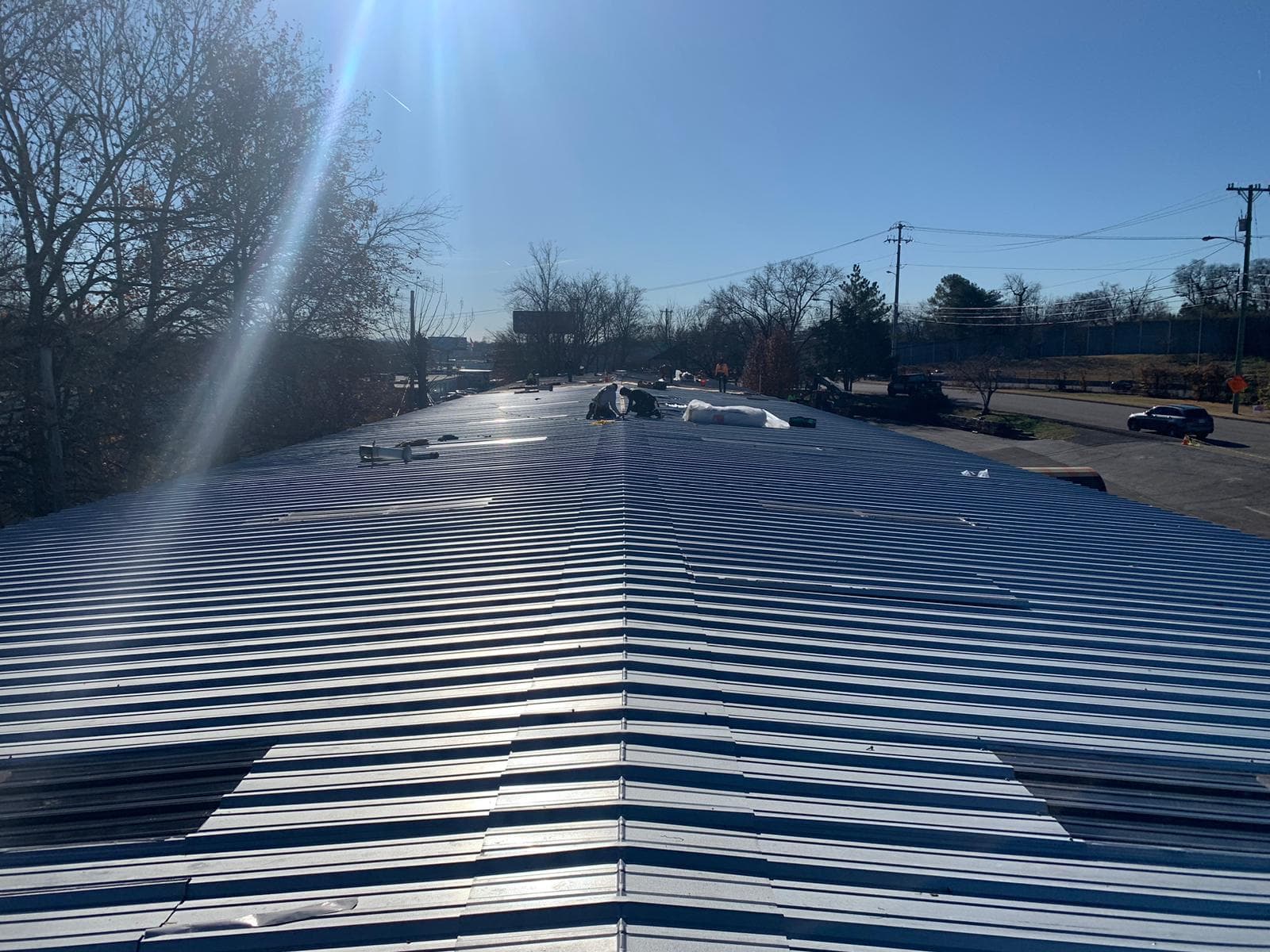
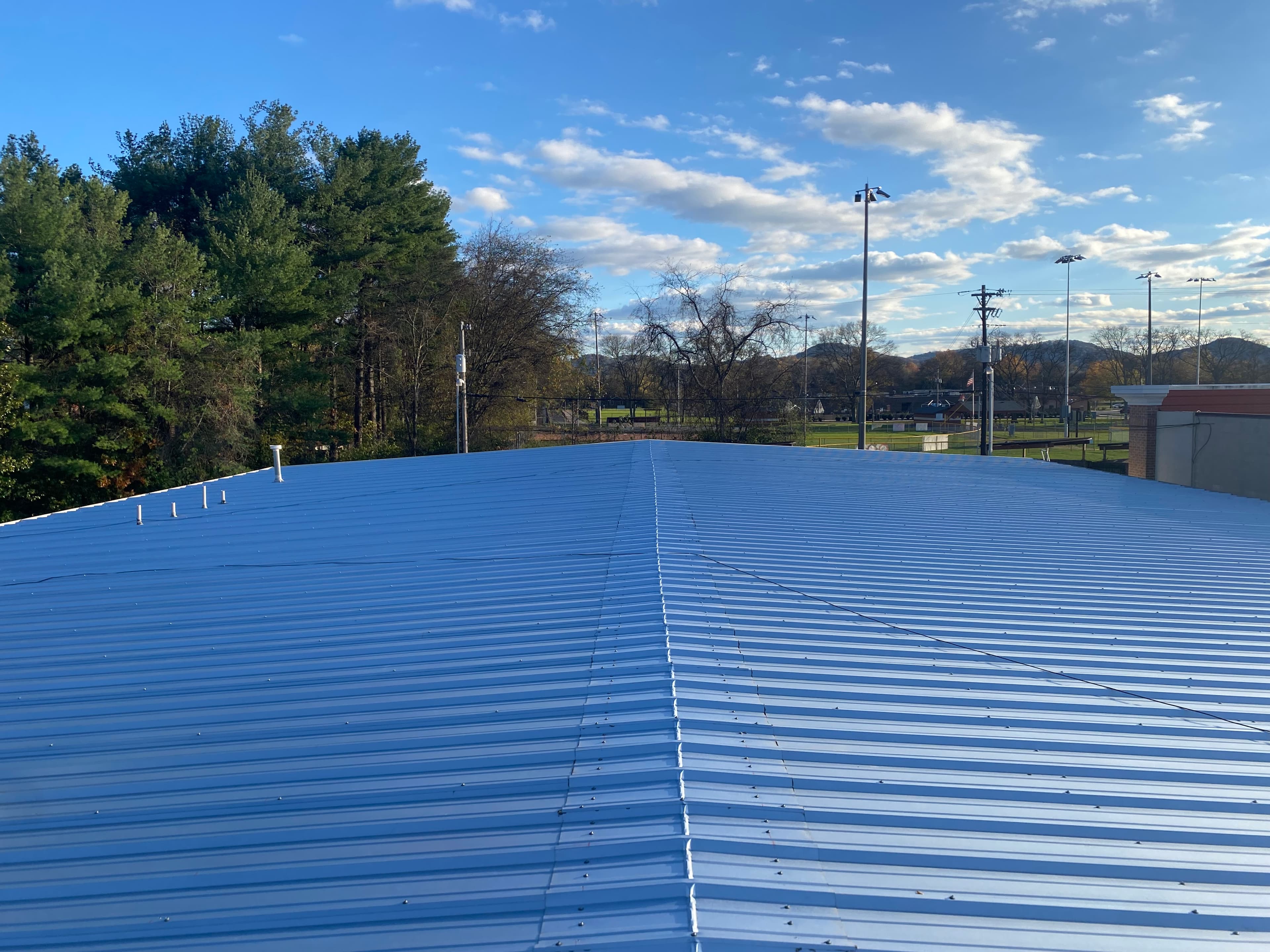
Mechanically attached and fully adhered TPO dominate class-A office, medical office, and self-storage. Modified bitumen persists on older retail. EPDM appears on some legacy institutional buildings. Standing-seam metal is common on flex. Architectural asphalt shingles dominate garden and wrap multifamily, small office, and churches.
Cumming Landmarks & Properties We've Served Near
Our commercial and multifamily roofing work crosses paths with Cumming's most recognizable properties and corridors. These landmarks anchor the commercial districts we work in daily - they're not just tourism references, they're the neighborhoods where property managers ask us to inspect multifamily, retail, hospitality, and office stock.
- The Collection at Forsyth
- Northside Hospital Forsyth
- Sawnee Mountain Preserve
- Cumming City Center
- Lake Lanier (south shore)
- Fowler Park
- Lanier Technical College Forsyth
- GA-400 corridor
Property Types We Serve in Cumming
- Northside Hospital Forsyth campus
- The Collection at Forsyth
- Cumming City Center / Market Place Boulevard retail
- Lanier Technical College Forsyth campus
What a Cumming Commercial Roof Inspection Includes
Every Cumming commercial inspection we perform produces a photo-keyed PDF report built for the way Georgia adjusters, lenders, and asset managers actually work. We walk the full roof system - every slope, every drain, every penetration, every transition - and document what we see with photos referenced to a building or unit location. No generic stock photos. No marketing filler. Just the evidence a carrier needs to make a scope determination on a real commercial property.
On multifamily buildings we document building-by-building, which matters because a 300-unit Cumming complex may show damage concentrated on two of eight roofs. Adjusters want that level of granularity, and the documentation protects the owner from a blanket-scope claim that gets pared back in review.
The inspection report identifies your existing roof system (TPO, EPDM, PVC, modified bitumen, BUR, asphalt shingle, metal, or a mixed portfolio), estimates remaining useful life, flags flashing and penetration condition, and notes any observed damage with date-of-loss alignment where applicable. We also call out situations where we recommend repair rather than replacement - our business is not built on upselling.
Working With Cumming Adjusters and Carriers
Most Cumming commercial claims don't fail on the damage - they fail on documentation gaps or scope- supplement misunderstandings with the adjuster. Our inspection reports are formatted to match what Cumming-area commercial adjusters routinely request: photo-keyed damage evidence, roof-system identification, a priced scope against local labor and material norms, and a repair-vs-replacement recommendation grounded in observed condition.
When an adjuster's initial scope misses legitimate work - underlayment, code-required upgrades, perimeter metal, additional penetrations - we submit a supplement with supporting documentation. Reasonable supplements with good evidence are typically approved. We don't submit questionable supplements, and we don't push scope that wasn't clearly warranted by what we photographed. Cumming adjusters are experienced, and credibility is the currency we operate on.
Typical Cumming Commercial Roof Project Timeline
A typical Cumming commercial roof project runs 30–120 days from inspection to installation completion. Here's how that calendar breaks down on a mid-size property:
- Week 1: on-site inspection, photo-keyed report delivered to owner
- Weeks 2–3: claim filed, adjuster assigned, on-roof walk with adjuster + contractor
- Weeks 3–6: initial scope received, supplement filed for any missed work, approved scope returned
- Weeks 6–10: material procurement, tenant-notice distribution, phased production schedule built
- Weeks 10–16: on-roof production, daily photo documentation, weekly progress check-ins
- Weeks 16–17: final walk, punch-list completion, closeout documentation to lender and carrier
Multifamily properties in Cumming with 100–300 units typically run on the longer end of that range; smaller commercial buildings close faster. Material lead times on TPO, EPDM, and PVC are the usual timeline variables. We share a phased Gantt schedule so operations, leasing, and asset-management teams can plan around the work.
The Collection at Forsyth and GA-400 Retail Corridor
The Collection at Forsyth and the adjacent Peachtree Parkway retail cluster make up one of the densest commercial-roof footprints in north Atlanta. These roofs are predominantly mechanically attached TPO and modified-bitumen, with heavy HVAC penetration counts, multiple tenant expansions, and national-tenant warranty obligations that require every repair and replacement to match manufacturer specification. Red Door's photo-keyed PDFs align with how national retail construction teams want documentation: each image tied to a numbered section, each penetration labeled, and each condition described in manufacturer-aligned language. We coordinate access windows with landlord property managers and tenant construction to avoid interfering with daily operations, deliveries, and curbside customer traffic.
For storm-triggered claims on The Collection and adjacent centers, we reference the specific NOAA Storm Events Database record, walk the full roof envelope, and document both damaged and undamaged sections so the carrier has a complete picture. Percentage wind and hail deductibles on large retail portfolios can be significant, and scope, depreciation, and recoverable depreciation decisions remain carrier-determined. When inspection shows no hail or wind damage attributable to the referenced storm, we issue a Certificate of Clearance in writing for the ownership and lender file.
- Photo-keyed PDFs aligned to national-tenant documentation standards
- Access coordination with landlord property managers and tenant construction
- Full-envelope walks with both damaged and undamaged sections documented
- Certificate of Clearance issued when no storm damage is found
Storm Cadence and Claim Documentation Workflow for Forsyth County
Forsyth County's severe-weather calendar concentrates claim activity into the mid-March through early-May spring supercell window, with a secondary August through September window tied to tropical remnants. Every storm-triggered inspection begins with pulling the NOAA Storm Events Database record for the referenced date, cross-referencing hail-swath and radar products, and walking the roof on a prepared section-by-section plan. Each image is keyed to a numbered roof section for the carrier's review, and the report describes damage in manufacturer-aligned terms that tie back to the referenced storm event.
Where damage is present, we recommend repair or replacement pathways that match the observed scope and the manufacturer specification. Where damage is absent, we issue a Certificate of Clearance documenting that observation in writing. We do not promise insurance outcomes, we do not guarantee claim approval, and we do not characterize pre-existing wear as storm damage. The owner's decision on whether to open a claim given their percentage deductible exposure is theirs to make, informed by the photo-keyed PDF we deliver.
Healthcare and Medical Office Corridor around Northside Hospital Forsyth
Northside Hospital Forsyth anchors a growing healthcare corridor that now includes ambulatory surgery, imaging, specialty practice, and primary-care medical office buildings clustered along Samples Road and Hospital Boulevard. Roof systems on the corridor are predominantly mechanically attached and fully adhered TPO with dense rooftop mechanical loads. Pitch-pan maintenance, flashing terminations, and seam integrity dominate the failure modes. We coordinate with facility engineering and risk management on infection-control pathways during any occupied work and deliver photo-keyed PDFs that facility staff, asset managers, and carriers can all reference consistently.
On storm-triggered claims in the healthcare corridor, scope, depreciation, and deductible application are always carrier-determined. What Red Door brings is defensible, well-labeled documentation that ties observed damage to a specific NOAA storm record, recommends repair or replacement pathways that match manufacturer specification, and issues a Certificate of Clearance when the inspection shows no storm damage. Red Door operates under the Red Door family of companies' Georgia general contractor licensure and does not guarantee insurance outcomes on Forsyth healthcare projects.
- Coordination with facility engineering on infection-control pathways
- Drone-assisted inspection to reduce rooftop foot traffic on occupied buildings
- Photo-keyed PDFs usable by facility staff, asset managers, and carriers
- Certificate of Clearance when inspection shows no storm damage
Why Cumming Property Owners Choose Red Door Roofing
30+ years, Red Door family
Built on 30 years of commercial experience across the Southeast. Notable clients include Best Western, Harbor Freight, Tractor Supply, and Vanderbilt Medical Clinic.
Carrier-ready documentation
Photo-keyed inspection reports formatted for Cumming-area adjuster and lender workflows. No guarantees on claim outcomes - the carrier calls that.
Tenant-in-place phasing
Multifamily work phased by building block with tenant-notice templates, noise windows, and operations- team documentation. Tenants stay in place.
No-obligation inspection
If our Cumming inspection finds no qualifying damage, we issue a Certificate of Clearance - suitable for lender, insurer, and asset-manager files. No further commitment.
Cumming Commercial Roofing FAQs
Do you support Lake Lanier shoreline commercial and hospitality properties?
Can Red Door coordinate with national retail tenant construction teams?
How do you sequence reroofs on occupied class-A office in Cumming?
Do you inspect self-storage facilities along SR-20 and GA-400?
Do you handle roof inspections for retail and restaurant owners at The Collection at Forsyth and nearby centers?
Can you work with Northside Hospital Forsyth medical office landlords and physician-owned buildings?
What roof systems are most common on Forsyth County commercial buildings?
How do percentage wind and hail deductibles work on Forsyth County commercial policies?
Can Red Door phase a multifamily reroof along GA-400 without displacing residents?
Does Red Door provide acquisition due-diligence roof reports in Cumming?
Nearby Georgia Cities We Also Serve
Our commercial roofing coverage extends across Georgia. These three Cumming-adjacent cities are part of our routine service footprint.
Need a Cumming inspection?
Call us directly at 1-855-GO4REDD or request a no-obligation inspection online. Most Cumming-area inspections are scheduled within days of the request.
Request InspectionSchedule a Cumming Roof Inspection
No obligation. Documented findings you can use for insurance, lender, or asset-manager records.
30+ Years of Red Door Family Experience · 16 States
Free · No obligation · No follow-up sales calls