
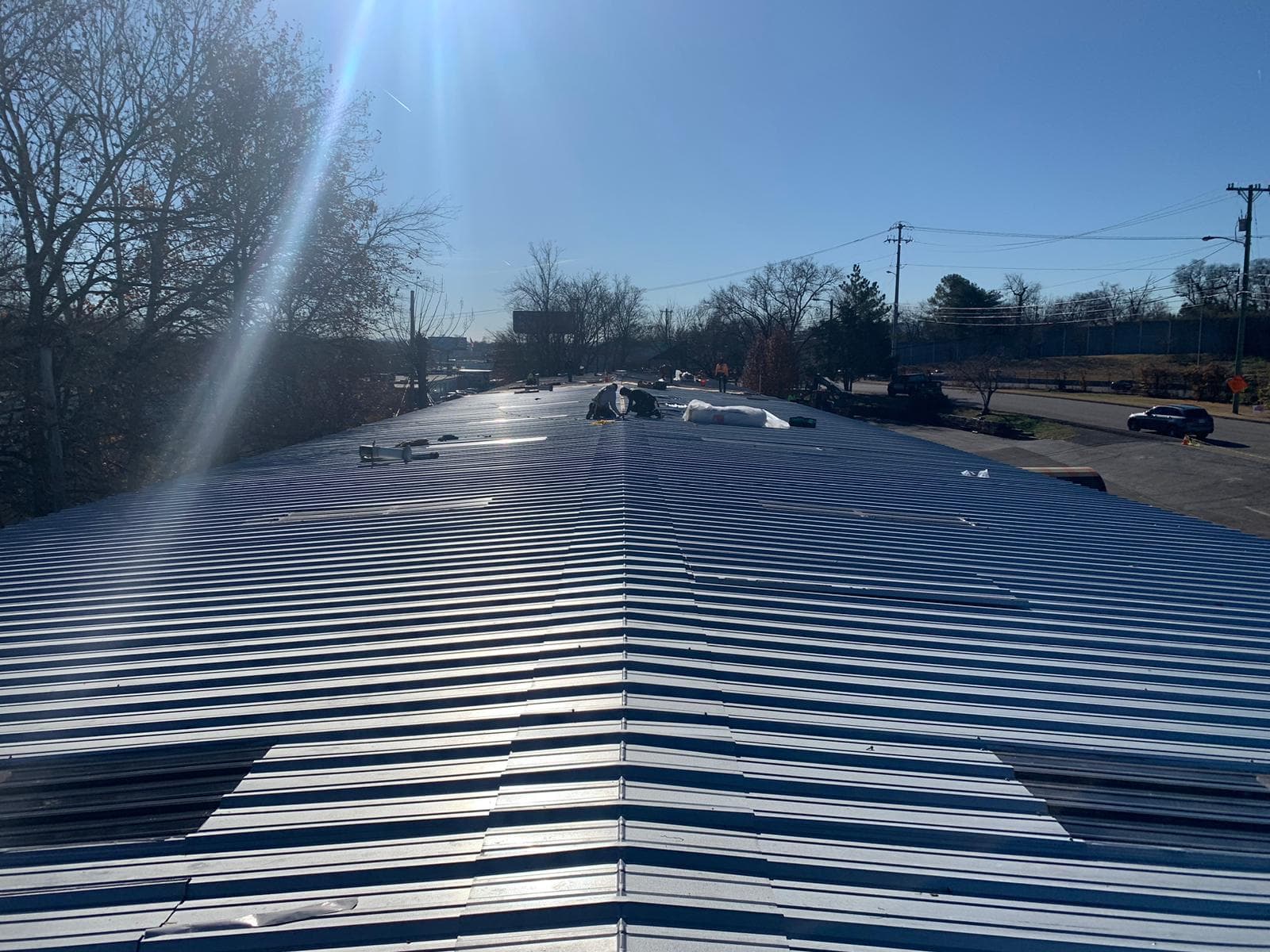
Commercial Roofing in Greer, South Carolina
Inspection, documentation, and insurance-supported roof replacement for commercial and multifamily properties across Greer.
Commercial & Multifamily Roofing Across the Greenville-Anderson-Greer MSA
Greer's commercial roof inventory is dominated by large-deck industrial single-ply on BMW Tier-1 and Tier-2 supplier footprints, GSP aviation and MRO facilities, and an expanding logistics footprint along I-85 and SC-101. Secondary demand comes from multifamily garden and mid-rise apartment communities built to house the manufacturing and aviation workforce, healthcare facilities anchored by Bon Secours St. Francis Eastside, and a hospitality corridor serving business travelers at GSP. Red Door Roofing services this market with photo-keyed inspection documentation, TPO and PVC single-ply expertise, standing-seam metal capability for hangar and warehouse decks, and a phased multifamily workflow that respects tenant life. Every file is documented for carrier review and for long-horizon capital planning, and the Certificate of Clearance product gives owners a formal record when a roof passes a deliberate inspection with no claim-worthy conditions. Licensed through the Red Door family of companies' South Carolina general contractor license.
Red Door Roofing serves commercial, multifamily, industrial, and healthcare property owners across Greer and the Greenville-Spartanburg upstate commercial market, a dense automotive-manufacturing and aviation-logistics corridor where roof performance is directly tied to production uptime, tenant operations, and large-footprint industrial continuity. Greer sits at the center of one of the most consequential Tier-1 manufacturing ecosystems in the American Southeast, anchored by BMW Manufacturing Company's Plant Spartanburg - the largest BMW production facility in the world by output - along with Greenville-Spartanburg International Airport (GSP) and a growing cluster of aerospace, logistics, and advanced-manufacturing suppliers. That industrial density drives demand for large-deck TPO and PVC single-ply systems, standing-seam metal on warehouse and distribution footprints, structural metal on aviation-adjacent hangars and MRO facilities, and phased multifamily roof programs across the apartment inventory that houses the workforce supporting BMW, GSP, Michelin, and dozens of Tier-2 and Tier-3 suppliers clustered along I-85 and SC-101. Our commercial inspections are documented with photo-keyed PDF reports organized by elevation, slope, and roof zone, with each defect linked to a numbered photograph and, when required, to a diagram of the hail or wind event that produced the condition. When our crews complete a deliberate on-roof review and confirm there is no damage meriting a claim, we issue a Certificate of Clearance so the owner has a time-stamped, photo-backed record of condition to archive alongside capital planning documents and lender reports. Red Door operates in South Carolina through the Red Door family of companies' general contractor licensure, and every commercial file - industrial, multifamily, healthcare, hospitality, or office - moves through the same documentation pipeline: drone orthomosaic, elevation-by-elevation photography, moisture scan where appropriate, core-cut documentation when a system cross-section is warranted, and a written scope that ties directly to the numbered photo log. For Greer owners, that discipline matters because upstate SC absorbs a bimodal severe-weather load - spring supercells rolling out of the Tennessee Valley plus interior-track remnants of Atlantic-basin named storms - and the carrier-side supplement review is increasingly rigorous. We build files that survive desk review, field review, and re-inspection.
Greer Business Parks & Office Districts We Serve
Our commercial roofing work in Greer concentrates around the metro's largest office parks and corporate districts. Each of these business parks contains multiple commercial and mixed-use tenants where tenant-in-place scheduling, after-hours production windows, and coordinated material staging matter as much as the roof scope itself. Commercial-grade flat roof systems and pitched multifamily assemblies are both well represented across these parks - our inspections walk every roof section, every transition, and every drain to build a complete condition document suitable for carrier, lender, and asset-manager review.
- BMW Plant Spartanburg supplier cluster
- GSP International Airport industrial park
- Pelham Road industrial corridor
- Highway 101 industrial park
- Greer Commerce Park
- South Buncombe Road logistics cluster
- Wade Hampton Boulevard commercial strip
- I-85 at Pelham Road logistics node
Primary Greer Commercial Corridors
Greer's commercial and multifamily stock clusters along a handful of primary corridors. Our inspection and replacement work tracks along these corridors where commercial density, tenant complexity, and storm exposure concentrate. Routing and material staging around these corridors is part of every Greer project plan - peak commuter hours, event calendars, and fire-lane requirements all factor into how we schedule.
- Wade Hampton Boulevard
- Pelham Road
- East Poinsett Street
- SC-101 corridor
- Highway 29 corridor
- Brushy Creek Road
Greer Multifamily Districts
Multifamily roof replacement demands phased scheduling so tenants stay in place. Our work across Greer's multifamily districts follows building-by-building production schedules with tenant-notice templates and noise-window coordination per property. Asset managers receive portfolio-level closeout documentation; property managers receive a phased Gantt-style schedule they can share with residents and operations teams; leasing teams receive advance notice for unit-turn and move-in coordination.
- Wade Hampton Boulevard apartment corridor
- Pelham Road multifamily cluster
- Highway 101 garden communities
- Brushy Creek multifamily
- East Greer mid-rise inventory
Greer Storm & Severe-Weather History
Greer absorbs a bimodal severe-weather load. Spring supercells roll out of the Tennessee Valley from March through late May, producing 1-inch to 2-inch hail and 55-to-75 mph straight-line wind gusts across industrial single-ply decks and multifamily pitched fields. A second exposure window runs late August through early October when Atlantic-basin named storms push interior remnants across the upstate. The 2024-09-26 Hurricane Helene event was the most consequential interior wind event in recent memory for upstate SC and is still being worked through carrier supplement review. Owners should expect inspection cadence to lean toward twice-annual - post-spring supercell season and post-tropical season - with additional inspection after any named-event interior remnant.
Greer and the Greenville-Spartanburg upstate sit in a bimodal severe-weather corridor with documented wind and hail exposure across both a spring supercell season and an Atlantic named-storm interior-remnant season. The spring window typically opens in March and runs through late May, bringing broad squall lines and discrete supercells that carry 1-inch to 2-inch hail and 55-to-75 mph straight-line wind gusts across industrial roof decks, multifamily pitched-shingle fields, and hospitality porte-cocheres. Recent dated events that inform our documentation posture include the 2019-03-03 severe weather outbreak that moved across the southern Appalachians and upstate SC, the 2023-01-12 central-southeastern tornado and severe-storm outbreak, and the 2024-03-14 spring thunderstorm cycle that produced hail across multiple upstate SC counties. On the tropical side, the upstate absorbed measurable wind loading from 2016-10-08 Hurricane Matthew, 2018-09-14 Hurricane Florence, 2019-09-05 Hurricane Dorian, and 2022-09-28 Hurricane Ian remnants, and most consequentially from 2024-09-26 Hurricane Helene, which tracked into the upstate and produced a sustained interior wind event that damaged industrial single-ply decks, metal-panel fastener lines, and multifamily pitched roofs across Greenville and Spartanburg counties. Helene's upstate impact is still moving through the carrier supplement-review workflow as this page is published, and many Greer owners are discovering that initial field adjustments under-scoped flashings, edge metal, and concealed deck conditions that only a proper photo-keyed supplement could substantiate. We inspect with that reality in mind: every elevation, every penetration, every edge condition is photographed and numbered so that if a supplement becomes necessary, the file is already built.
Notable documented Greer-area events
2019-03-03 · Severe weather outbreak
Wind and hail across upstate SC, including Greenville and Spartanburg counties.
2023-01-12 · Severe storm and tornado outbreak
Straight-line wind damage across upstate SC commercial roofs.
2024-03-14 · Spring thunderstorm cycle
Hail reports across multiple upstate counties near Greer.
2024-09-26 · Hurricane Helene interior remnant
Sustained interior wind event in upstate SC; active carrier supplement-review workflow ongoing.
Insurance Process in Greer
South Carolina commercial and multifamily policies commonly carry a percentage-based wind and hail deductible, often in the 1 to 5 percent range of insured building value, with some large industrial schedules running higher. Named-storm deductibles may apply separately when a tropical system is named at landfall. The carrier makes the final determination on every claim. Our role is to build a photo-keyed documentation file that gives the adjuster everything they need to render a decision on the evidence.
Industrial and multifamily lenders active in the Greer market frequently require third-party roof condition reports at refinance and at acquisition. Our photo-keyed PDFs, core-cut records where warranted, and Certificate of Clearance product are designed to satisfy lender-side diligence and carrier-side underwriting at the same time, without duplicate fieldwork.
Commercial Roof Systems Common in Greer
Greer commercial roofs are dominated by mechanically attached and fully adhered TPO and PVC single-ply on large industrial and warehouse decks, with standing-seam structural metal on hangar, MRO, and some manufacturing footprints. Multifamily garden communities run pitched asphalt architectural shingle with selective low-slope TPO at breezeways. Healthcare and hospitality decks commonly mix TPO with modified-bitumen transitions at parapets and mechanical curbs.
Greer Landmarks & Properties We've Served Near
Our commercial and multifamily roofing work crosses paths with Greer's most recognizable properties and corridors. These landmarks anchor the commercial districts we work in daily - they're not just tourism references, they're the neighborhoods where property managers ask us to inspect multifamily, retail, hospitality, and office stock.
- BMW Manufacturing Plant Spartanburg
- Greenville-Spartanburg International Airport
- Bon Secours St. Francis Eastside
- Greer City Park
- Wade Hampton Boulevard
- Pelham Road
- Greer Commerce Park
- SC-101 corridor
Property Types We Serve in Greer
- BMW Manufacturing Plant Spartanburg campus-adjacent supplier roofs
- Greenville-Spartanburg International Airport facilities
- Bon Secours St. Francis Eastside medical campus area
- Wade Hampton Boulevard multifamily and retail inventory
What a Greer Commercial Roof Inspection Includes
Every Greer commercial inspection we perform produces a photo-keyed PDF report built for the way South Carolina adjusters, lenders, and asset managers actually work. We walk the full roof system - every slope, every drain, every penetration, every transition - and document what we see with photos referenced to a building or unit location. No generic stock photos. No marketing filler. Just the evidence a carrier needs to make a scope determination on a real commercial property.
On multifamily buildings we document building-by-building, which matters because a 300-unit Greer complex may show damage concentrated on two of eight roofs. Adjusters want that level of granularity, and the documentation protects the owner from a blanket-scope claim that gets pared back in review.
The inspection report identifies your existing roof system (TPO, EPDM, PVC, modified bitumen, BUR, asphalt shingle, metal, or a mixed portfolio), estimates remaining useful life, flags flashing and penetration condition, and notes any observed damage with date-of-loss alignment where applicable. We also call out situations where we recommend repair rather than replacement - our business is not built on upselling.
Working With Greer Adjusters and Carriers
Most Greer commercial claims don't fail on the damage - they fail on documentation gaps or scope- supplement misunderstandings with the adjuster. Our inspection reports are formatted to match what Greer-area commercial adjusters routinely request: photo-keyed damage evidence, roof-system identification, a priced scope against local labor and material norms, and a repair-vs-replacement recommendation grounded in observed condition.
When an adjuster's initial scope misses legitimate work - underlayment, code-required upgrades, perimeter metal, additional penetrations - we submit a supplement with supporting documentation. Reasonable supplements with good evidence are typically approved. We don't submit questionable supplements, and we don't push scope that wasn't clearly warranted by what we photographed. Greer adjusters are experienced, and credibility is the currency we operate on.
Typical Greer Commercial Roof Project Timeline
A typical Greer commercial roof project runs 30–120 days from inspection to installation completion. Here's how that calendar breaks down on a mid-size property:
- Week 1: on-site inspection, photo-keyed report delivered to owner
- Weeks 2–3: claim filed, adjuster assigned, on-roof walk with adjuster + contractor
- Weeks 3–6: initial scope received, supplement filed for any missed work, approved scope returned
- Weeks 6–10: material procurement, tenant-notice distribution, phased production schedule built
- Weeks 10–16: on-roof production, daily photo documentation, weekly progress check-ins
- Weeks 16–17: final walk, punch-list completion, closeout documentation to lender and carrier
Multifamily properties in Greer with 100–300 units typically run on the longer end of that range; smaller commercial buildings close faster. Material lead times on TPO, EPDM, and PVC are the usual timeline variables. We share a phased Gantt schedule so operations, leasing, and asset-management teams can plan around the work.
BMW supplier cluster and the I-85 industrial roof profile
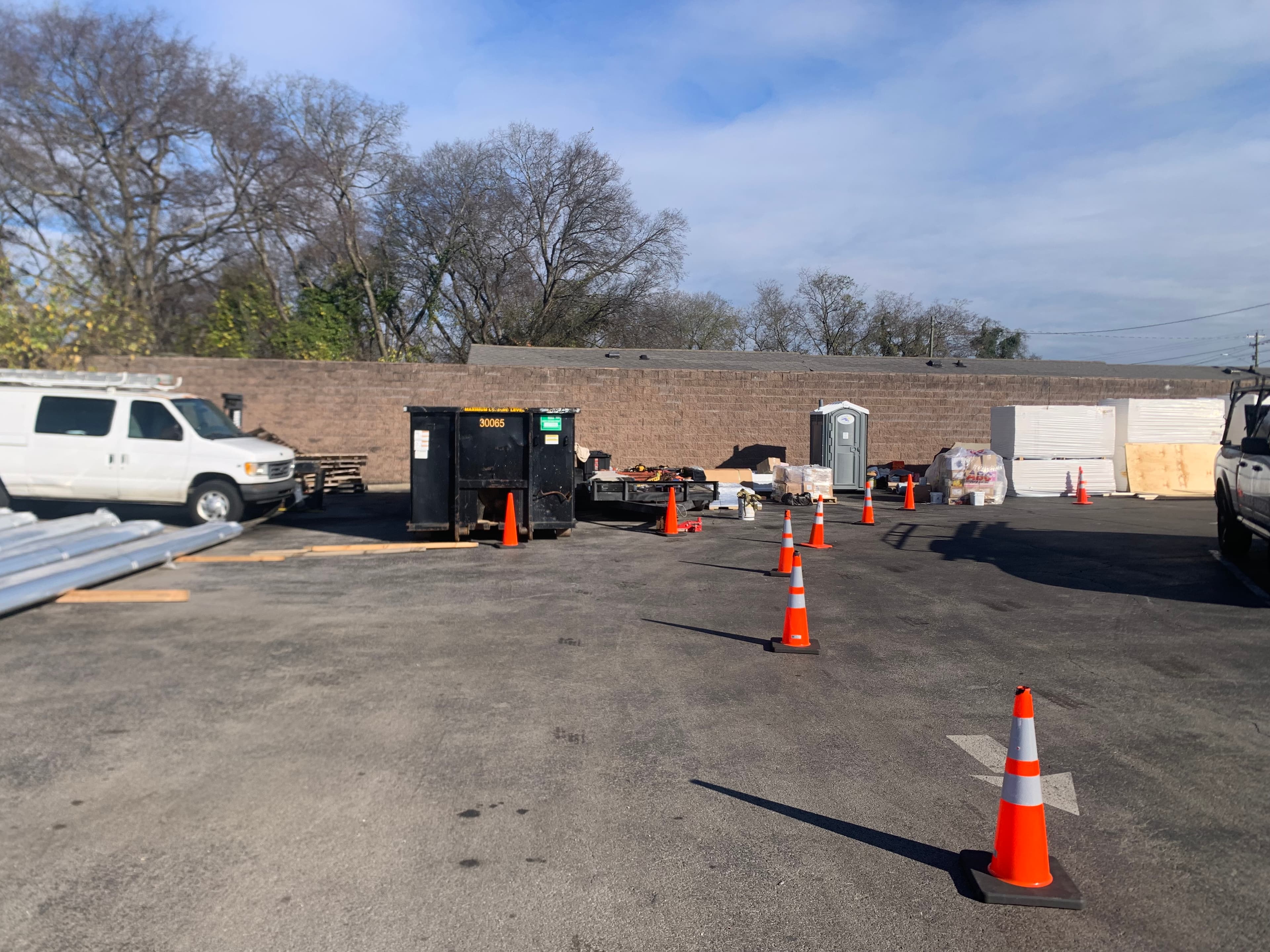
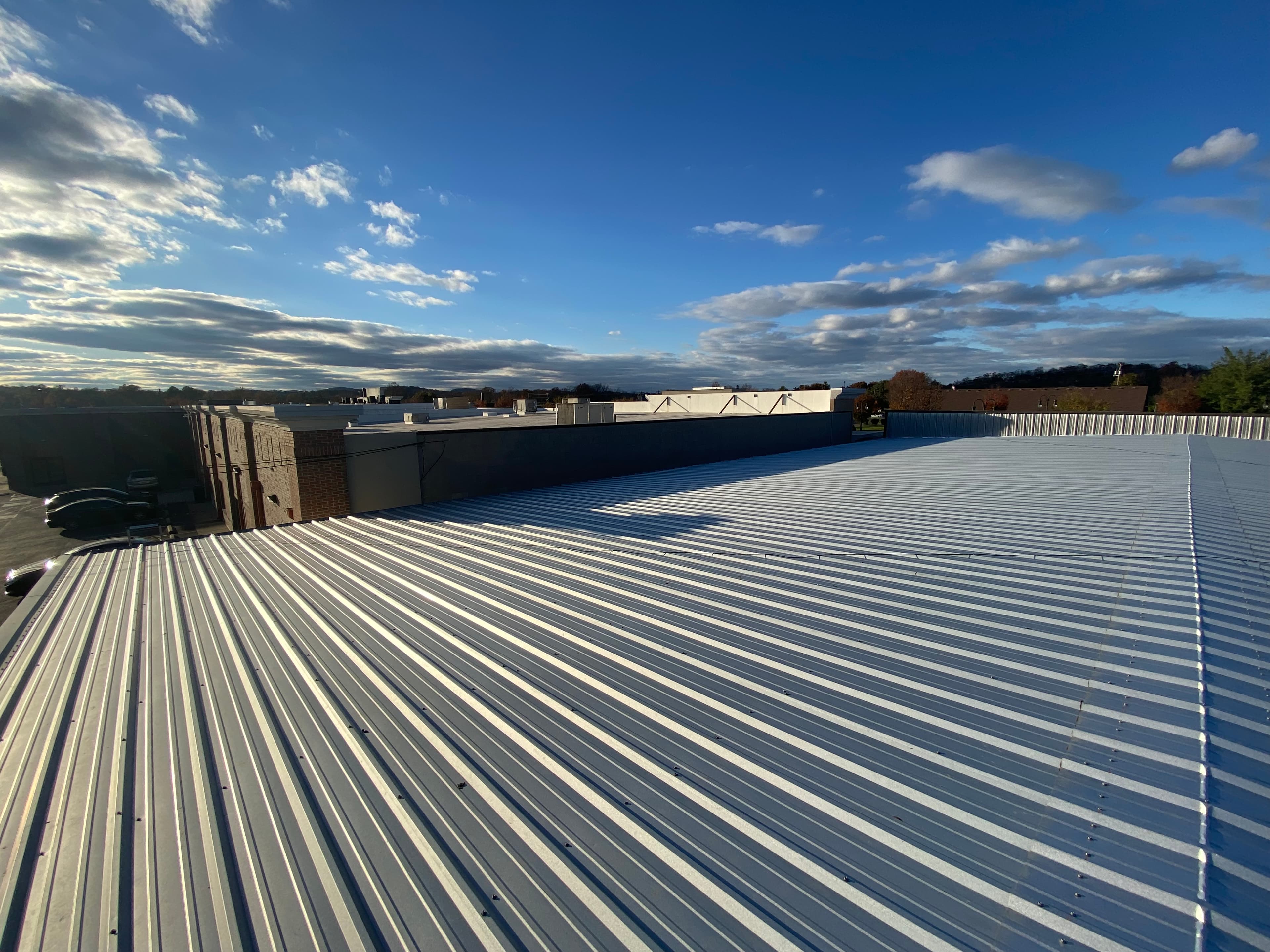
The Greer commercial roof portfolio is shaped more than any other single factor by BMW Plant Spartanburg and its supplier cluster. Plant Spartanburg is the largest BMW production facility in the world by output, and the Tier-1 and Tier-2 supplier footprint around Greer, Duncan, and the I-85 corridor extends across dozens of stamping plants, injection-molding shops, logistics centers, and sequencing facilities that run on just-in-time production schedules measured in minutes, not hours. The roof deck on a typical Tier-1 supplier plant is large - frequently 200,000 to 600,000 square feet - and dominated by mechanically attached or fully adhered TPO or PVC single-ply with a high count of penetrations, mechanical curbs, skylights, and dock-door clerestories. A single edge-metal failure, a single under-scoped flashing detail, or a single unidentified hail bruise can translate directly into interior exposure on a line that cannot be shut down without cascading consequences up and down the supply chain.
Red Door Roofing inspects this inventory with that operational reality in mind. We open with a drone orthomosaic to capture the whole deck in a single session, then walk the roof elevation by elevation with numbered photography of every penetration, edge condition, and mechanical curb. Where a system cross-section is warranted, we pull a documented core cut. Where hail is alleged, we run 10-foot-by-10-foot test squares and photograph the results in situ. The deliverable is a photo-keyed PDF organized by elevation, slope, and roof zone, with each defect linked to a numbered photograph and each zone linked to a production-area overlay provided by the plant so the facilities team and the production planners can read the same document.
- Drone orthomosaic opens every Tier-1 inspection, followed by elevation-by-elevation on-roof photography.
- Core cuts documented where a system cross-section is warranted for warranty or claim purposes.
- Inspection and tear-off phased around 24/7 JIT production shifts to protect line uptime.
- Photo-keyed PDFs cross-referenced to plant production-area overlays for facilities and production planning.
Helene supplement workflow and upstate SC carrier posture
Hurricane Helene's 2024-09-26 interior track through upstate SC produced a sustained wind event that damaged industrial single-ply decks, metal-panel fastener lines, and multifamily pitched roofs across Greenville and Spartanburg counties. Many initial field adjustments under-scoped the event because the damage pattern was concentrated at edges, flashings, and concealed deck conditions rather than at the visible field of the roof. Owners who relied on a drive-by adjustment without a proper on-roof inspection are now discovering that the carrier file was built without the documentation needed to substantiate a full repair scope. The Helene supplement workflow is still live in the upstate SC commercial market, and Red Door Roofing is actively building supplement packages that give owners a fair shot at a complete scope.
Our supplement file opens with a fresh drone orthomosaic and an elevation-by-elevation photo log tied to the 2024-09-26 storm date. We document test-square results where hail or wind-uplift is alleged, photograph every edge metal failure and fastener back-out, and annotate the concealed deck conditions visible only after controlled probing. The supplement package is delivered to the carrier as a photo-keyed PDF with a numbered defect index. The carrier makes the final determination, but a disciplined file substantially improves the quality of the review and gives the adjuster everything they need to render a decision on the evidence rather than on a drive-by impression.
Multifamily phasing and healthcare coordination in the Greer workforce-housing corridor
The apartment inventory along Wade Hampton Boulevard, SC-101, and the I-85 corridor anchors workforce housing for BMW, GSP, Michelin, and the supplier cluster. Roof programs in this inventory are almost always phased - typically 2 to 6 buildings per phase across a garden or mid-rise community - and they run on a tenant-notice cadence that respects resident life. Red Door Roofing runs phased multifamily programs with written tenant-notice templates issued 5 to 7 days in advance, balcony and patio protection staged the morning of each building, dumpster placement coordinated with the property management team, and daily magnet sweeps of parking areas at the end of each production day.
Healthcare-facility roof work in the Greer market, anchored by Bon Secours St. Francis Eastside and the medical-office inventory around it, runs on a different rhythm. Patient-care continuity, infection-control protocols, rooftop mechanical protection, and interior-exposure risk all shape the phasing. We coordinate with facilities and infection-prevention teams, stage negative-air where appropriate, and document every phase in the same photo-keyed PDF format used across the rest of our commercial portfolio. The consistency of the documentation product across industrial, multifamily, and healthcare owners is the single most valuable thing Red Door delivers for a Greer owner building a long-horizon capital plan.
Why Greer Property Owners Choose Red Door Roofing
30+ years, Red Door family
Built on 30 years of commercial experience across the Southeast. Notable clients include Best Western, Harbor Freight, Tractor Supply, and Vanderbilt Medical Clinic.
Carrier-ready documentation
Photo-keyed inspection reports formatted for Greer-area adjuster and lender workflows. No guarantees on claim outcomes - the carrier calls that.
Tenant-in-place phasing
Multifamily work phased by building block with tenant-notice templates, noise windows, and operations- team documentation. Tenants stay in place.
No-obligation inspection
If our Greer inspection finds no qualifying damage, we issue a Certificate of Clearance - suitable for lender, insurer, and asset-manager files. No further commitment.
Greer Commercial Roofing FAQs
Do you handle roof work on BMW Tier-1 supplier plants with 24/7 production shifts?
Can you inspect a GSP-adjacent hangar or MRO facility without disrupting aircraft movements?
How do you document a multifamily roof program across the Greer workforce-housing corridor?
What does a Hurricane Helene supplement workflow look like for a Greer owner six months after the event?
Do you inspect BMW-adjacent Tier-1 and Tier-2 industrial roofs in Greer?
What is a Certificate of Clearance and when do you issue one?
Can you coordinate inspections around GSP airport airside access restrictions?
What percentage wind and hail deductible should a Greer commercial owner expect?
Can Red Door Roofing guarantee my insurance claim will be approved?
Do you work on multifamily apartment roof programs in the Greer workforce-housing inventory?
Nearby South Carolina Cities We Also Serve
Our commercial roofing coverage extends across South Carolina. These three Greer-adjacent cities are part of our routine service footprint.
Need a Greer inspection?
Call us directly at 1-855-GO4REDD or request a no-obligation inspection online. Most Greer-area inspections are scheduled within days of the request.
Request InspectionSchedule a Greer Roof Inspection
No obligation. Documented findings you can use for insurance, lender, or asset-manager records.
30+ Years of Red Door Family Experience · 16 States
Free · No obligation · No follow-up sales calls