
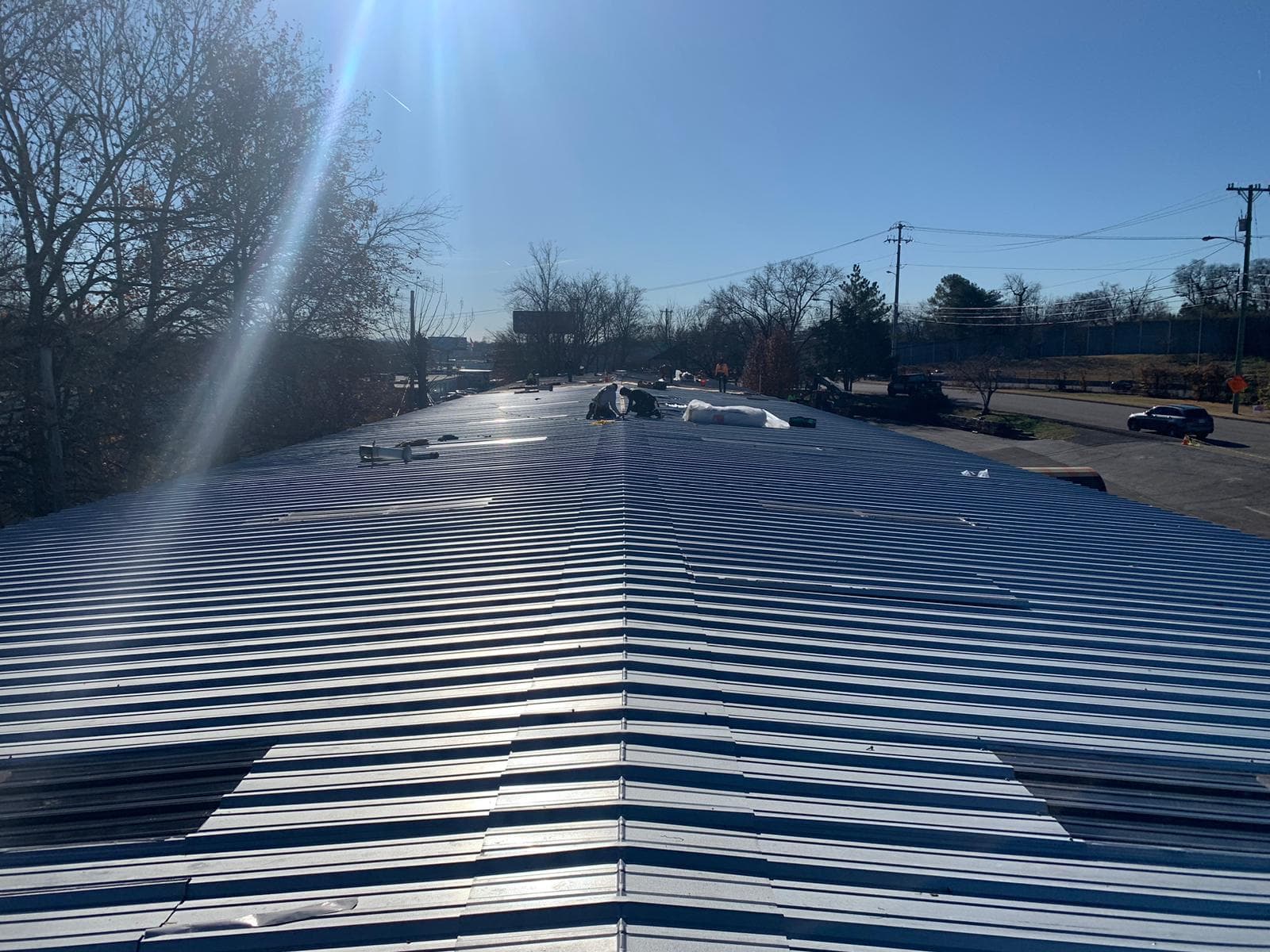
Commercial Roofing in Port Royal, South Carolina
Inspection, documentation, and insurance-supported roof replacement for commercial and multifamily properties across Port Royal.
Commercial & Multifamily Roofing Across the Hilton Head Island-Bluffton-Beaufort MSA
Red Door Roofing serves commercial, multifamily, healthcare, and military-support property owners across Port Royal and the greater Beaufort County Lowcountry market. The town's commercial inventory clusters along Paris Avenue, Ribaut Road, and the approaches to MCRD Parris Island and Naval Hospital Beaufort, with additional nodes around the historic Port of Port Royal waterfront and the Sands Beach recreation corridor. Our Port Royal portfolio covers downtown mixed-use, military-family multifamily, base-adjacent retail and office, hospitality and restaurant product, and growing self-storage and industrial-service commercial. Every inspection is delivered as a photo-keyed PDF tied to a roof-plan diagram, giving property managers, facilities directors, and asset managers the indexed documentation required for carrier claims, lender refinance, and CapEx planning under coastal South Carolina percentage-deductible policies.
Red Door Roofing delivers commercial, multifamily, healthcare, and military-support commercial roofing services across Port Royal and the greater Beaufort County Lowcountry market. Port Royal's compact commercial footprint punches above its population weight thanks to its role as a Marine Corps access community: the town sits between the city of Beaufort and Marine Corps Recruit Depot Parris Island, absorbing a steady flow of military families, contractors supporting MCRD, and businesses serving the Naval Hospital Beaufort and the broader Tri-Command defense economy. Our teams document every Port Royal commercial roof assessment with photo-keyed PDF inspection reports that tie each image to a roof-plan quadrant, giving property managers, base-adjacent commercial landlords, healthcare facilities directors, and lenders a defensible record that holds up in carrier review, capital-planning meetings, and refinance diligence. The commercial roof inventory in Port Royal spans low-slope TPO and modified bitumen over downtown mixed-use, restaurant, and small office product along Paris Avenue and Ribaut Road; standing-seam metal on historic Port of Port Royal adaptive reuse and newer hospitality product; and architectural shingle on garden-style multifamily and townhome developments serving the military-family rental market. Atlantic salt-air exposure from the Beaufort River, Battery Creek, and Port Royal Sound drives fastener corrosion, flashing oxidation, and sealant degradation faster than inland markets, so Port Royal commercial roofs typically show measurable wear three to five years earlier than equivalent inland installations. Red Door crews operate under the Red Door family of companies' South Carolina general-contractor licensure, which means property owners work with a single licensed accountable contractor across inspection, documentation, repair, replacement, and carrier coordination. When we inspect a Port Royal roof and find no storm-related damage, we issue a Certificate of Clearance documenting the inspection date, scope, and findings. Property owners use the certificate at refinance, at sale, during insurance renewal, and in annual CapEx review. We never guarantee insurance outcomes because the carrier makes the final determination, but the photo-keyed evidence package we produce represents the most complete, roof-plan-indexed file the adjuster or engineer reviewing the claim will see that week.
Port Royal Business Parks & Office Districts We Serve
Our commercial roofing work in Port Royal concentrates around the metro's largest office parks and corporate districts. Each of these business parks contains multiple commercial and mixed-use tenants where tenant-in-place scheduling, after-hours production windows, and coordinated material staging matter as much as the roof scope itself. Commercial-grade flat roof systems and pitched multifamily assemblies are both well represented across these parks - our inspections walk every roof section, every transition, and every drain to build a complete condition document suitable for carrier, lender, and asset-manager review.
- Ribaut Road medical and office corridor
- Paris Avenue downtown commercial
- Port of Port Royal historic commercial
- Sands Beach recreation commercial
- Beaufort-Port Royal industrial approach
- Battery Creek commerce nodes
- Tri-Command contractor-support commercial
- Robert Smalls Parkway gateway commercial
Primary Port Royal Commercial Corridors
Port Royal's commercial and multifamily stock clusters along a handful of primary corridors. Our inspection and replacement work tracks along these corridors where commercial density, tenant complexity, and storm exposure concentrate. Routing and material staging around these corridors is part of every Port Royal project plan - peak commuter hours, event calendars, and fire-lane requirements all factor into how we schedule.
- Paris Avenue
- Ribaut Road / SC-281
- Robert Smalls Parkway
- Savannah Highway / US-21
- Battery Creek Road
- Port Royal historic waterfront
Port Royal Multifamily Districts
Multifamily roof replacement demands phased scheduling so tenants stay in place. Our work across Port Royal's multifamily districts follows building-by-building production schedules with tenant-notice templates and noise-window coordination per property. Asset managers receive portfolio-level closeout documentation; property managers receive a phased Gantt-style schedule they can share with residents and operations teams; leasing teams receive advance notice for unit-turn and move-in coordination.
- Battery Creek apartment corridor
- Ribaut Road military-family rental
- Paris Avenue mixed-use residential
- Sands Beach adjacent multifamily
- Port Royal historic townhouse
Port Royal Storm & Severe-Weather History
Port Royal sits in an active South Atlantic named-storm corridor with multiple tropical-system impacts each decade. The 2016 through 2024 window produced Matthew, Florence, Dorian, Ian remnants, Idalia, and Helene all touching Beaufort County roof systems to varying degrees. Beyond named storms, seasonal convective weather produces localized microbursts and small-hail events that frequently leave subtle damage missed on ground-level checks. Commercial property owners in Port Royal should plan on documented professional roof inspections annually and after every named-storm pass, with photo-keyed PDF reports kept on file for carrier submission readiness and CapEx budget defense through the entire tropical-season calendar. Post-event inspection timing matters especially for hail and microburst damage where membrane and metal surface patterns weather quickly and lose their diagnostic clarity within weeks of the originating event.
Port Royal sits at the eastern edge of Beaufort County with direct Port Royal Sound and Atlantic-approach exposure, placing the town in one of South Carolina's most active named-storm corridors. Hurricane Matthew on 2016-10-08 pushed sustained tropical-storm-force winds and outer-band gusts across the Lowcountry, initiating the modern commercial-claim cycle for Port Royal and Beaufort commercial properties. Hurricane Florence on 2018-09-14 delivered extended-duration rain and sustained tropical-storm gusts, driving water intrusion through compromised flashings on older Paris Avenue and Ribaut Road commercial roofs. Hurricane Dorian on 2019-09-05 produced another round of coastal wind scouring. Hurricane Ian remnants on 2022-09-28 brought tropical-storm gusts and saturating rain across Port Royal Sound. Hurricane Idalia on 2023-08-30 tracked through the Lowcountry and tested every commercial assembly in the Port Royal-Beaufort corridor. Hurricane Helene on 2024-09-26, while tracking farther inland, still delivered peripheral wind and triggered a regional supply-chain draw that tightened South Carolina commercial-roofing labor and material availability. Beyond named storms, Port Royal absorbs seasonal severe-thunderstorm activity from the Lowcountry convective window, including microbursts and small-hail events that often leave subtle damage invisible from the ground. Commercial policies in Port Royal almost universally carry named-storm deductibles expressed as a percentage of insured value, typically 2% to 5%, alongside separate wind-and-hail percentage deductibles. That deductible structure changes every conversation about repair versus replacement, about claim filing thresholds, and about how property owners sequence capital planning across a portfolio. Our photo-keyed documentation approach is built for exactly this claim environment and gives owners the indexed evidence required to navigate percentage-deductible claims.
Notable documented Port Royal-area events
2016-10-08 · Hurricane Matthew
Tropical-storm-force sustained winds across Port Royal, widespread shingle loss and membrane edge lift on Paris Avenue and Ribaut Road commercial
2018-09-14 · Hurricane Florence
Extended duration rain and tropical-storm gusts, water intrusion through compromised flashings on legacy downtown commercial roofs
2023-08-30 · Hurricane Idalia
Direct Lowcountry track, notable commercial claim volume in Beaufort-Port Royal corridor under named-storm deductibles
2024-09-26 · Hurricane Helene
Peripheral tropical-storm wind across Beaufort County, supply-chain draw on South Carolina commercial roofing materials and labor for months after
Insurance Process in Port Royal
Port Royal commercial policies almost universally carry named-storm deductibles of 2% to 5% of insured value, alongside separate wind-and-hail percentage deductibles. That structure pushes small losses below the claim threshold and makes documentation essential for borderline cases. Red Door never guarantees insurance outcomes because the carrier makes the final determination on every claim submitted.
Lenders financing Beaufort County commercial product typically require third-party roof condition reports at acquisition and refinance, with photo-keyed documentation preferred by loan-committee reviewers. Carriers underwriting coastal SC commercial frequently ask for current inspection reports at renewal and apply surcharges where documentation is incomplete.
Commercial Roof Systems Common in Port Royal
Port Royal commercial roof assemblies run heavy on TPO single-ply and modified bitumen over downtown mixed-use, restaurant, and small office product along Paris Avenue and Ribaut Road; standing-seam metal on historic Port of Port Royal adaptive reuse; and architectural shingle on garden-style multifamily and townhome developments serving the Tri-Command military-family rental market throughout the town.
Port Royal Landmarks & Properties We've Served Near
Our commercial and multifamily roofing work crosses paths with Port Royal's most recognizable properties and corridors. These landmarks anchor the commercial districts we work in daily - they're not just tourism references, they're the neighborhoods where property managers ask us to inspect multifamily, retail, hospitality, and office stock.
- Port of Port Royal
- Sands Beach
- Paris Avenue
- Ribaut Road
- Battery Creek
- Robert Smalls Parkway
- MCRD Parris Island approach
- Port Royal Sound
Property Types We Serve in Port Royal
- Port of Port Royal historic commercial waterfront
- Ribaut Road healthcare and office corridor
- Paris Avenue downtown commercial district
- Sands Beach adjacent hospitality and recreation commercial
What a Port Royal Commercial Roof Inspection Includes
Every Port Royal commercial inspection we perform produces a photo-keyed PDF report built for the way South Carolina adjusters, lenders, and asset managers actually work. We walk the full roof system - every slope, every drain, every penetration, every transition - and document what we see with photos referenced to a building or unit location. No generic stock photos. No marketing filler. Just the evidence a carrier needs to make a scope determination on a real commercial property.
On multifamily buildings we document building-by-building, which matters because a 300-unit Port Royal complex may show damage concentrated on two of eight roofs. Adjusters want that level of granularity, and the documentation protects the owner from a blanket-scope claim that gets pared back in review.
The inspection report identifies your existing roof system (TPO, EPDM, PVC, modified bitumen, BUR, asphalt shingle, metal, or a mixed portfolio), estimates remaining useful life, flags flashing and penetration condition, and notes any observed damage with date-of-loss alignment where applicable. We also call out situations where we recommend repair rather than replacement - our business is not built on upselling.
Working With Port Royal Adjusters and Carriers
Most Port Royal commercial claims don't fail on the damage - they fail on documentation gaps or scope- supplement misunderstandings with the adjuster. Our inspection reports are formatted to match what Port Royal-area commercial adjusters routinely request: photo-keyed damage evidence, roof-system identification, a priced scope against local labor and material norms, and a repair-vs-replacement recommendation grounded in observed condition.
When an adjuster's initial scope misses legitimate work - underlayment, code-required upgrades, perimeter metal, additional penetrations - we submit a supplement with supporting documentation. Reasonable supplements with good evidence are typically approved. We don't submit questionable supplements, and we don't push scope that wasn't clearly warranted by what we photographed. Port Royal adjusters are experienced, and credibility is the currency we operate on.
Typical Port Royal Commercial Roof Project Timeline
A typical Port Royal commercial roof project runs 30–120 days from inspection to installation completion. Here's how that calendar breaks down on a mid-size property:
- Week 1: on-site inspection, photo-keyed report delivered to owner
- Weeks 2–3: claim filed, adjuster assigned, on-roof walk with adjuster + contractor
- Weeks 3–6: initial scope received, supplement filed for any missed work, approved scope returned
- Weeks 6–10: material procurement, tenant-notice distribution, phased production schedule built
- Weeks 10–16: on-roof production, daily photo documentation, weekly progress check-ins
- Weeks 16–17: final walk, punch-list completion, closeout documentation to lender and carrier
Multifamily properties in Port Royal with 100–300 units typically run on the longer end of that range; smaller commercial buildings close faster. Material lead times on TPO, EPDM, and PVC are the usual timeline variables. We share a phased Gantt schedule so operations, leasing, and asset-management teams can plan around the work.
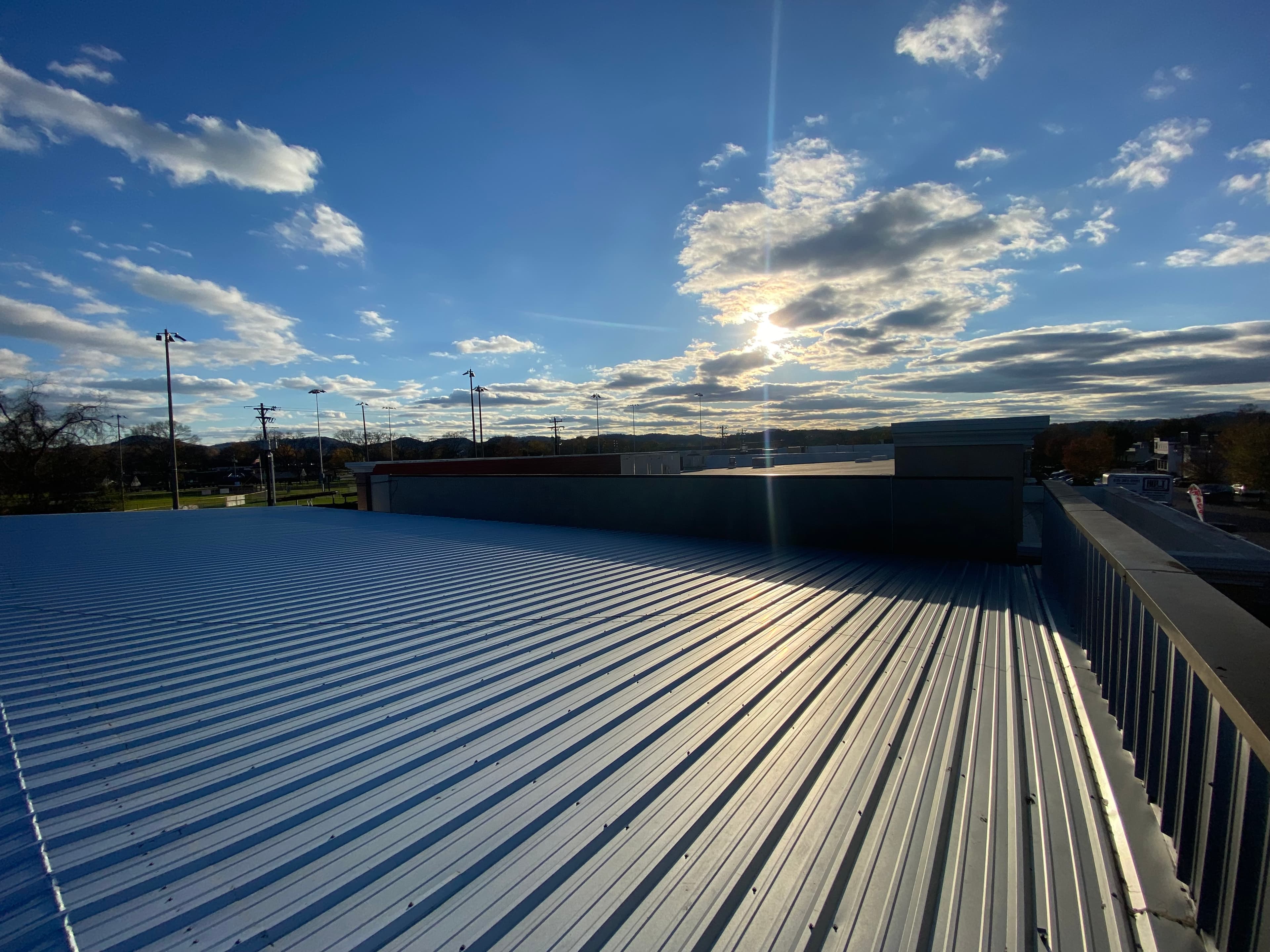
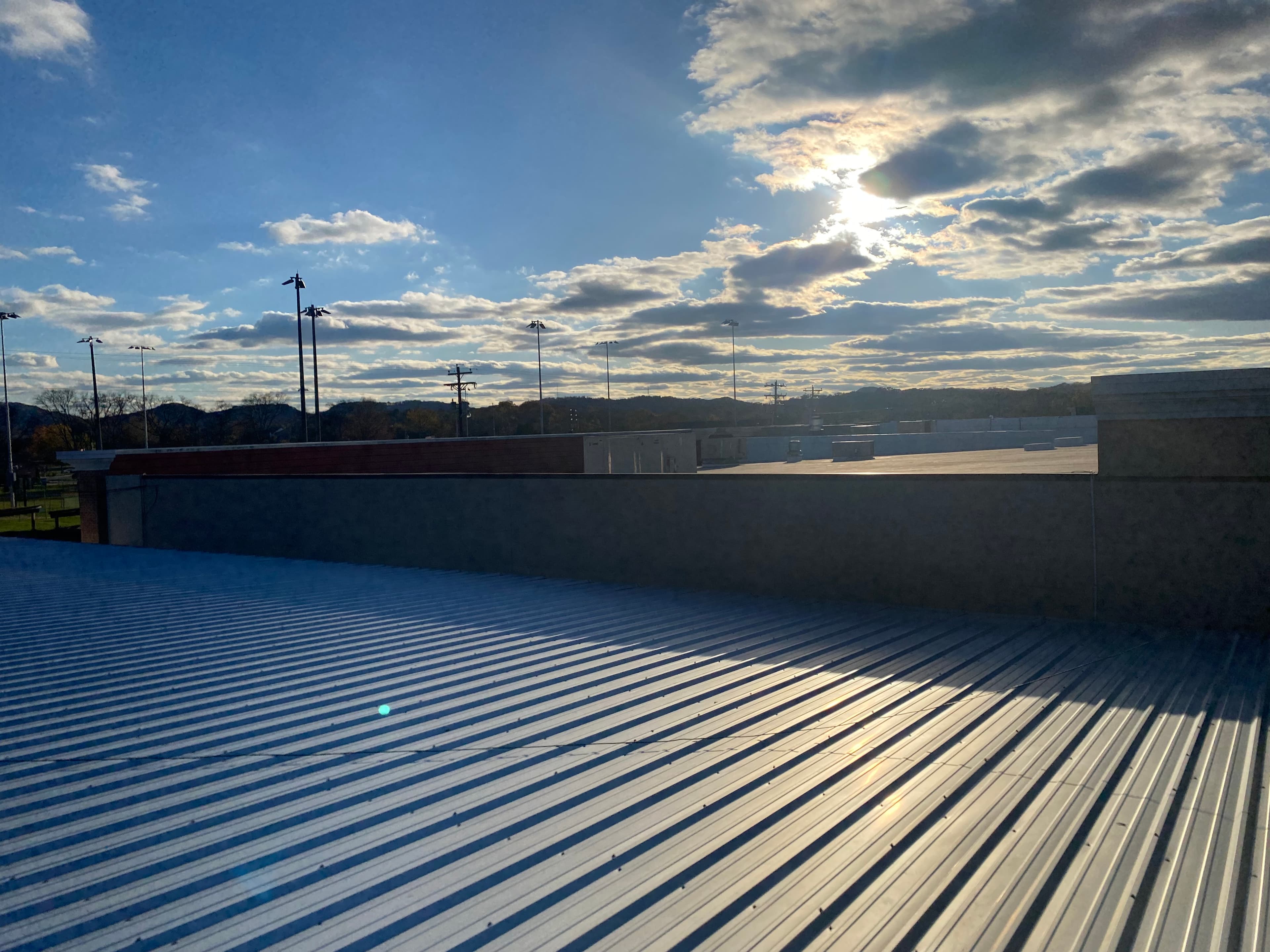
Tri-Command defense economy and Port Royal commercial roofing
Port Royal's commercial footprint is shaped by its position between the city of Beaufort and Marine Corps Recruit Depot Parris Island, with Naval Hospital Beaufort and Marine Corps Air Station Beaufort completing the Tri-Command defense cluster. The town's commercial property owners include base-adjacent retail, office, and hospitality operators; federal-contractor-support firms providing services to MCRD and the Naval Hospital; property managers running military-family rental portfolios; and healthcare and professional-services offices serving the active-duty, retiree, and civilian-contractor population. Red Door Roofing approaches this market with documentation rigor calibrated to federal-contractor expectations: photo-keyed PDF reports, indexed roof-plan diagrams, dated image evidence, and written observations that survive both carrier review and lender diligence.
Our Port Royal commercial file packages include pre-work baseline photos, phase-by-phase progress documentation, and a complete closeout file so owners have a defensible record at every point in the asset lifecycle. For properties that support base access or contractor operations, we coordinate with security and facility-management teams to meet credentialing and escort requirements, and we build project schedules that respect both mission-critical operational windows and the tenant-notice requirements common to military-family multifamily. We never guarantee insurance outcomes because the carrier makes the final determination, but the Port Royal Tri-Command file standard we maintain gives property owners the best possible documentation foundation for every claim and every refinance.
The broader Tri-Command-supporting commercial inventory in Port Royal also includes retail, restaurant, professional-services, and hospitality product serving the rotating active-duty, recruit-family, and civilian-contractor populations. That tenant profile produces unusually steady commercial occupancy year-round, distinct from the seasonal swings more common in coastal Beaufort County. For commercial landlords in this segment, our photo-keyed PDF documentation supports steady-state asset-management workflows: annual inspection cycles, lender-refinance diligence, and carrier renewal documentation all rely on the same consistent evidence standard. Across every Tri-Command-adjacent commercial asset we serve in Port Royal, the documentation rigor holds constant, giving owners a foundation that survives owner transitions, property-manager changes, and multi-year asset-management cycles in the Lowcountry defense-support market.
- Federal-contractor-ready documentation rigor on every file
- Coordination with base security and facility-management teams where required
- Closeout packages designed for lender and carrier diligence
Post-storm workflow and coastal named-storm claim documentation
When a named storm approaches Beaufort County, our Port Royal commercial workflow shifts into a documented post-storm sequence designed to produce the evidence owners need under percentage-based named-storm deductibles. Pre-storm, we offer documented baseline inspections so owners have a pre-event reference photographic record. Post-storm, as soon as wind conditions and local access allow, crews mobilize for temporary-protection work, water-intrusion mitigation, and photo-keyed roof assessments, with existing commercial customers sequenced first. Every post-storm report ties photographs to roof-plan quadrants, pairs each image with a written observation and a potential-cause note, and delivers a PDF formatted for carrier first-notice-of-loss submission.
The documentation matters because Port Royal commercial policies typically carry 2% to 5% named-storm deductibles, plus separate wind-and-hail percentage deductibles. On a $3 million property, that translates to a $60,000 to $150,000 named-storm deductible, meaning small losses fall below threshold and borderline losses hinge entirely on evidence quality. Our reports are built to navigate that environment. We never guarantee insurance outcomes because the carrier makes the final determination, but thorough, indexed, photo-keyed documentation measurably changes the conversation in every claim we support across Port Royal, Beaufort, and the broader Lowcountry commercial market.
Post-storm sequencing for Port Royal multi-building portfolios follows a structured priority order: life-safety and water-intrusion mitigation first, tenant-occupied multifamily and healthcare second, retail and office third, and purely functional commercial last. Throughout that sequence, each building receives its photo-keyed PDF report and temporary-protection documentation on a rolling basis, so the asset manager sees continuous documentation flow rather than a single lump deliverable after everything is complete. That rolling documentation cadence matches how carriers process first-notice-of-loss filings and supplemental-evidence requests, giving Port Royal owners a faster, more predictable path through the named-storm claim cycle than they would receive from a contractor operating without the Tri-Command-calibrated documentation discipline we maintain.
Downtown Paris Avenue, historic Port of Port Royal, and adaptive-reuse roofing
Port Royal's downtown commercial district along Paris Avenue, together with the historic Port of Port Royal adaptive-reuse waterfront, creates a specialized segment of the local commercial roof inventory. These properties often sit under town and historic-district architectural review, carry older roof decks and structural assemblies, and require specification choices that respect both historic aesthetics and modern weather-resistance standards. Standing-seam metal, architectural shingle, and low-profile low-slope assemblies dominate this segment, often with heritage-compatible finishes and low-visibility equipment screens.
Our Port Royal teams document these buildings with the same photo-keyed PDF rigor applied to every other commercial asset in the market, but we pair the documentation with specification notes that reference local architectural review standards where applicable. Adaptive-reuse projects at Port Royal historic commercial addresses frequently involve lender requirements tied to preservation tax credits and insurance-carrier requirements tied to replacement-cost valuation of historic structures. Our documentation package is built to support both workflows, giving the owner, the lender, the carrier, and the historic review board a single indexed evidence file usable throughout the project lifecycle and across every renewal and refinance cycle afterward.
Historic Port of Port Royal waterfront redevelopment continues to expand the adaptive-reuse commercial inventory, with former maritime and industrial structures converting to hospitality, restaurant, and mixed-use product. Roof specifications on these conversions balance the weather-resistance standards modern commercial insurance requires with the historic aesthetic the redevelopment master plan preserves. Standing-seam metal with heritage-compatible finishes, low-profile mechanical equipment placement, and concealed-fastener detailing all play a role in these projects. Our documentation captures both the technical specification and the heritage-context decisions, producing a complete project file that protects the asset value across Paris Avenue and Port waterfront adaptive-reuse commercial properties through their full CapEx, insurance, and disposition lifecycle.
- Historic-district-compatible specifications for Paris Avenue and Port waterfront
- Documentation aligned with preservation tax credit and replacement-cost workflows
- Low-visibility equipment screens for historic-district architectural review
Why Port Royal Property Owners Choose Red Door Roofing
30+ years, Red Door family
Built on 30 years of commercial experience across the Southeast. Notable clients include Best Western, Harbor Freight, Tractor Supply, and Vanderbilt Medical Clinic.
Carrier-ready documentation
Photo-keyed inspection reports formatted for Port Royal-area adjuster and lender workflows. No guarantees on claim outcomes - the carrier calls that.
Tenant-in-place phasing
Multifamily work phased by building block with tenant-notice templates, noise windows, and operations- team documentation. Tenants stay in place.
No-obligation inspection
If our Port Royal inspection finds no qualifying damage, we issue a Certificate of Clearance - suitable for lender, insurer, and asset-manager files. No further commitment.
Port Royal Commercial Roofing FAQs
How does proximity to MCRD Parris Island shape Port Royal commercial roofing?
Can you schedule work around military-tenant rotation cycles?
Do you handle salt-air corrosion on Port Royal commercial roofs?
What happens if your inspection finds no storm damage?
Does Red Door Roofing serve military-support commercial properties in Port Royal?
Can you handle badge-escort and controlled-access work near Parris Island?
What commercial roof systems do you inspect and install in Port Royal?
How do you document commercial roof damage for insurance claims?
What is a Certificate of Clearance?
How quickly can you respond after a named-storm event?
Nearby South Carolina Cities We Also Serve
Our commercial roofing coverage extends across South Carolina. These three Port Royal-adjacent cities are part of our routine service footprint.
Need a Port Royal inspection?
Call us directly at 1-855-GO4REDD or request a no-obligation inspection online. Most Port Royal-area inspections are scheduled within days of the request.
Request InspectionSchedule a Port Royal Roof Inspection
No obligation. Documented findings you can use for insurance, lender, or asset-manager records.
30+ Years of Red Door Family Experience · 16 States
Free · No obligation · No follow-up sales calls