
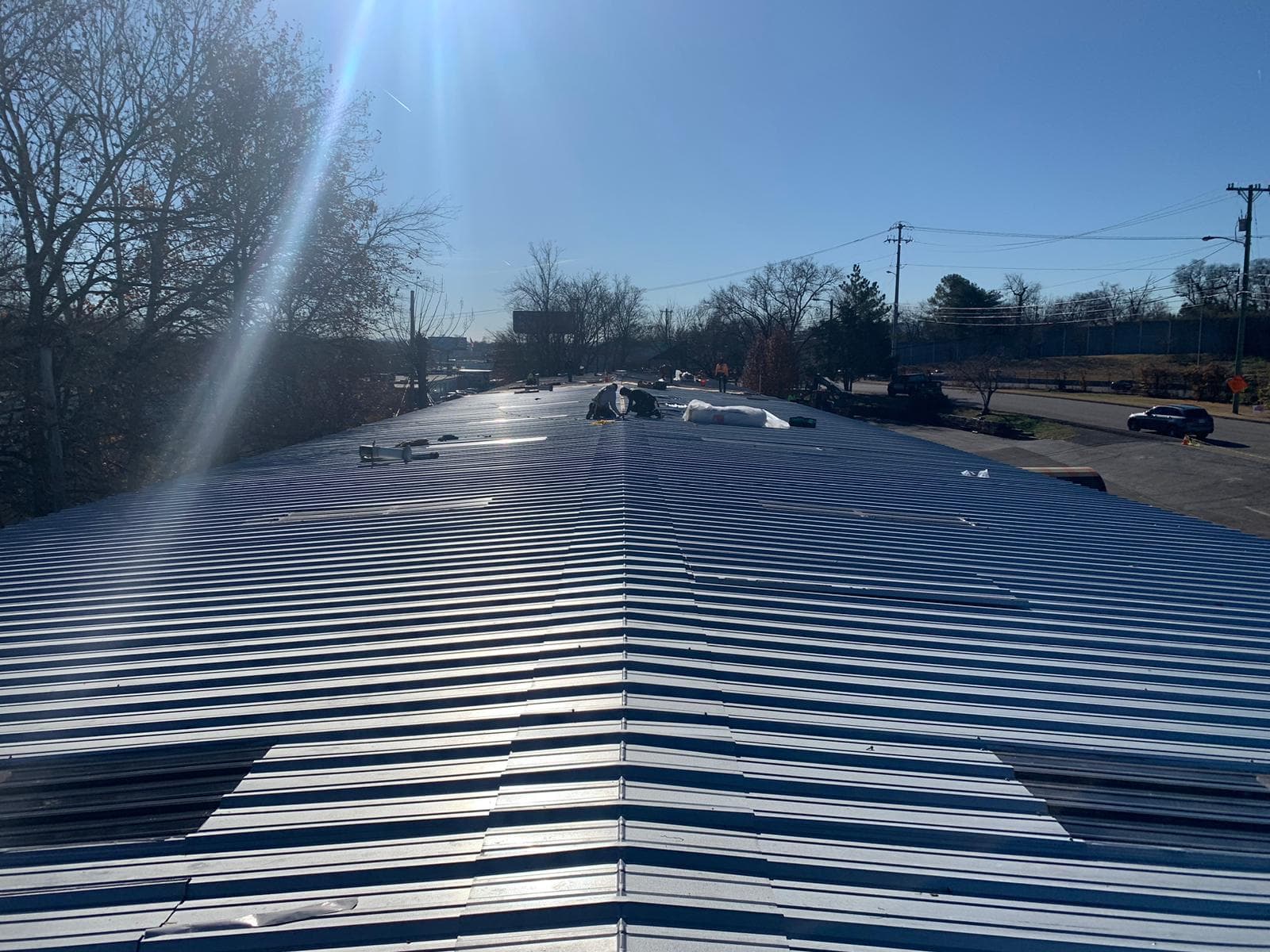
Commercial Roofing in Rome, Georgia
Inspection, documentation, and insurance-supported roof replacement for commercial and multifamily properties across Rome.
Commercial & Multifamily Roofing Across the Rome MSA (Floyd County) - NW Georgia commercial hub on the Alabama-Georgia severe-weather corridor
Rome is the commercial, healthcare, and industrial anchor of NW Georgia's Floyd County submarket, positioned on the US-27 / US-411 / Martha Berry Highway corridor between Atlanta and Chattanooga. The city's commercial character reflects four overlapping economies that differentiate it from every other Georgia commercial market. Mohawk Industries and the broader NW Georgia carpet-manufacturing corridor drive a dense industrial and logistics commercial footprint spanning Dalton, Calhoun, and Rome. Berry College anchors one of the largest contiguous college campuses in the world (27,000+ acres) with a distinct heritage-campus architectural inventory. Redmond Regional Medical Center and Floyd Medical Center together form NW Georgia's primary healthcare commercial district. The downtown Rome historic commercial district anchors mixed-use retail, professional services, and hospitality commercial centered on Broad Street and the Rome Clocktower district. Our Rome commercial roofing work spans all four sectors with a consistent photo-keyed documentation format calibrated to the NW Georgia adjuster workflow.
Red Door Roofing serves commercial, multifamily, industrial, and healthcare property owners across Rome and the Floyd County commercial market, northwest Georgia's historic commercial and industrial hub positioned along US-27, US-411, and the Martha Berry Highway corridor. Rome is the largest commercial center between Atlanta and Chattanooga, and the city's commercial character reflects four overlapping economies that differentiate it from metro Atlanta and middle Georgia commercial markets. The carpet-and-flooring industrial base anchored by Mohawk Industries and the broader NW Georgia carpet-manufacturing corridor drives a dense industrial and logistics commercial footprint. Berry College - occupying one of the largest contiguous college campuses in the world at over 27,000 acres - anchors a significant university-adjacent commercial and professional-services footprint. Redmond Regional Medical Center (HCA) and Floyd Medical Center (Atrium Health) together form NW Georgia's primary healthcare commercial district, driving 24/7 clinical-commercial demand along Redmond Circle and Turner McCall Boulevard. The historic downtown Rome commercial district anchors mixed-use retail, professional services, and hospitality commercial centered on Broad Street and the Rome Clocktower district. Rome sits inside NW Georgia's severe-weather corridor with recurring spring (March–May) supercell hail-and-wind activity and documented tornado exposure patterns that track from Alabama across Polk, Floyd, and Bartow counties. Floyd County commercial policies commonly apply percentage wind/hail deductibles on insured value, and documented severe-weather events including the January 2023 NW Georgia tornado outbreak (which included an EF1 tornado through Rome) have produced commercial claim patterns that reward property owners maintaining a documented inspection cadence. We calibrate every Rome inspection report to the NW Georgia adjuster workflow - photo-keyed, slope-oriented, with date-of-loss validation against NOAA SPC records for Floyd County weather events and the recurring Alabama-to-Georgia supercell track corridor. Our Rome work concentrates on four property types. First, carpet-and-flooring industrial and logistics commercial along US-27, US-411, and the Mohawk Industries corridor - NW Georgia's carpet-manufacturing industrial base produces large single-building commercial roof surfaces with unusual rooftop-equipment density from dye-house exhaust, fiber-processing ventilation, and material-handling equipment. Second, healthcare commercial across the Redmond Regional and Floyd Medical Center campuses and the surrounding medical-office corridor, where 24/7 clinical operations drive inspection-scheduling constraints. Third, multifamily and garden-style residential stock along Shorter Avenue, Turner McCall Boulevard, and the Horseleg Creek corridor, where multi-building complexes with TPO and EPDM on flat sections plus architectural asphalt shingle on pitched roofs require phased replacement planning. Fourth, hospitality, retail, and professional-services commercial along US-27, Turner McCall Boulevard, and the downtown Rome historic district, where mixed-vintage commercial stock with both modern TPO and legacy built-up roofing requires roof-system-specific inspection expertise. Berry College and Shorter University university-adjacent commercial rounds out our Rome service footprint. Every Rome commercial inspection produces a photo-keyed PDF report formatted for Floyd County adjusters, lenders, and asset managers - every slope, every drain, every penetration, every transition documented to a building or unit reference. If our inspection finds no qualifying damage, we issue a Certificate of Clearance suitable for lender, insurer, or asset-manager files at no cost or obligation. We support the carrier scope conversation end-to-end on documented claims, and Georgia commercial work operates under our Red Door family of companies' Georgia general contractor licensure so the licensing and insurance side is handled correctly the first time. Floyd County owners benefit from annual inspections plus prompt post-event documentation on every Rome commercial portfolio.
Rome Business Parks & Office Districts We Serve
Our commercial roofing work in Rome concentrates around the metro's largest office parks and corporate districts. Each of these business parks contains multiple commercial and mixed-use tenants where tenant-in-place scheduling, after-hours production windows, and coordinated material staging matter as much as the roof scope itself. Commercial-grade flat roof systems and pitched multifamily assemblies are both well represented across these parks - our inspections walk every roof section, every transition, and every drain to build a complete condition document suitable for carrier, lender, and asset-manager review.
- Mohawk Industries carpet-manufacturing corridor
- US-27 industrial belt
- US-411 logistics corridor
- Redmond Circle medical-office district
- Turner McCall Boulevard commercial
- Shorter Avenue retail and multifamily
- Martha Berry Highway professional-services belt
- Downtown Rome historic commercial
- Berry College university-adjacent commercial
- Shorter University university-adjacent commercial
Primary Rome Commercial Corridors
Rome's commercial and multifamily stock clusters along a handful of primary corridors. Our inspection and replacement work tracks along these corridors where commercial density, tenant complexity, and storm exposure concentrate. Routing and material staging around these corridors is part of every Rome project plan - peak commuter hours, event calendars, and fire-lane requirements all factor into how we schedule.
- US-27 north-south commercial spine
- US-411 northeast commercial corridor
- Martha Berry Highway
- Shorter Avenue retail and multifamily
- Turner McCall Boulevard healthcare and retail
- Redmond Circle medical-office
- Broad Street downtown historic
- Horseleg Creek Road commercial
Rome Multifamily Districts
Multifamily roof replacement demands phased scheduling so tenants stay in place. Our work across Rome's multifamily districts follows building-by-building production schedules with tenant-notice templates and noise-window coordination per property. Asset managers receive portfolio-level closeout documentation; property managers receive a phased Gantt-style schedule they can share with residents and operations teams; leasing teams receive advance notice for unit-turn and move-in coordination.
- Shorter Avenue multifamily corridor
- Turner McCall Boulevard garden-style communities
- Horseleg Creek Road multifamily
- Martha Berry Highway multifamily belt
- Riverside multifamily
- Mount Berry multifamily
Rome Storm & Severe-Weather History
Floyd County sits in NW Georgia's severe-weather corridor with documented spring (March–May) peak activity. Supercell tracks from Alabama across Polk, Floyd, and Bartow counties produce recurring hail-and-wind seasons, and NW Georgia's position downstream of Alabama supercell development means that Rome commercial property owners face what is essentially a secondary-track exposure window. The 2011 Super Outbreak and the January 2023 Rome EF1 tornado both reinforced that Floyd County faces tornado-scale severe-weather exposure on a recurring basis. Rome commercial property owners who schedule post-event inspections within two-to-four weeks preserve clean carrier documentation; those who wait until interior water surfaces face compressed claim windows and a more difficult scope conversation with NW Georgia adjusters.
Rome and Floyd County sit in NW Georgia's severe-weather corridor with documented hail, straight-line wind, and tornado exposure through the spring (March–May) peak window. Supercell tracks from Alabama across Polk, Floyd, and Bartow counties produce recurring hail-and-wind seasons, and the January 12, 2023 NW Georgia tornado outbreak - which included a documented EF1 tornado through Rome - left a commercial claim pattern across Floyd County that continues to shape lender and carrier documentation expectations today. The 2011 Super Outbreak produced documented tornado damage across NW Georgia including Floyd County, reshaping the local commercial-insurance landscape in ways that still inform claim-scope review standards. NW Georgia's position downstream of Alabama supercell development means that Rome commercial property owners face what is essentially a secondary-track exposure - severe-weather activity that develops in Alabama frequently tracks into NW Georgia during peak spring supercell windows. Floyd County commercial policies commonly apply percentage wind/hail deductibles on insured value, and our recommendation is an annual inspection plus prompt post-event documentation within two-to-four weeks of any significant severe-weather event affecting NW Georgia. Notable documented events on local record include 2011-04-27 (Super Outbreak - tornado damage across NW Georgia including Floyd County); 2017-09-11 (Tropical Storm Irma remnants - extended wind event through NW Georgia); 2019-03-03 (Severe weather outbreak - documented hail and wind across Floyd County); 2023-01-12 (NW Georgia tornado outbreak - EF1 tornado through Rome, commercial and multifamily claims across Floyd County); 2024-03-14 (Severe thunderstorm - NW Georgia hail and wind event). Georgia commercial policies typically apply percentage wind/hail deductibles on insured value, and Floyd County adjusters cross-reference NOAA SPC records for date-of-loss validation. Our Rome inspection reports align with the photo-keyed, slope-oriented format NW Georgia adjusters routinely request.
Notable documented Rome-area events
2011-04-27 · Super Outbreak
Tornado damage across NW Georgia including Floyd County - benchmark event reshaping local commercial-insurance documentation expectations
2017-09-11 · Tropical Storm Irma remnants
Extended wind event through NW Georgia commercial stock
2019-03-03 · Severe weather outbreak
Documented hail and wind across Floyd County commercial stock
2023-01-12 · NW Georgia tornado outbreak
EF1 tornado through Rome - commercial and multifamily claims across Floyd County hospitality, retail, and carpet-industrial stock
2024-03-14 · Severe thunderstorm
NW Georgia hail and wind event with documented commercial claims
Annual spring · Recurring hail and wind
Floyd County faces spring (March–May) supercell activity with downstream tracking from Alabama supercell development
Insurance Process in Rome
Georgia commercial policies commonly apply percentage wind/hail deductibles on insured value across Floyd County property. Floyd County commercial carriers and adjusters routinely cross-reference NOAA SPC records and NW Georgia weather-observation archives for date-of-loss validation. Our Rome inspection documentation aligns with the photo-keyed, date-aligned, slope-oriented format that NW Georgia adjusters routinely request for commercial claim scope approval. Carpet-and-flooring industrial commercial policies in the Rome market frequently carry production-continuity and business-interruption documentation requirements that layer on top of standard commercial-property insurance workflow; we coordinate documentation to align with both.
Floyd County commercial lenders and CMBS servicers routinely request Roof Condition Certifications at refinance and acquisition. Major carriers writing Rome commercial property (Chubb, Travelers, Liberty Mutual, regional NW Georgia carriers) accept photo-keyed inspection reports as standard claim documentation. Our format matches what their adjuster field expects on NW Georgia commercial claim scope, and we coordinate production-continuity and business-interruption documentation alignment on carpet-and-flooring industrial commercial property where required.
Commercial Roof Systems Common in Rome
Rome commercial stock splits along four roof-system families. TPO and EPDM dominate multifamily, office, and medical-office flat roofs from the 1990–2020 development wave along Shorter Avenue and Turner McCall Boulevard. Modified bitumen persists on older carpet-and-flooring industrial stock along the Mohawk Industries corridor. Metal standing-seam is common on newer industrial, logistics, and flex-space construction. Legacy built-up roofing appears on historic downtown Rome commercial and on some Berry College campus buildings with heritage-preservation considerations. Architectural asphalt shingle is standard on pitched multifamily, professional-services, and hospitality stock.
Rome Landmarks & Properties We've Served Near
Our commercial and multifamily roofing work crosses paths with Rome's most recognizable properties and corridors. These landmarks anchor the commercial districts we work in daily - they're not just tourism references, they're the neighborhoods where property managers ask us to inspect multifamily, retail, hospitality, and office stock.
- Berry College
- Redmond Regional Medical Center
- Floyd Medical Center
- Rome City Clocktower
- Barron Stadium
- Shorter University
- Myrtle Hill Cemetery
- Rome Area History Museum
- Chieftains Museum
- State Mutual Stadium (Rome Emperors)
Property Types We Serve in Rome
- Carpet-and-flooring industrial along the Mohawk Industries corridor
- Healthcare commercial at Redmond Regional Medical Center and Floyd Medical Center
- Berry College heritage-campus commercial and adjacent professional-services stock
- Multifamily communities along Shorter Avenue and Turner McCall Boulevard
- Downtown Rome Clocktower historic commercial and hospitality
What a Rome Commercial Roof Inspection Includes
Every Rome commercial inspection we perform produces a photo-keyed PDF report built for the way Georgia adjusters, lenders, and asset managers actually work. We walk the full roof system - every slope, every drain, every penetration, every transition - and document what we see with photos referenced to a building or unit location. No generic stock photos. No marketing filler. Just the evidence a carrier needs to make a scope determination on a real commercial property.
On multifamily buildings we document building-by-building, which matters because a 300-unit Rome complex may show damage concentrated on two of eight roofs. Adjusters want that level of granularity, and the documentation protects the owner from a blanket-scope claim that gets pared back in review.
The inspection report identifies your existing roof system (TPO, EPDM, PVC, modified bitumen, BUR, asphalt shingle, metal, or a mixed portfolio), estimates remaining useful life, flags flashing and penetration condition, and notes any observed damage with date-of-loss alignment where applicable. We also call out situations where we recommend repair rather than replacement - our business is not built on upselling.
Working With Rome Adjusters and Carriers
Most Rome commercial claims don't fail on the damage - they fail on documentation gaps or scope- supplement misunderstandings with the adjuster. Our inspection reports are formatted to match what Rome-area commercial adjusters routinely request: photo-keyed damage evidence, roof-system identification, a priced scope against local labor and material norms, and a repair-vs-replacement recommendation grounded in observed condition.
When an adjuster's initial scope misses legitimate work - underlayment, code-required upgrades, perimeter metal, additional penetrations - we submit a supplement with supporting documentation. Reasonable supplements with good evidence are typically approved. We don't submit questionable supplements, and we don't push scope that wasn't clearly warranted by what we photographed. Rome adjusters are experienced, and credibility is the currency we operate on.
Typical Rome Commercial Roof Project Timeline
A typical Rome commercial roof project runs 30–120 days from inspection to installation completion. Here's how that calendar breaks down on a mid-size property:
- Week 1: on-site inspection, photo-keyed report delivered to owner
- Weeks 2–3: claim filed, adjuster assigned, on-roof walk with adjuster + contractor
- Weeks 3–6: initial scope received, supplement filed for any missed work, approved scope returned
- Weeks 6–10: material procurement, tenant-notice distribution, phased production schedule built
- Weeks 10–16: on-roof production, daily photo documentation, weekly progress check-ins
- Weeks 16–17: final walk, punch-list completion, closeout documentation to lender and carrier
Multifamily properties in Rome with 100–300 units typically run on the longer end of that range; smaller commercial buildings close faster. Material lead times on TPO, EPDM, and PVC are the usual timeline variables. We share a phased Gantt schedule so operations, leasing, and asset-management teams can plan around the work.
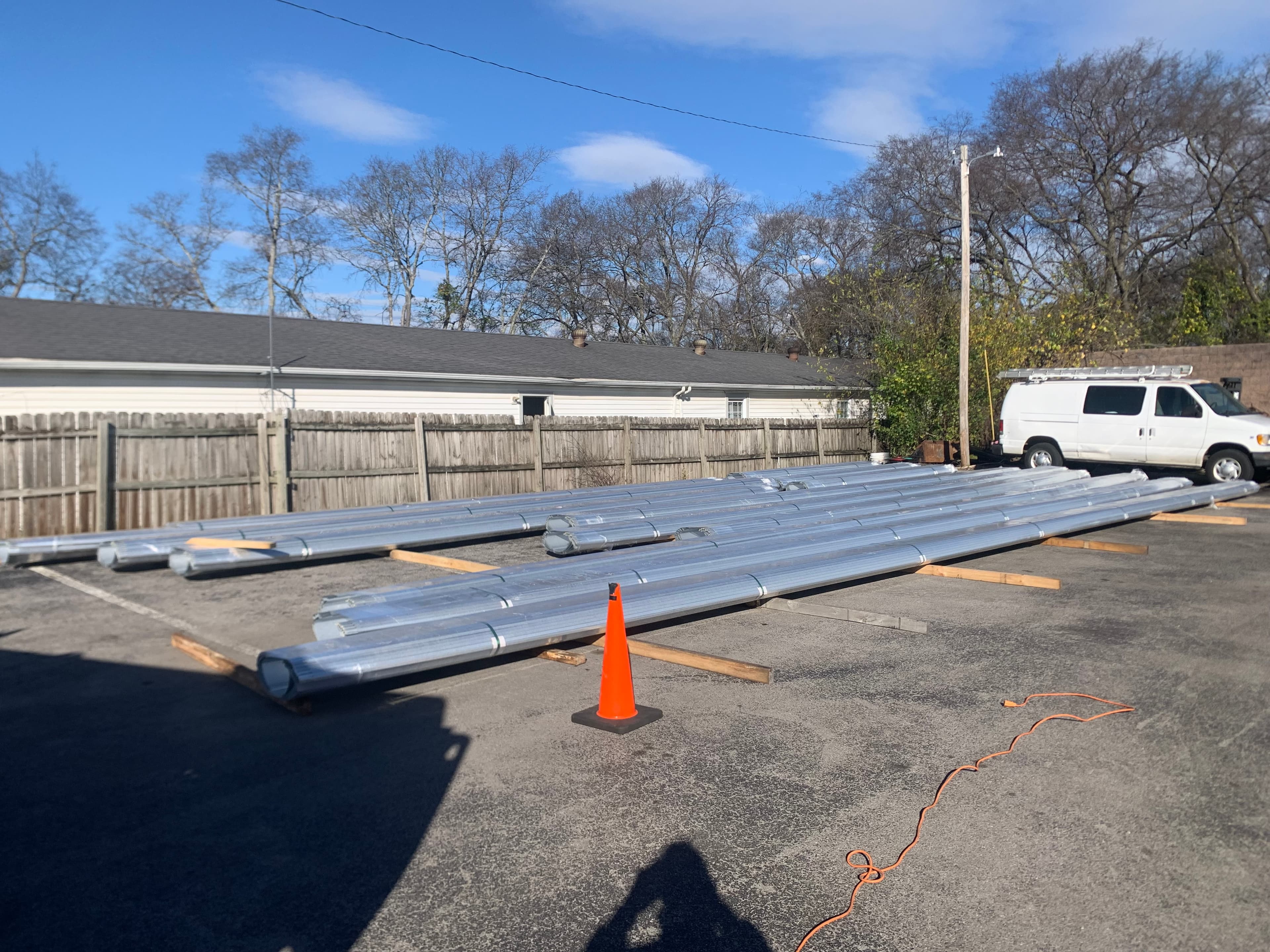
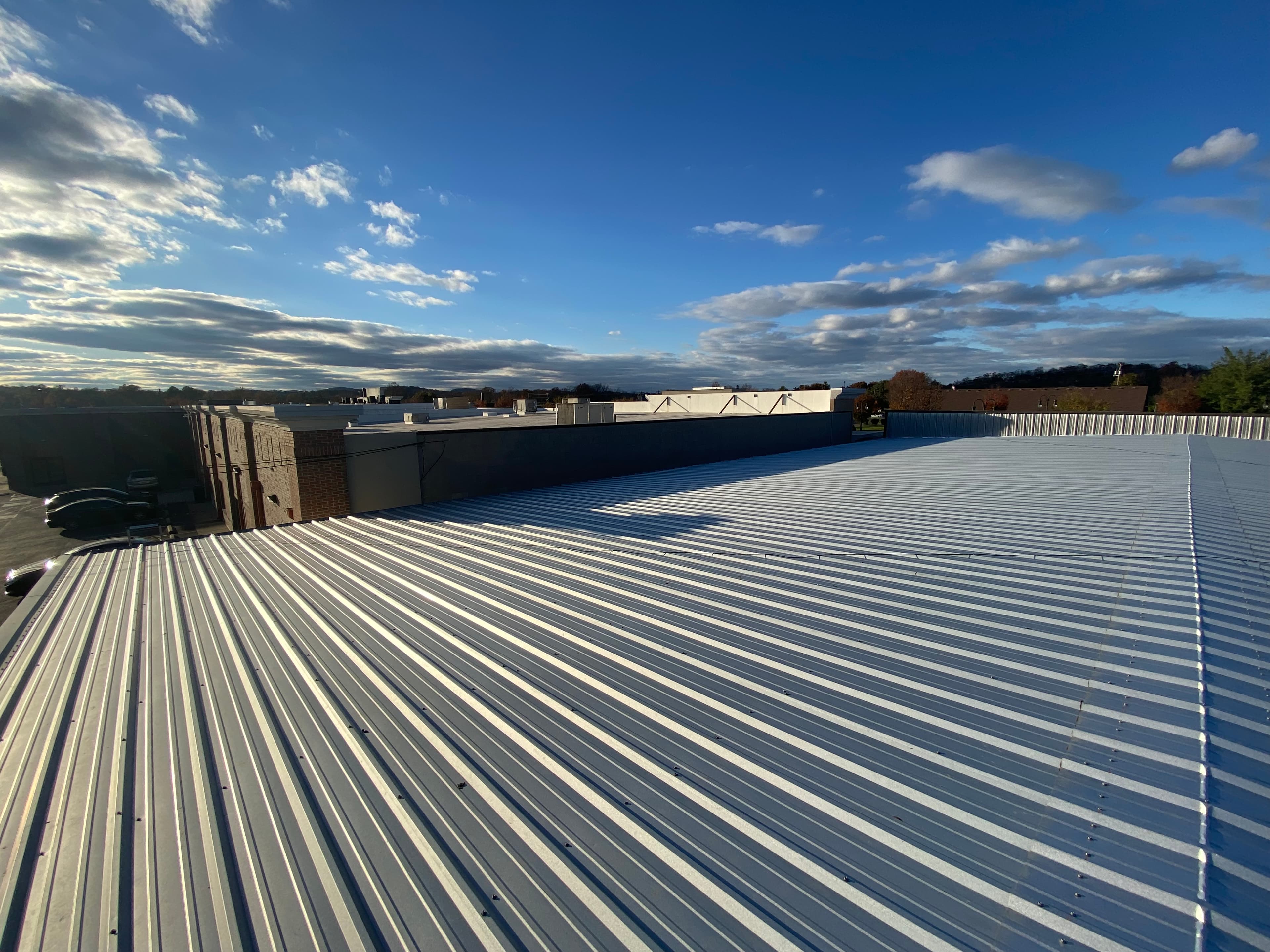
The NW Georgia carpet-and-flooring industrial corridor: Roofing Mohawk and the Dalton-Rome manufacturing belt
NW Georgia's carpet-and-flooring industrial corridor stretches from Dalton south through Calhoun and Rome, and the Rome section of that corridor - anchored by Mohawk Industries and the supporting supplier and logistics footprint - produces a commercial roofing market with operational characteristics distinct from every other Georgia industrial segment. Dye-house operations generate high-temperature exhaust and moisture loads that concentrate stress at roof flashings, curbs, and mechanical-equipment transitions. Fiber-processing lines produce airborne particulate that settles on roof membranes and affects drainage patterns around roof drains and scuppers over time. Material-handling equipment including overhead conveyors, forklift traffic on elevated loading docks, and dock-canopy integration all drive unusual curb-and-penetration exposure patterns.
Our carpet-and-flooring industrial commercial roofing work in Rome documents rooftop-equipment inventory alongside membrane and flashing condition, because for this industrial segment the equipment-integration detail matters as much as the roof-condition detail. Production-window constraints on carpet-manufacturing facilities are material - just-in-time customer delivery schedules for retail and commercial flooring accounts mean that roof production and inspection work must coordinate around shift cycles and production-line operations. We schedule inspection windows around shift changeovers, coordinate crane and material staging around dock-bay operations, and format documentation to align with both commercial-property insurance workflow and production-continuity requirements on carpet-manufacturing property.
- Dye-house exhaust and moisture loads concentrate stress at flashings, curbs, and equipment transitions
- Fiber-processing particulate affects drainage and roof-drain/scupper performance over time
- Material-handling equipment drives unusual curb-and-penetration exposure patterns
- Production-window constraints require inspection coordination with shift cycles and customer delivery schedules
Berry College heritage campus: Roofing one of the world's largest contiguous college campuses
Berry College occupies one of the largest contiguous college campuses in the world at over 27,000 acres in Floyd County, and the commercial roof inventory across Berry's academic, administrative, residential, and athletic-facility buildings spans everything from 19th-century heritage construction with slate and built-up roofing to modern TPO and PVC on new-construction campus buildings. Heritage-preservation coordination requirements apply to portions of the Berry campus inventory where the original Ford Foundation-era English Gothic architecture and the iconic Berry College stone construction require preservation-appropriate materials sourcing and craft-trade expertise on replacement.
Our Berry College-adjacent commercial roofing work coordinates with the specific preservation and facilities-management standards that apply across the Berry campus. Heritage-building roof documentation frequently requires attention to historic-architecture coordination alongside standard commercial-property inspection workflow, and the facilities-management and athletic-department coordination overhead on Berry campus work is materially different from standard commercial-roof project management. Berry's scale - 27,000 acres with academic, residential, agricultural, and athletic facilities all active - also drives coordination requirements on material staging, crane placement, and construction-traffic routing across one of the largest private landholders in NW Georgia.
Redmond Regional and Floyd Medical Center: NW Georgia's healthcare-commercial roofing district
Redmond Regional Medical Center (HCA) and Floyd Medical Center (Atrium Health) together anchor NW Georgia's primary healthcare commercial district, and the medical-office commercial that clusters along Redmond Circle and Turner McCall Boulevard represents one of the densest healthcare-commercial concentrations between Atlanta and Chattanooga. Roofing work across the two hospital campuses and the surrounding medical-office inventory operates under tenant-operation constraints similar to what we document on healthcare commercial in Gainesville (Northeast Georgia Medical Center), Warner Robins (Houston Medical Center), and Florence, SC (McLeod Regional and MUSC Health Florence).
We schedule Rome medical-office and hospital-adjacent inspections outside clinical hours whenever possible, coordinate crane and material-staging placement around ambulance and patient-transport flow, and phase production windows so that surgical-suite and imaging-center operations continue uninterrupted. Documentation format for NW Georgia medical property typically includes additional infection-control coordination notes, facilities-management sign-off paperwork, hospital-system risk-management documentation, and asset-manager-specific reporting beyond the standard photo-keyed commercial inspection report. Redmond Regional and Floyd Medical facilities-management teams often request expedited inspection scheduling after named-storm or severe-weather impact, and we coordinate two-to-four-week post-event documentation windows on hospital-system commercial property as a matter of routine.
January 2023 Rome EF1 tornado and the Floyd County commercial claim cycle
The January 12, 2023 NW Georgia tornado outbreak included a documented EF1 tornado track through Rome, and the commercial claim cycle that followed left a damage pattern across Floyd County hospitality, retail, carpet-industrial, and multifamily stock that continues to shape lender and carrier documentation expectations today. The 2023 Rome event followed a recurring NW Georgia severe-weather pattern where Alabama-origin supercells track downstream across Polk, Floyd, and Bartow counties during spring severe-weather windows and occasionally produce tornado-scale damage. The 2011 Super Outbreak produced the benchmark prior event, and the 2023 Rome tornado reinforced that Floyd County commercial property owners face tornado-scale severe-weather exposure on a recurring basis.
Floyd County commercial policies commonly apply percentage wind/hail deductibles on insured value, and the compound severe-weather exposure pattern across NW Georgia means Rome commercial property owners can face documented exposure windows in multiple years across a given decade. Annual inspection cadence plus prompt post-event documentation within two-to-four weeks of any significant severe-weather event affecting NW Georgia is our standard recommendation. Our Rome inspection format reflects the post-2023 documentation standard - photo-keyed, slope-oriented, date-aligned, with pre-storm condition benchmarking where owners maintained annual inspection cadence ahead of the 2023 tornado event.
Why Rome Property Owners Choose Red Door Roofing
30+ years, Red Door family
Built on 30 years of commercial experience across the Southeast. Notable clients include Best Western, Harbor Freight, Tractor Supply, and Vanderbilt Medical Clinic.
Carrier-ready documentation
Photo-keyed inspection reports formatted for Rome-area adjuster and lender workflows. No guarantees on claim outcomes - the carrier calls that.
Tenant-in-place phasing
Multifamily work phased by building block with tenant-notice templates, noise windows, and operations- team documentation. Tenants stay in place.
No-obligation inspection
If our Rome inspection finds no qualifying damage, we issue a Certificate of Clearance - suitable for lender, insurer, and asset-manager files. No further commitment.
Rome Commercial Roofing FAQs
Does Rome commercial roof storm damage qualify for insurance replacement?
How do you handle inspection and work on carpet-and-flooring industrial near the Mohawk Industries corridor?
Which NW Georgia corridors does Red Door serve most often?
How does the Alabama-to-Georgia supercell track pattern affect Rome commercial roof planning?
Does commercial roof storm damage qualify for insurance replacement in Rome?
What commercial roof systems are most common in Rome?
How long does a commercial roof replacement take in the Rome area?
Which Rome corridors and landmarks has Red Door worked near?
What happens if no storm damage is found on my Rome roof?
Do you serve carpet-and-flooring industrial commercial near the Mohawk Industries corridor?
Nearby Georgia Cities We Also Serve
Our commercial roofing coverage extends across Georgia. These three Rome-adjacent cities are part of our routine service footprint.
Need a Rome inspection?
Call us directly at 1-855-GO4REDD or request a no-obligation inspection online. Most Rome-area inspections are scheduled within days of the request.
Request InspectionSchedule a Rome Roof Inspection
No obligation. Documented findings you can use for insurance, lender, or asset-manager records.
30+ Years of Red Door Family Experience · 16 States
Free · No obligation · No follow-up sales calls